
Maritime East Africa (820 – 963 CE): …
Years: 820 - 963
Maritime East Africa (820 – 963 CE): Early Swahili Settlements, Madagascar’s Highlands, and Island Outposts
Geographic and Environmental Context
Maritime East Africa includes the littoral and nearshore islands from southern Somalia through Kenya and Tanzania to northern and central Mozambique and southern Malawi, together with the offshore archipelagos of Lamu, Pate, Mombasa, Zanzibar, Pemba, Mafia, Kilwa Kisiwani, Songo Mnara, and the Comoros, as well as Madagascar, the Seychelles, and the Mascarene Islands.
-
Anchors: Mombasa, Dar es Salaam, Beira, Blantyre on the coast and uplands; Madagascar’s central highlands and western ports; small-island chains along the western Indian Ocean.
Climate and Environmental Shifts
-
The Medieval Warm Period brought relatively stable monsoon winds, ensuring reliable sailing seasons.
-
Rainfall supported rice and banana cultivation in coastal lowlands and Madagascar’s river valleys.
-
The Seychelles and Mascarene Islands were uninhabited, their ecosystems dominated by seabirds, turtles, and unique flora.
Societies and Political Developments
-
Swahili coast: settlements at Shanga, Lamu, and Mombasa grew from Bantu–Persian interactions.
-
Madagascar: settled by Austronesian migrants from Island Southeast Asia, blending with African communities; highland villages and coastal chiefdoms developed.
-
Comoros: mixed Austronesian–African societies flourished on fishing, coconuts, and small-scale trade.
-
Seychelles & Mascarene Islands: uninhabited, though visited by passing mariners.
Economy and Trade
-
Exports: ivory, tortoise shell, rhinoceros horn, slaves, and forest goods.
-
Imports: beads, cloth, and ceramics from Arabia, Persia, and India.
-
Madagascar supplied rice, cattle, and forest products into coastal exchange.
Belief and Symbolism
-
Indigenous Bantu religions on the coast blended with early Islam, arriving via Arab merchants.
-
Austronesian ancestor worship shaped Madagascar and Comoros rituals.
Long-Term Significance
By 963, the Swahili coast was knit into Indian Ocean exchange, while Madagascar, Comoros, and nearby archipelagos formed an interconnected cultural and economic frontier.
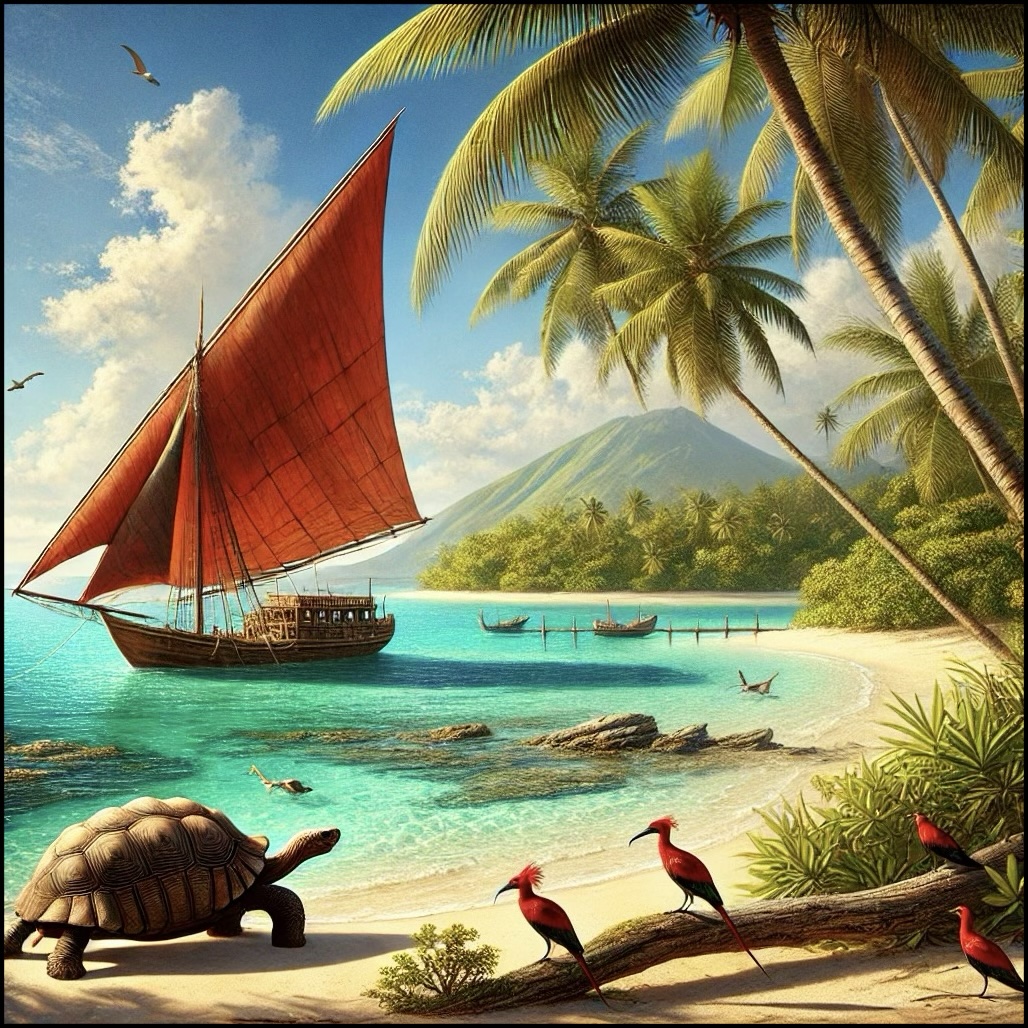
Maritime East Africa (with civilization) ©2024-25 Electric Prism, Inc. All rights reserved.
Groups
- Austronesian peoples
- Bantu peoples
- Arab people
- Persian people
- Somalis
- Madagascar
- Nilotic peoples
- Swahili people
- Comoro Islands
- Islam
- Abbasid Caliphate (Baghdad)
- Abbasid Caliphate (Samarra)
- Abbasid Caliphate (Baghdad)
Commodoties
- Fish and game
- Gem materials
- Glass
- Domestic animals
- Grains and produce
- Textiles
- Ceramics
- Strategic metals
- Slaves
- Lumber
- Manufactured goods
- Aroma compounds
- Spices
Subjects
Regions
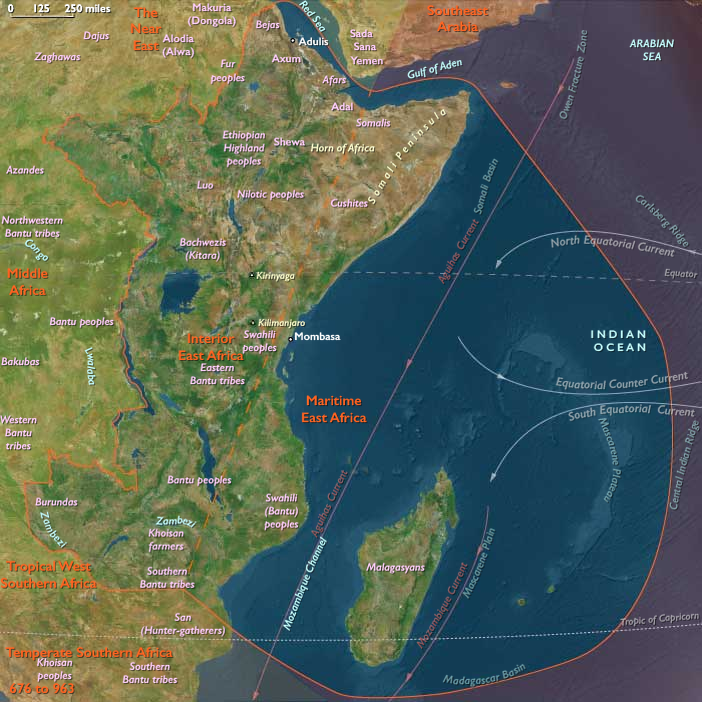
Subregions
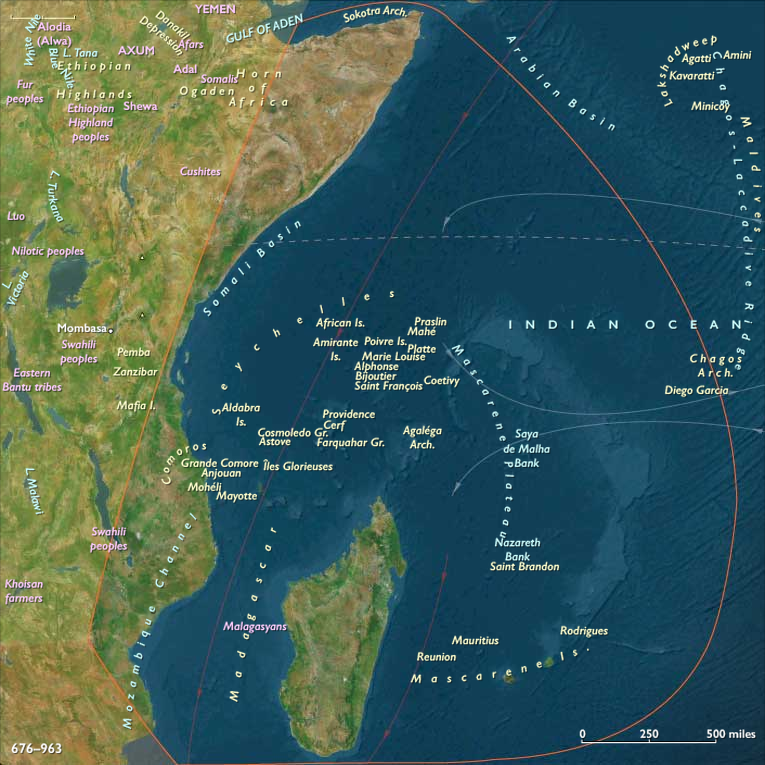
Related Events
Showing 10 events out of 54673 total
Years: 820 - 963
Maritime East Africa (with civilization) ©2024-25 Electric Prism, Inc. All rights reserved.
Groups
- Austronesian peoples
- Bantu peoples
- Arab people
- Persian people
- Somalis
- Madagascar
- Nilotic peoples
- Swahili people
- Comoro Islands
- Islam
- Abbasid Caliphate (Baghdad)
- Abbasid Caliphate (Samarra)
- Abbasid Caliphate (Baghdad)
Commodoties
- Fish and game
- Gem materials
- Glass
- Domestic animals
- Grains and produce
- Textiles
- Ceramics
- Strategic metals
- Slaves
- Lumber
- Manufactured goods
- Aroma compounds
- Spices
Subjects
Regions
Subregions