Event
Maritime South Asia (477 BCE–243 CE): Classical…
Maritime South Asia (477 BCE–243 CE): Classical Antiquity — Sangam Ports and Indian Ocean Exchange
Geographic and Environmental Context
Reliable monsoon navigation transformed Maritime South Asia into one of the principal crossroads of the Indian Ocean. Expanding irrigation, productive river deltas, coconut-lined coasts, estuaries, and lagoon systems supported rapidly growing agricultural and maritime economies throughout the peninsula and Sri Lanka.
Societies and Political Developments
The Satavahana realm unified much of the Deccan while the Chera, Chola, and Pandya polities flourished across Tamilakam during the Sangam age. Anuradhapura emerged as the dominant kingdom of Sri Lanka, strengthening centralized management of irrigation and agriculture. Although political authority remained divided among several states, expanding commerce increasingly linked their economies.
Economy and Exchange
Roman trade dramatically expanded maritime commerce. Pepper, spices, pearls, cotton textiles, gemstones, ivory, iron, and fine ceramics flowed through ports such as Muziris and across both coasts. Inland market towns connected agricultural interiors with coastal harbors, while river transport integrated upland production into wider commercial networks.
Technology and Material Culture
Iron agriculture expanded across fertile plains, while irrigation tanks and canals multiplied. Coinage became increasingly common, supporting commercial exchange. Textile production, metalworking, shipbuilding, and brick construction reached new levels of sophistication.
Belief and Cultural Life
Buddhism, Jainism, and diverse Hindu traditions flourished simultaneously. Monasteries, temples, and urban religious centers expanded alongside prosperous trading communities, while literary traditions of the Sangam age celebrated both martial elites and commercial prosperity.
Environmental Adaptation and Resilience
Expanding irrigation systems stabilized agricultural production despite monsoon variability. Agroforestry, fisheries, river transport, and diversified coastal economies created resilient environmental systems capable of sustaining dense populations and growing trade.
Legacy of the Age
By 243 CE, Maritime South Asia had become one of the principal commercial landscapes of the Indian Ocean, where monsoon navigation, irrigation agriculture, and prosperous coastal kingdoms formed an increasingly integrated regional civilization.

-
{# Image navigates to the detail page; the magnifying-glass chip is the only Fancybox lightbox trigger (kept a separate sibling — anchors can't nest). #}
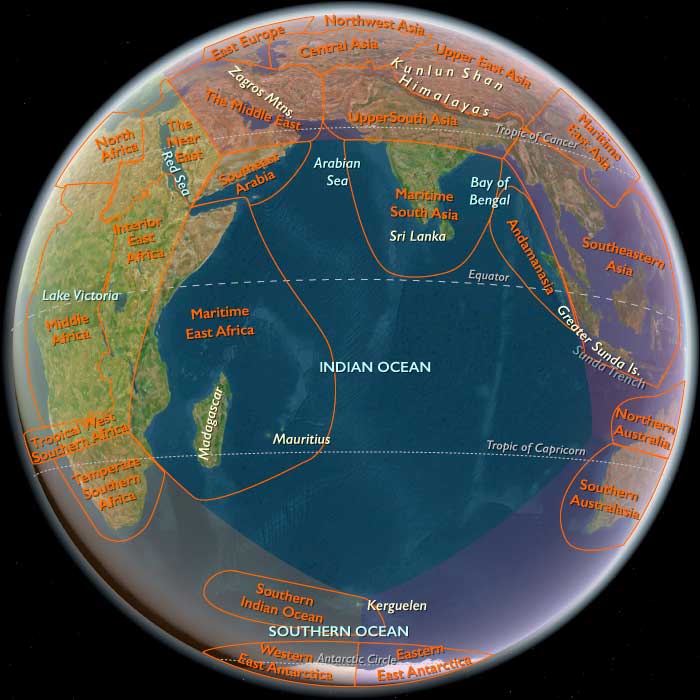
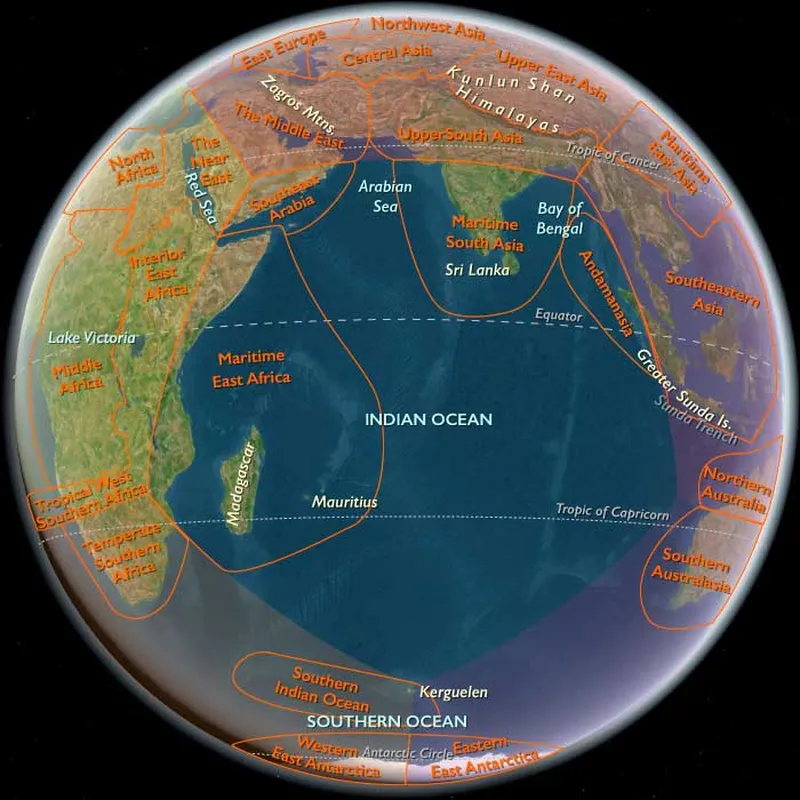 The Indian Ocean Lands
World
-
{# Image navigates to the detail page; the magnifying-glass chip is the only Fancybox lightbox trigger (kept a separate sibling — anchors can't nest). #}
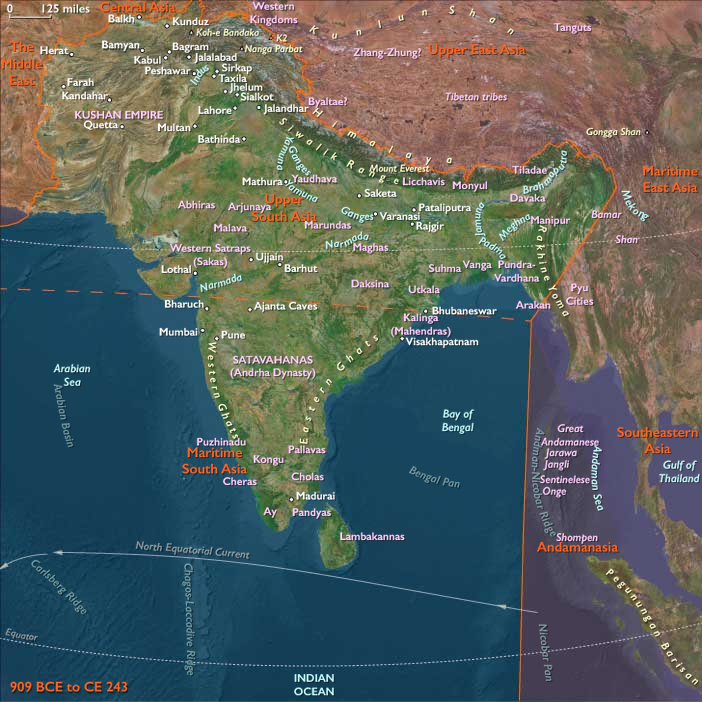 South Asia
Region
-
{# Image navigates to the detail page; the magnifying-glass chip is the only Fancybox lightbox trigger (kept a separate sibling — anchors can't nest). #}
 Maritime South Asia
Subregion