Martin and Pierre Chambiges Complete the West…
1506 CE
Martin and Pierre Chambiges Complete the West Façade of Troyes Cathedral (1506)
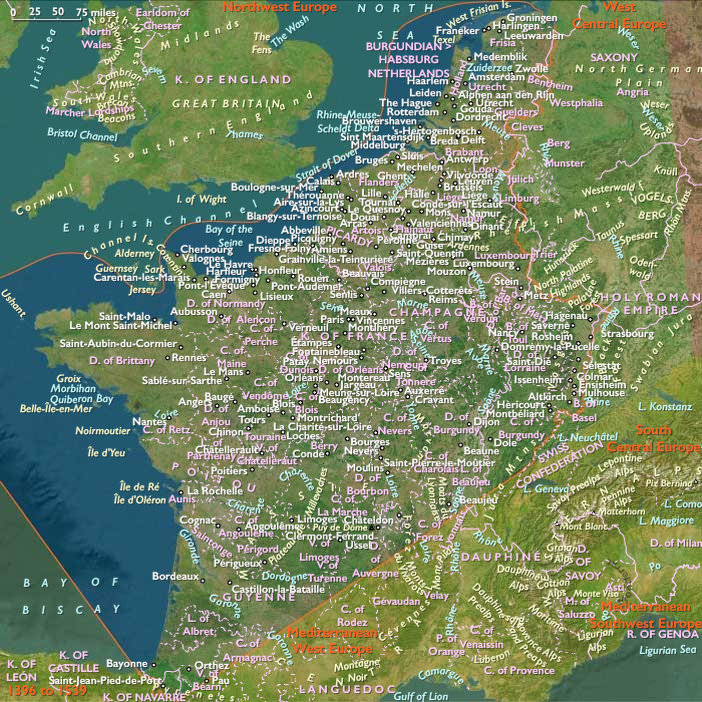
In 1506, renowned French architects Martin Chambiges and his son Pierre Chambiges completed the impressive west façade of Troyes Cathedral. This striking structure, executed in the elaborate Flamboyant Gothic style, represents one of the most significant examples of late Gothic architecture in Atlantic West Europe, characterized by intricate stonework, richly ornamental tracery, and elaborate sculptural details.
The Chambiges’ innovative and sophisticated design at Troyes is notable for its refined balance between structural integrity and decorative complexity. Their mastery is evident in the façade’s vertical elegance, delicate sculptural embellishments, and the flame-like motifs distinctive of the Flamboyant style. The cathedral's west façade thus embodies the culmination of medieval Gothic traditions just before Renaissance architectural ideals began to emerge more prominently throughout northern Europe.
Artistic and Cultural Significance:
The completion of Troyes Cathedral's west façade under Martin and Pierre Chambiges reflected the continuing vitality and sophistication of late medieval ecclesiastical architecture in France. It marked a significant artistic achievement, showcasing how Flamboyant Gothic aesthetics expressed both spiritual grandeur and civic pride, further reinforcing the cultural prominence of cathedral building in late medieval urban centers.
Consequences and Legacy:
The Chambiges’ work at Troyes significantly influenced subsequent architectural endeavors across northern France and the Low Countries. Their elegant fusion of technical skill and ornamental exuberance marked a critical point in architectural history, bridging the rich legacy of Gothic design with emerging Renaissance sensibilities, leaving a lasting impact on architectural practice in Atlantic West Europe.
People
Subjects
Regions
West Europe
View →Subregions