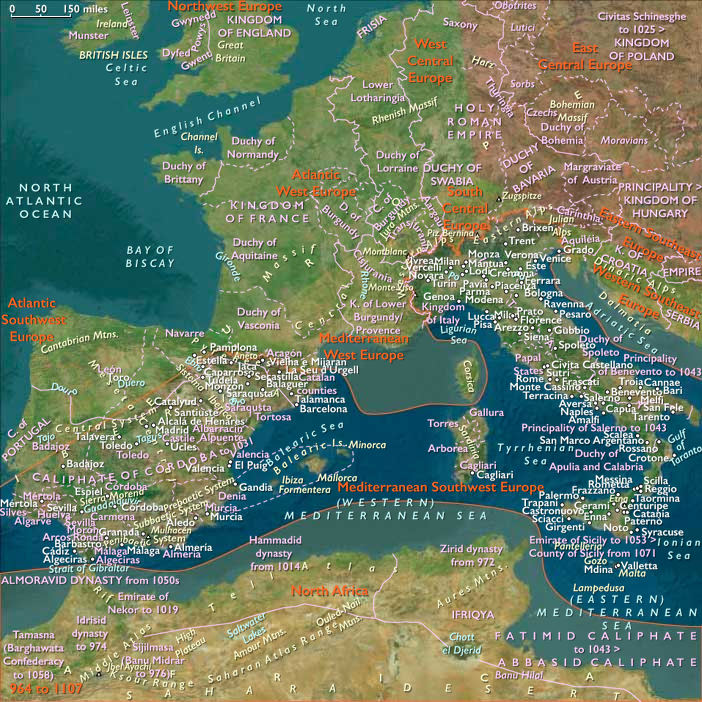
Mediterranean Southwest Europe (1024–1035 CE): End of…
1024 CE to 1035 CE
Mediterranean Southwest Europe (1024–1035 CE): End of the Fitna and the Abolition of the Cordoban Caliphate
The era 1024–1035 CE in Mediterranean Southwest Europe is defined by the conclusion of the Fitna of al-Andalus, resulting in the permanent fragmentation of the Caliphate of Córdoba into a collection of smaller, independent kingdoms.
Conclusion of the Fitna and Fall of the Cordoban Caliphate
The protracted internal conflict known as the Fitna of al-Andalus finally concludes in 1031 CE with the formal abolition of the Cordoban Caliphate. The severe fragmentation that had developed over the previous decades crystallizes into a patchwork of small successor states known as taifas, each asserting regional control. Although the Cordoban caliphal structure is dismantled, various taifa kingdoms continue to claim caliphal authority in efforts to legitimize their rule and bolster their political prestige.
Rise of Taifa Kingdoms and Political Decentralization
Following the caliphate’s collapse, multiple taifa kingdoms—such as those ruled by the Hammudid Dynasty—emerge throughout Iberia. Each taifa establishes independent administrations and fosters local cultural identities, leading to intensified political competition, diplomatic alliances, and occasional conflicts among these small states.
Intellectual Continuity Amid Fragmentation
Despite political disintegration, intellectual and cultural activities remain vibrant within the new taifa states. Jewish and Mozarab scholarly traditions continue to flourish, notably in intellectual centers such as Lucena, sustaining Andalusia's rich multicultural legacy. This intellectual resilience underscores the continued cultural dynamism even amid political instability.
Persistent Economic and Technological Stability
Technological advancements, notably the sustained use of the Catalan forge, continue underpinning regional economic prosperity. Improved iron production supports agricultural productivity, military capability, and urban growth, maintaining economic stability despite the political uncertainties following the collapse of central authority.
Legacy of the Era
The era 1024–1035 CE marks a critical turning point with the definitive end of the Cordoban Caliphate, profoundly reshaping the political landscape of Iberia into a complex network of taifa states. While political unity is irretrievably lost, enduring cultural vitality and economic resilience continue to shape the region’s evolving historical trajectory.
Groups
Topics
Commodities
Subjects
Regions
Southwest Europe
View →Subregions