
Mediterranean Southwest Europe (1072–1083 CE): Consolidation of…
1072 CE to 1083 CE
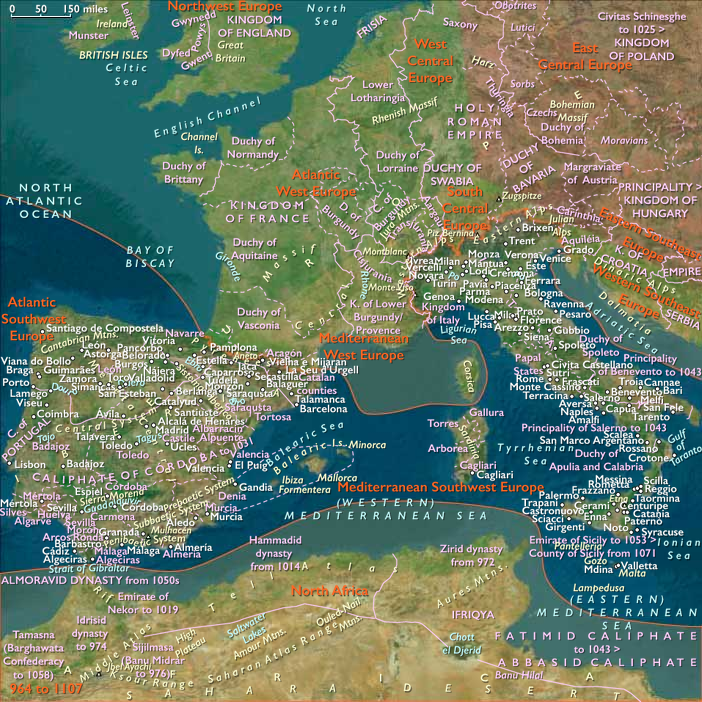
Mediterranean Southwest Europe (1072–1083 CE): Consolidation of Norman Power, Papal Strengthening, and Andalusian Realignments
The era 1072–1083 CE in Mediterranean Southwest Europe is defined by the consolidation of Norman rule in southern Italy and Sicily, continued strengthening of papal authority through the Gregorian Reforms, and significant political and military shifts within Muslim Al-Andalus.
Norman Consolidation in Southern Italy and Sicily
Norman leaders, notably the Guiscard brothers, continue to expand and solidify their power in southern Italy and Sicily. By 1072, the Normans successfully capture Palermo, establishing definitive Norman control over Sicily. This conquest marks the end of Muslim rule on the island and integrates Sicily firmly into the Norman political and cultural sphere, significantly reshaping regional dynamics.
Papal Authority and Gregorian Reform Intensification
Under Pope Gregory VII (r. 1073–1085), the Gregorian Reforms intensify, profoundly reshaping the moral and political fabric of the Roman Catholic Church. Gregory VII vigorously asserts papal supremacy and ecclesiastical independence, challenging secular interference and clerical corruption. His reforms, particularly emphasizing the eradication of simony and enforcing clerical celibacy, enhance the moral authority of the papacy, significantly affecting church-state relations across Europe.
Political Realignments in Al-Andalus
In Muslim Iberia, political dynamics continue to evolve dramatically. The Emirate of Toledo solidifies its prominence among the fragmented taifa kingdoms, emerging as a primary Muslim polity on the peninsula. Concurrently, the Arab emirate of Seville strategically expands westward, driving a wedge through Berber territories towards the Atlantic coast. These realignments reflect the intricate interplay of ethnic, religious, and regional identities within Al-Andalus, shaping its political landscape.
Cross-Cultural Military Ventures: Early Crusading Contexts
Military ventures with strong religious motivations become increasingly prevalent. The earlier international siege of Barbastro (1064) establishes a precedent that inspires further papal-sanctioned military initiatives against Muslim-held territories. Such expeditions, increasingly involving diverse European participants, foreshadow the formal Crusades that will commence at the end of the century.
Continued Intellectual and Cultural Vibrancy
Despite ongoing political turbulence, intellectual and cultural activities thrive in Mediterranean Southwest Europe. Jewish scholarship remains robust, particularly in Andalusian centers such as Lucena, while Mozarab communities continue to preserve and promote intercultural intellectual exchange. These enduring scholarly traditions reinforce the region’s vibrant cultural landscape.
Economic Stability and Technological Advancements
Economic vitality persists, driven by sustained technological innovations such as the widespread use of the Catalan forge. Improved iron production continues to underpin agricultural productivity, military capabilities, and urban expansion, sustaining regional prosperity amidst broader political transformations.
Legacy of the Era
The era 1072–1083 CE significantly shapes the Mediterranean Southwest European landscape through the consolidation of Norman power, the deepening impact of Gregorian reforms, and continued political evolution within Al-Andalus. Collectively, these developments lay critical groundwork for profound religious, political, and cultural transformations in subsequent decades.
Groups
Topics
Commodities
Subjects
Regions
Southwest Europe
View →Subregions
