
Mediterranean Southwest Europe (1612–1623 CE): Artistic Flourishing, …
Years: 1612 - 1623
Mediterranean Southwest Europe (1612–1623 CE): Artistic Flourishing, Religious Realignments, and Political Dynamics
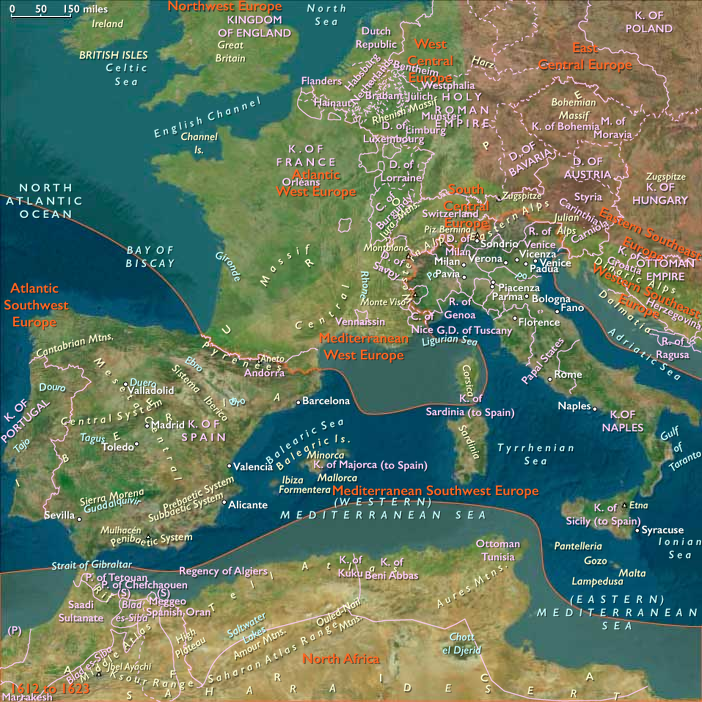
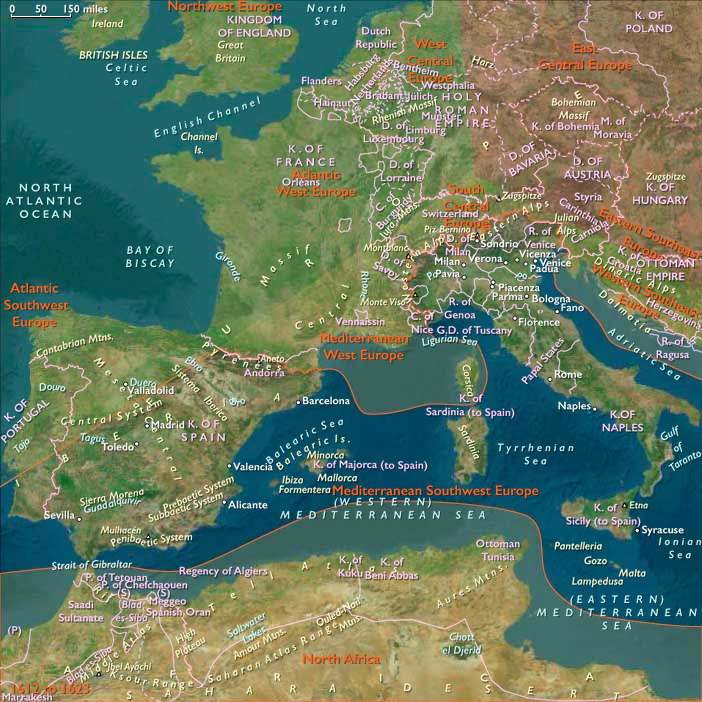
The era 1612–1623 CE in Mediterranean Southwest Europe witnesses a vibrant interplay of artistic brilliance, religious developments, and shifting political landscapes. From Italy’s innovative artistic and scientific progress to Spain’s religious and literary introspection, and Malta’s continuing strategic fortifications, the region reflects broader European trends within its distinctive cultural fabric.
Italy: Pinnacle of Baroque Art and Scientific Inquiry
Italy remains the epicenter of European cultural life, with the Baroque style fully flourishing in painting, sculpture, and architecture. The period sees masterpieces by artists such as Gian Lorenzo Bernini, whose dynamic sculptures—such as Apollo and Daphne and the early work on David—showcase intense emotional expression and technical virtuosity. Artemisia Gentileschi, one of the few prominent female artists of the era, emerges with strikingly realistic and emotionally charged works such as Judith Slaying Holofernes (1614–1620), exemplifying both dramatic realism and a powerful feminist perspective.
Simultaneously, Italy remains central to European scientific inquiry, particularly astronomy and physics. Galileo Galilei publishes The Assayer in 1623, further promoting scientific methodology and observational astronomy, despite increasing opposition from religious authorities. The intellectual climate remains tense yet prolific, highlighting Italy’s dual role as a center of creative genius and scientific advancement.
Spain: Literary Brilliance and Religious Conservatism
Spain continues to experience its literary Golden Age, enriched by the continued influence of playwrights such as Lope de Vega, who produces numerous dramas capturing the intricacies of human nature and society. Luis de Góngora, one of Spain's greatest Baroque poets, publishes his complex and ornate works, influencing Spanish literature profoundly with a style known as Gongorism, characterized by elaborate metaphor and rich imagery.
Religiously, Spain intensifies its conservative stance, with the Spanish Inquisition maintaining strict orthodoxy, reflecting a broader European climate of religious conflict amid the Thirty Years' War. This heightened conservatism impacts intellectual and cultural expression, influencing themes of moral introspection and spiritual intensity in Spanish literature and art.
Malta: Continued Defensive Enhancement and Cultural Prestige
Malta, under the Knights Hospitaller, sustains its defensive fortification efforts begun in the previous century. The strategic importance of Malta escalates with the construction of additional coastal towers and fortifications, including the Wignacourt towers, enhancing its role as a key Mediterranean defense against Ottoman incursions. The Knights also expand their humanitarian efforts, reinforcing Malta’s cultural prestige through the renowned Sacra Infermeria, a cutting-edge medical facility known across Europe for its advanced healthcare practices.
Venice: Economic and Cultural Vibrancy
Venice remains an essential economic and cultural hub, balancing its trade relationships with the Ottoman Empire and broader European markets. This position enables Venice to continue importing exotic goods, influencing European tastes, fashion, and daily life. The exchange of goods like coffee, spices, and textiles enhances Venice’s cosmopolitan atmosphere, fostering an environment where diverse ideas and cultures intermingle.
Venetian art and music also flourish, with figures like Claudio Monteverdi pioneering developments in Baroque opera. Monteverdi's L'incoronazione di Poppea (The Coronation of Poppea) further revolutionizes the operatic form, reinforcing Venice’s reputation as a major European cultural center.
Political Dynamics and Diplomatic Maneuvering
The period is marked by intricate political and diplomatic maneuvering throughout the region. Spain’s involvement in European conflicts, particularly its entanglement in the Thirty Years’ War, strains its economic resources, affecting its political stability. Conversely, Italian states engage in intricate diplomatic negotiations and shifting alliances to navigate the turbulent political landscape shaped by broader European conflicts.
Legacy of the Era
The years 1612–1623 CE in Mediterranean Southwest Europe are defined by artistic innovation, religious conservatism, and strategic political maneuvering. Italy’s Baroque brilliance, Spain’s introspective literary and religious climate, Malta’s fortification and medical advancements, and Venice’s thriving trade and cultural milieu collectively portray a region deeply interconnected with broader European developments, setting a foundational stage for subsequent historical transformations.
People
- Artemisia Gentileschi
- Claudio Monteverdi
- Félix Lope de Vega
- Galileo Galilei
- Gian Lorenzo Bernini
- Luis de Góngora
Groups
- Andorra, Principality of
- Malta
- Italy, Kingdom of (Holy Roman Empire)
- Christians, Roman Catholic
- Venice, (Most Serene) Republic of
- Holy Roman Empire
- Ottoman Empire
- Spain, Habsburg Kingdom of
- Knights of Malta, Sovereign and Military Order of the
Topics
- Humanism, Renaissance
- Renaissance, Italian
- Spanish Golden Age
- Counter-Reformation (also Catholic Reformation or Catholic Revival)
- Thirty Years' War
Commodoties
Subjects
Regions
Subregions
Years: 1612 - 1623
People
- Artemisia Gentileschi
- Claudio Monteverdi
- Félix Lope de Vega
- Galileo Galilei
- Gian Lorenzo Bernini
- Luis de Góngora
Groups
- Andorra, Principality of
- Malta
- Italy, Kingdom of (Holy Roman Empire)
- Christians, Roman Catholic
- Venice, (Most Serene) Republic of
- Holy Roman Empire
- Ottoman Empire
- Spain, Habsburg Kingdom of
- Knights of Malta, Sovereign and Military Order of the
Topics
- Humanism, Renaissance
- Renaissance, Italian
- Spanish Golden Age
- Counter-Reformation (also Catholic Reformation or Catholic Revival)
- Thirty Years' War
Commodoties
Subjects
Regions
Subregions