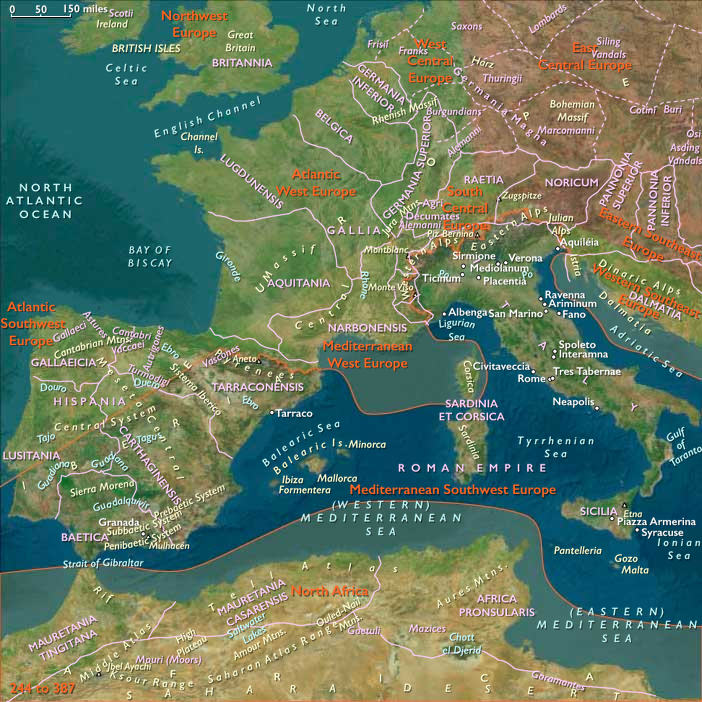
Mediterranean Southwest Europe (244–255 CE): Crisis Deepens…
244 CE to 255 CE
Mediterranean Southwest Europe (244–255 CE): Crisis Deepens and the Rise of Military Anarchy
The era 244–255 CE in Mediterranean Southwest Europe is marked by escalating instability and deepening political fragmentation, symptomatic of the broader "Crisis of the Third Century." Following the Severan dynasty's collapse, the region endures intensified pressures from external invasions, internal power struggles, and economic disruption.
Military Anarchy and Frequent Imperial Changes
With the assassination of Alexander Severus in 235 CE, Rome plunges into decades of military anarchy characterized by rapid changes in imperial leadership, often driven by rival military factions. Between 244–255 CE, multiple emperors ascend and fall in quick succession, undermining central authority and weakening the empire’s coherence.
Growing External Threats and Border Instability
During this period, Mediterranean Southwest Europe increasingly faces external threats, particularly along its northern and eastern frontiers. Germanic tribes intensify incursions across the Rhine and Danube frontiers, while the Sassanian Empire pressures Rome from the east, stretching Roman military resources thin and exacerbating internal divisions.
Economic Decline and Fiscal Crisis
The frequent shifts in power and prolonged military campaigns severely strain the empire’s economy. Inflation rises, trade suffers, and local economies face disruption as imperial resources are diverted to military defenses. This economic instability leads to decreased regional prosperity, impacting both urban centers and rural communities.
Decentralization and Provincial Autonomy
Amid weakening central governance, provincial leaders and military commanders assume increased autonomy. Mediterranean Southwest Europe experiences decentralization as local authorities and military governors assert greater regional control, attempting to maintain stability in the absence of strong central imperial oversight.
Cultural Resilience Amid Crisis
Despite growing instability, cultural and intellectual life persist, reflecting the resilience of Roman society. Literary, philosophical, and artistic expressions continue, albeit increasingly influenced by the prevailing sense of uncertainty and anxiety. Christian communities also maintain their theological debates and doctrinal developments, shaping their identity amidst broader societal upheaval.
Religious Developments and Christian Communities
Christianity continues its steady growth during this turbulent era, further solidifying its presence and influence in Roman society. The period sees continued theological refinement and organizational consolidation within Christian communities, setting important precedents for the future role of Christianity in Roman governance and culture.
Legacy of the Era
The era 244–255 CE represents a significant intensification of the Crisis of the Third Century, characterized by weakened imperial control, external threats, and internal divisions. The resilience of local governance, continued cultural activity, and enduring religious developments underscore the complexity and adaptive capacities of Roman society, even as the empire's broader structure increasingly destabilizes.
Groups
Subjects
Regions
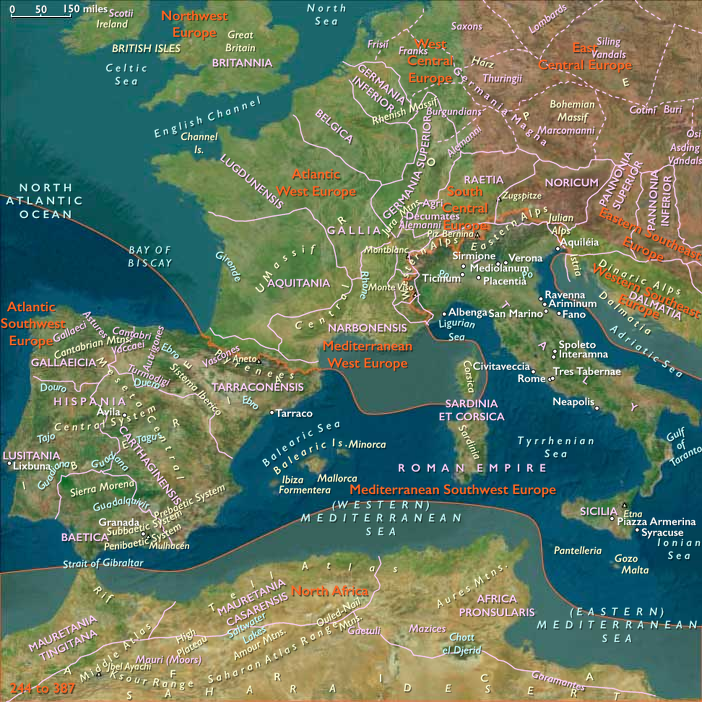
Southwest Europe
View →Subregions