
Mediterranean West Europe (964 – 1107 CE):…
964 CE to 1107 CE
Mediterranean West Europe (964 – 1107 CE): Cluniac Reform, Trencavel Rule, and Maritime Provence
Geographic and Environmental Context
Geographic and Environmental Context
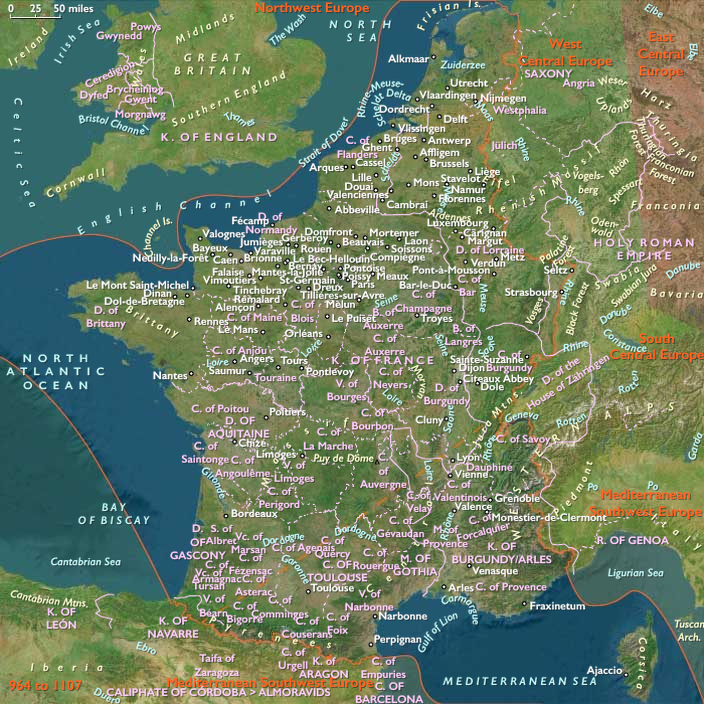
Mediterranean West Europe includes southern France (from the Rhône valley to the Pyrenees, including Languedoc, Provence, and Roussillon), Monaco, Corsica, Lyon, and the southern Jura.
-
Anchors: the Rhône Valley (Lyon as an ecclesiastical and commercial hub), the southern Jura as alpine corridors, the Provençal littoral (Avignon, Marseille, Toulon, Nice, Monaco), the Languedoc plain (Carcassonne, Béziers, Narbonne, Montpellier), the Roussillon/Catalan marches (Perpignan), and Corsica contested between Pisa and Genoa.
Climate and Environmental Shifts
-
Warm, stable conditions continued. Vineyards in Rhône and Languedoc expanded; sheep grazed uplands.
-
Rhône navigation improved; southern Jura pastures sustained dairying.
Societies and Political Developments
-
Kingdom of Arles/Burgundy encompassed Provence and Lyon under loose imperial authority until incorporated into the Holy Roman Empire (1032).
-
Counts of Toulouse dominated Languedoc; Trencavel viscounts ruled Carcassonne and Béziers.
-
Provence: counts of Barcelona expanded into Roussillon and Provence.
-
Lyon consolidated as an ecclesiastical–commercial hub; archbishopric influential in councils.
-
Corsica shifted between Pisan and Genoese influence.
-
Monaco/Nice littoral under competing Provençal and Ligurian control.
Economy and Trade
-
Rhone corridor: Lyon fairs, river trade in grain, wine, salt, cloth.
-
Ports (Marseille, Narbonne, Montpellier): expanded as Mediterranean entrepôts.
-
Agriculture: olives, vines, and cereals in Languedoc; transhumant flocks in Jura and Pyrenees.
-
Corsica: timber and pastoralism; strategic harbors.
Belief and Symbolism
-
Cluniac reform radiated from Burgundy and Jura into Provence.
-
Pilgrimage routes to Santiago de Compostela energized Languedoc and Roussillon.
Long-Term Significance
By 1107, Mediterranean West Europe was a patchwork of counts, bishops, and communes—Rhône commerce, Cluniac reform, and Catalan expansion underwrote prosperity.
Images

Mediterranean West Europe (with civilization) ©2024-25 Electric Prism, Inc. All rights reserved.
People
Groups
Topics
Commodities
Subjects
Regions
West Europe
View →Subregions
