
Middle Africa (1684–1827 CE): Slave Corridors, Shifting …
Years: 1684 - 1827
Middle Africa (1684–1827 CE): Slave Corridors, Shifting Kingdoms, and Early Colonial Footholds
Geographic & Environmental Context
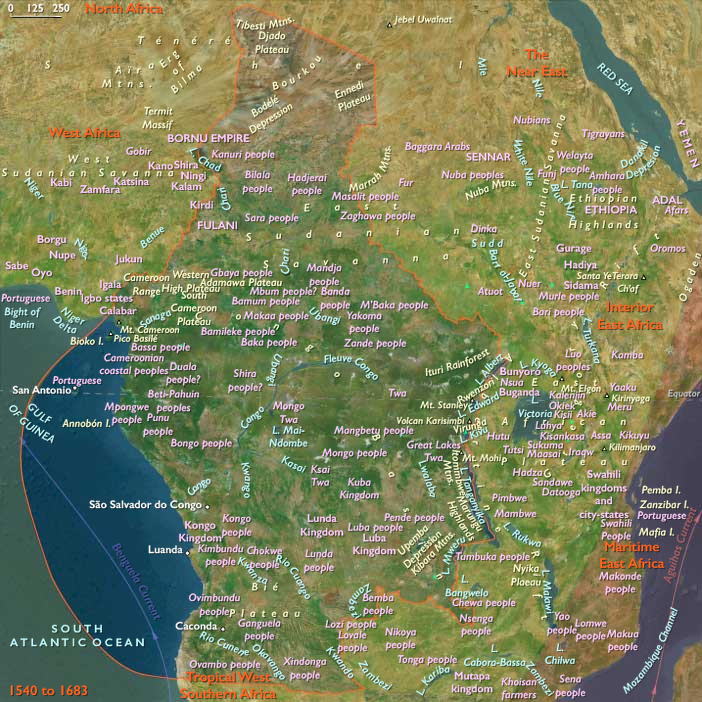
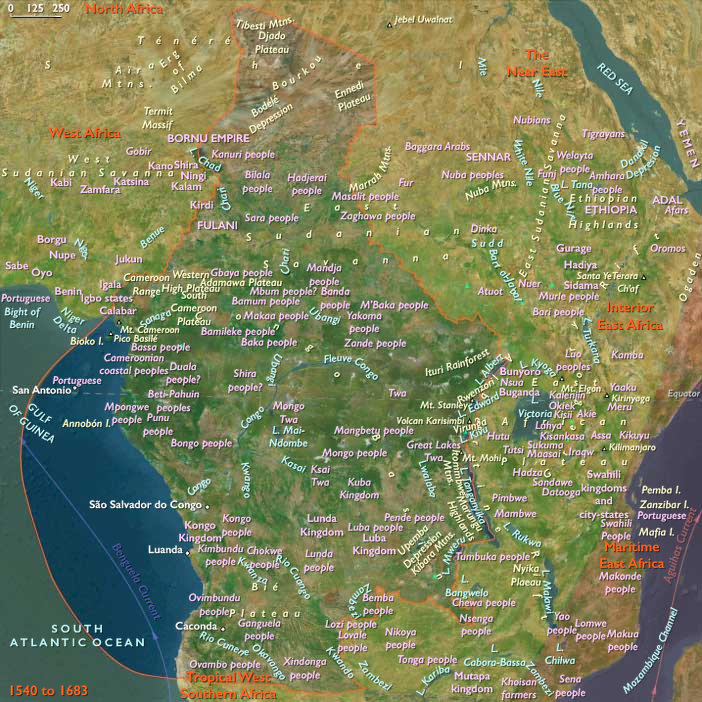
The subregion of Middle Africa includes Chad, the Central African Republic, Cameroon, Equatorial Guinea, São Tomé and Príncipe, Gabon, the Republic of the Congo, the Democratic Republic of the Congo, and Angola.Anchors included the Congo River and its Kasai and Ubangi tributaries, the Gulf of Guinea islands, the Cameroon Highlands, the savanna–Sahel interface around Lake Chad, and the Angolan coastal ports of Luanda and Benguela. Riverine forests, estuaries, and caravan paths framed both inland subsistence and global trade corridors.
Climate & Environmental Shifts
The later Little Ice Age brought irregular rainfall. Drought pulses in the Sahel and Lake Chad zones pushed herders and farmers into floodplains, while forest belts remained wetter but suffered intensified dry-season variability. Along the Congo, high-flow years enriched floodplain farming but raised risks of erosion. On São Tomé and Príncipe, soils exhausted by earlier sugar monoculture shifted toward provisioning crops.
Subsistence & Settlement
Subsistence systems remained resilient and diversified: cassava (by now fully naturalized) became a famine reserve, supplementing plantain, yam, maize, taro, and oil palm. Fisheries, forest hunting, and wild gathering (kola, honey, fruits) enriched diets. Riverbank towns grew as markets; inland villages clustered around initiation lodges and kin compounds. Northward, Lake Chad and savanna basins supported millet, sorghum, and cattle. On São Tomé, Príncipe, and Bioko, enslaved Africans farmed provisions and cacao, while smaller settler groups sustained coastal trade.
Technology & Material Culture
Iron tools, hoes, and axes underpinned farming and forest clearing. Copper, ivory, and raffia textiles circulated as wealth. Firearms became more common inland, secured through coastal brokers in exchange for captives. Canoe craft remained central to Congo navigation, while horses supported northern savanna warfare. In court centers, elaborate wood and ivory carvings, brass regalia, and masks embodied spiritual and political power. Catholic missions left churches and crosses along coasts, yet local artisans adapted forms into African idioms.
Movement & Interaction Corridors
-
Congo River system: The arterial link between forest polities and Atlantic coast, moving ivory, copper, raffia cloth, and captives.
-
Angolan coast: Luanda and Benguela grew as hubs of the Atlantic slave trade, sending hundreds of thousands to Brazil.
-
São Tomé and Príncipe: Declined as sugar producers but thrived as provisioning and transshipment points.
-
Caravan and canoe routes: Extended from interior savannas (Lunda, Luba) toward coastal entrepôts.
-
Lake Chad corridors: Connected Bornu and Hausa polities with Central African captives and ivory streams.
Cultural & Symbolic Expressions
The Kingdom of Kongo, weakened after Mbwila (1665), fractured into rival houses but retained Catholic rituals alongside ancestral shrines. In Angola, the legacy of Queen Njinga endured in Matamba’s royal cults, blending Catholic forms with nkisi practices. Inland, Luba and Lunda confederacies emerged, their kingship legitimized by sacred objects and oral epics. Across forest regions, initiation societies (mukanda, bwami) structured moral and social life. Coastal communities developed creolized Catholic festivals, while oral traditions narrated displacement and resistance under slaving pressure.
Technology & Power Shifts (Conflict Dynamics)
Firearms intensified warfare and slave raiding. The Imbangala bands of Angola institutionalized militarized raiding societies, feeding captives into coastal markets. Inland empires like Luba and Lunda expanded, taxing caravans and consolidating sacred kingship. In Kongo, civil wars fractured provinces into petty polities aligned with rival European allies. Coastal forts shifted hands: Portuguese consolidated Angola; Dutch influence receded; English, French, and Brazilian traders joined Portuguese in coastal factories.
Environmental Adaptation & Resilience
Cassava provided insurance against famine during drought or war disruption, as it thrived in poor soils and could be left unharvested until needed. Communities diversified plots with yams, maize, and legumes. Floodplain agriculture exploited annual silt renewal. Fishing and smoking technologies created portable surpluses. Kinship networks dispersed households, providing fallback shelters. Ritual societies imposed taboos on over-hunting, sustaining forest resilience.
Transition
By 1827 CE, Middle Africa was deeply embedded in the Atlantic economy. Angola was the single largest source of enslaved Africans to Brazil; the Kongo kingdom was fragmented, though its Catholic–African synthesis endured; Luba and Lunda empires rose inland as regional powers. São Tomé and Príncipe functioned as slave entrepôts and provisioning hubs. Despite violence, inland communities adapted through cassava-based farming and ritual solidarity. Yet the slaving vortex was hollowing societies, even as it forged new polities and cultural fusions that would shape the region’s colonial and postcolonial futures.
People
Groups
- Bantu peoples
- Khoikhoi
- San (Bushmen)
- Mongo peoples
- Kongo people
- Luba people
- Islam
- Zaghawa people
- Kanembu people
- Central Sudanic peoples
- Christians, Roman Catholic
- Ovimbundu
- Kakongo
- Ngoyo
- Bornu, Kingdom of
- Portugal, Avizan (Joannine) Kingdom of
- Kongo, Kingdom of
- Lunda people
- Chokwe people
- Ciyaka
- Kuba Kingdom
- Portuguese Empire
- Ndongo, Kingdom of
- Loango, Kingdom of
- Brazil, Colonial
- Bagirmi, Sultanate of
- Matamba, Kingdom of
- Ouaddai, or Wadai, Kingdom
- Spain, Habsburg Kingdom of
- Netherlands, United Provinces of the (Dutch Republic)
- England, (Stuart) Kingdom of
- Kasanje, Kingdom of
- Dutch West India Company
- Wadai Empire
- Darfur, Keira Sultanate of
- Dutch Loango-Angola
- England, Commonwealth of
- England, (Stewart, Restored) Kingdom of
- Bailundo, Kingdom of
- Kazembe
- Bornu, Kingdom of
Topics
Commodoties
Subjects
- Commerce
- Labor and Service
- Decorative arts
- Faith
- Government
- Custom and Law
- Metallurgy
- Human Migration
Regions
Subregions
Years: 1684 - 1827
People
Groups
- Bantu peoples
- Khoikhoi
- San (Bushmen)
- Mongo peoples
- Kongo people
- Luba people
- Islam
- Zaghawa people
- Kanembu people
- Central Sudanic peoples
- Christians, Roman Catholic
- Ovimbundu
- Kakongo
- Ngoyo
- Bornu, Kingdom of
- Portugal, Avizan (Joannine) Kingdom of
- Kongo, Kingdom of
- Lunda people
- Chokwe people
- Ciyaka
- Kuba Kingdom
- Portuguese Empire
- Ndongo, Kingdom of
- Loango, Kingdom of
- Brazil, Colonial
- Bagirmi, Sultanate of
- Matamba, Kingdom of
- Ouaddai, or Wadai, Kingdom
- Spain, Habsburg Kingdom of
- Netherlands, United Provinces of the (Dutch Republic)
- England, (Stuart) Kingdom of
- Kasanje, Kingdom of
- Dutch West India Company
- Wadai Empire
- Darfur, Keira Sultanate of
- Dutch Loango-Angola
- England, Commonwealth of
- England, (Stewart, Restored) Kingdom of
- Bailundo, Kingdom of
- Kazembe
- Bornu, Kingdom of
Topics
Commodoties
Subjects
- Commerce
- Labor and Service
- Decorative arts
- Faith
- Government
- Custom and Law
- Metallurgy
- Human Migration
Regions
Subregions