The slow but steady economic revival of…
964 CE to 1107 CE
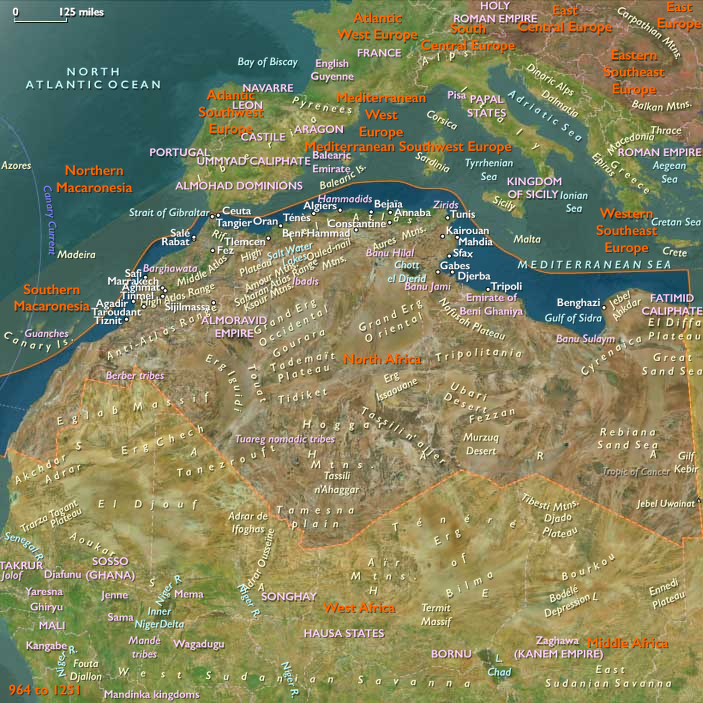
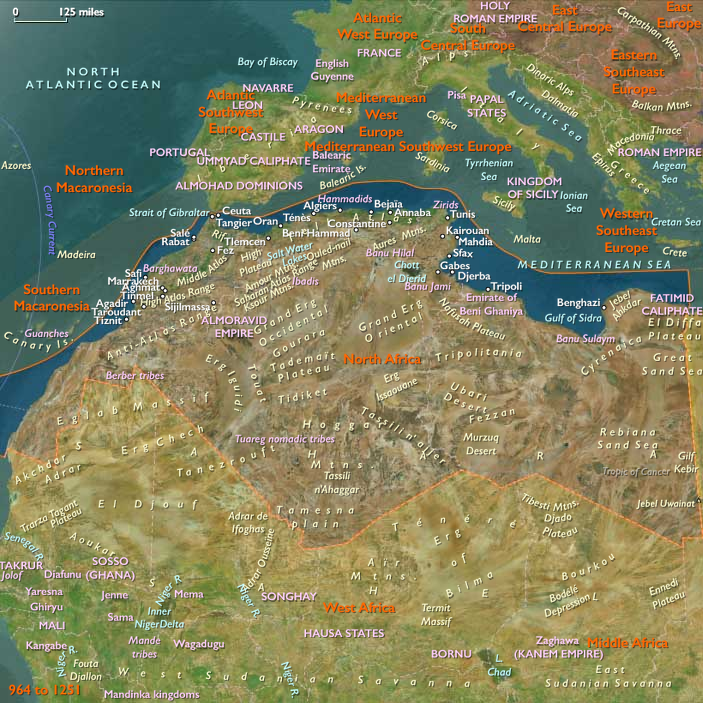
The slow but steady economic revival of Europe creates a demand for goods from the East for which Fatimid ports in North Africa and Sicily are ideal distribution centers.
Tripoli thrives on the trade in slaves and gold brought from the Sudan and on the sale of wool, leather, and salt shipped from its docks to Italy in exchange for wood and iron goods.
For many years the Fatimids threaten Morocco with invasion, but they eventually turn their armies eastward, where in the name of religion the Berbers take their revenge on the Arabs.
By 969 the Fatimids have completed the conquest of Egypt and moved their capital to the new city that they founded at Cairo, where they have established a Shia caliphate to rival that of the Sunni caliph at Baghdad.
They leave the Maghreb to their Berber vassals, the Zirids, but the Shia regime has already begun to crumble in Tripolitania as factions struggle indecisively for regional supremacy.
The Zirids neglect the economy, except to pillage it for their personal gain.
Agricultural production declines, and farmers and herdsmen became brigands.
Shifting patterns of trade gradually depress the once-thriving commerce of the towns.
In an effort to hold the support of the urban Arabs, in 1049 the Zirid amir defiantly rejects the Shia creed, breaks with the Fatimids, and initiates a Berber return to Sunni orthodoxy.
Groups
Topics
Commodities
Subjects
Regions
North Africa
View →Subregions