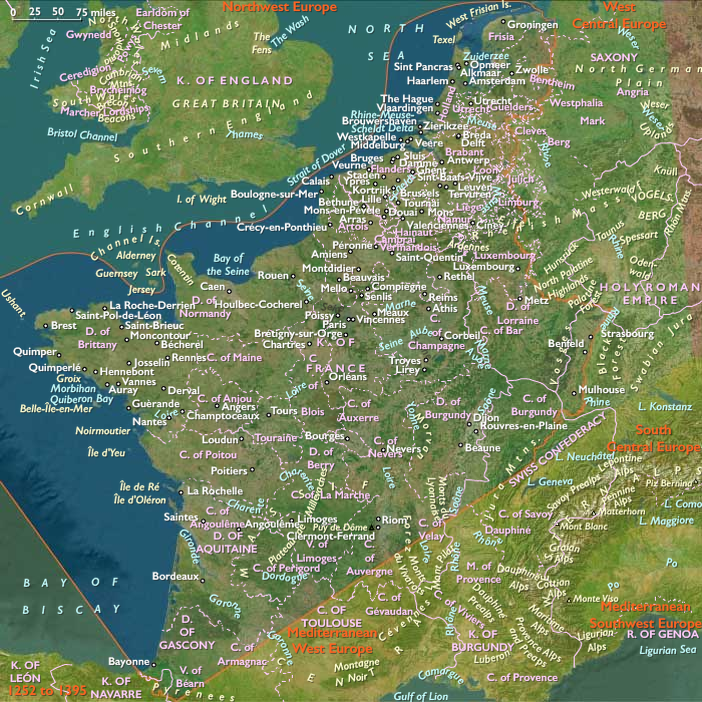
The Fall of Étienne Marcel and the…
1358 CE
The Fall of Étienne Marcel and the End of the Jacquerie
- Étienne Marcel’s decision to support Guillaume Cale's rebellion proved a costly mistake.
- When his wealthy supporters abandoned him, he lost control of Paris and was assassinated in September 1358.
- With the Dauphin now firmly in control, the Jacquerie was brutally crushed, with thousands of peasants executed.
Significance of the Jacquerie
- The rebellion highlighted the deep fractures in French society—between peasants and nobles, urban elites and monarchy, and factions within the nobility itself.
- Unlike later revolts, churches were generally not the targets of peasant fury, suggesting that the anger was primarily directed at the feudal aristocracy.
- The brutal suppression of the Jacquerie did not solve France’s deep problems, and discontent would continue to smolder for generations.
The Jacquerie of 1358 was not just a peasant revolt—it was a symptom of the complete breakdown of royal authority in France, where chaos, war, and economic hardship pushed the lower classes into a desperate uprising against the nobility.
Locations
Groups
Topics
Commodities
Subjects
Regions
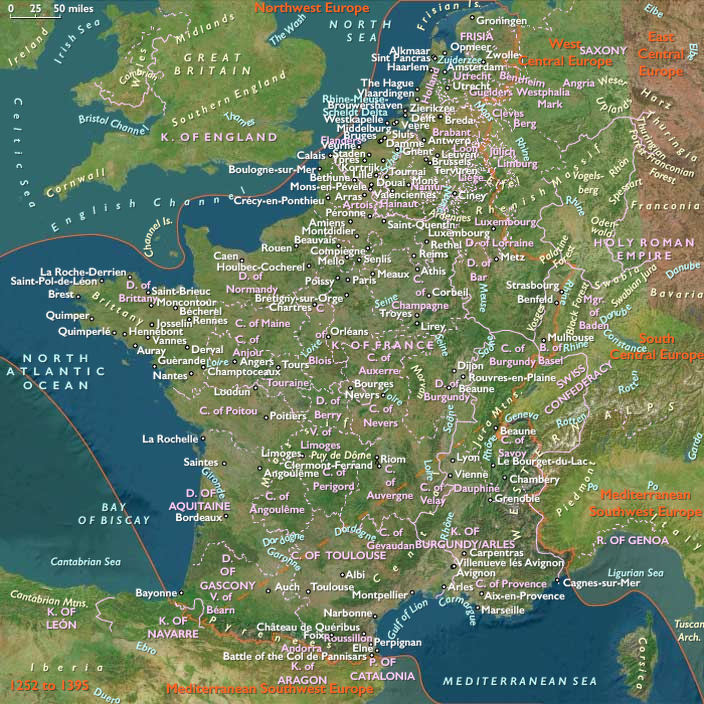
West Europe
View →Subregions