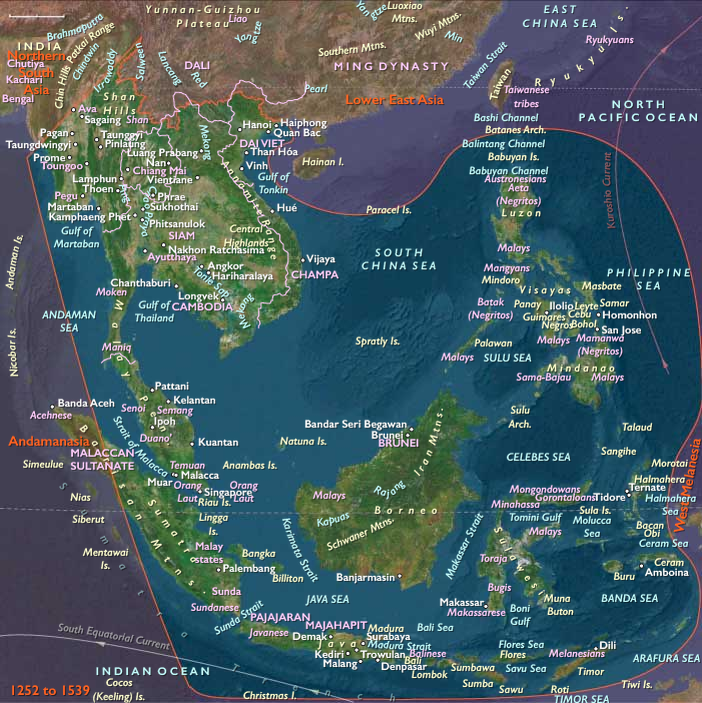
Most chiefs obey the order. However, Datu…
April 1521 CE
Most chiefs obey the order.
However, Datu Lapu-Lapu, one of the two chiefs within the island of Mactan, is the only chieftain to show his opposition.
Lapu-Lapu refuses to accept the authority of Rajah Humabon in these matters.
This opposition proves to be influential: as Antonio Pigafetta, Magellan's voyage chronicler, writes,
"On Friday, April twenty-six, Zula, the second chief of the island of Mactan, sent one of his sons to present two goats to the captain-general, and to say that he would send him all that he had promised, but that he had not been able to send it to him because of the other chief Lapu-Lapu, who refused to obey the king of Spain."
Rajah Humabon and Datu Zula suggest that Magellan go to the island of Mactan and force his subject chieftain Datu Lapu-Lapu to comply with his orders.
Magellan, seeing an opportunity to strengthen the existing friendship ties with the ruler of the Visayan region, agrees to help him subdue the resistant Lapu-Lapu.
According to the documents of Italian historian Antonio Pigafetta, Magellan tried to persuade Lapu-Lapu to comply with Rajah Humabon's orders the night before the battle:
"At midnight, sixty of us set out armed with corselets and helmets, together with the Christian king, the prince, some of the chief men, and twenty or thirty balanguais. [a type of Filipino boat] We reached Mactan three hours before dawn.
The captain did not wish to fight then, but sent a message to the natives to the effect that if they would obey the king of Spain, recognize the Christian king as their sovereign, and pay us our tribute, he would be their friend; but that if they wished otherwise, they should wait to see how our lances wounded.
They replied that if we had lances they had lances of bamboo and stakes hardened with fire.
They said that in order to induce us to go in search of them; for they had dug certain pit holes filled with spikes between the houses in order that we might fall into them."
Locations
People
Groups
Topics
Commodities
Subjects
Regions
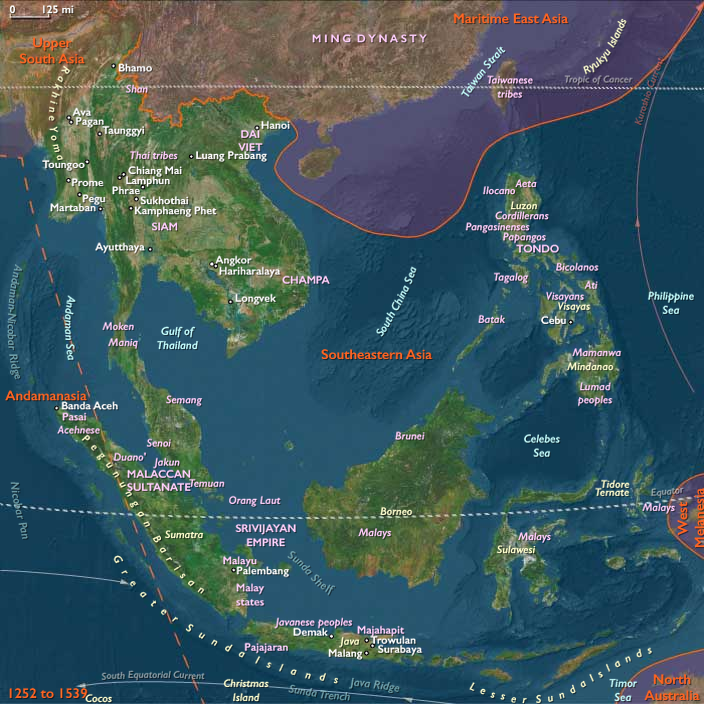
Southeast Asia
View →Subregions