
Loudoun's plan for the 1757 campaign is…
March 1757 CE
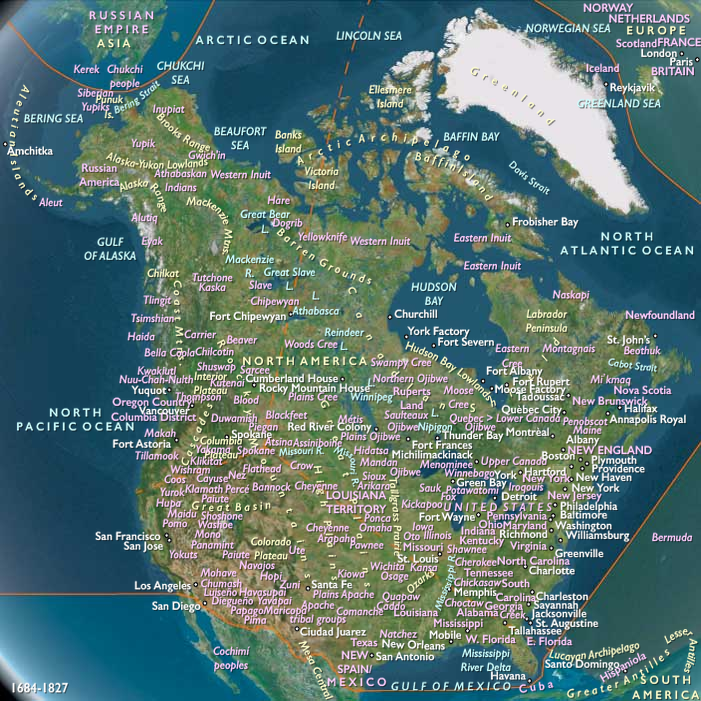
Submitted to the government in London in September 1756, the plan calls for a purely defensive posture along the frontier with New France, including the contested corridor of the Hudson River and Lake Champlain between Albany, New York and Montreal.
Following the Battle of Lake George in 1755, the French had begun construction of Fort Carillon (now known as Fort Ticonderoga) near the southern end of Lake Champlain, while the British had built Fort William Henry at the southern end of Lake George, and Fort Edward on the Hudson River, about sixteen miles (twenty-six kilometers) south of Fort William Henry.
The area between William Henry and Carillon is a wilderness dominated by Lake George.
Loudoun's plan depends on the expedition's timely arrival at Quebec, so that French troops will not have the opportunity to move against targets on the frontier, and will instead be needed to defend the heartland of the province of Canada along the Saint Lawrence River.
However, political turmoil in London over the progress of the Seven Years' War both in North America and in Europe has resulted in a change of power, with William Pitt the Elder rising to take control over military matters.
Loudoun consequently does not receive any feedback from London on his proposed campaign until March 1757.
Before this feedback arrived he had developed plans for the expedition to Quebec, and had worked with the provincial governors of the Thirteen Colonies to develop plans for a coordinated defense of the frontier, including the allotment of militia quotas to each province.
When William Pitt's instructions finally reach Loudoun in March 1757, they call for the expedition to first target Louisbourg on the Atlantic coast of Île Royale, now known as Cape Breton Island.
Although this does not materially affect the planning of the expedition, it is to have significant consequences on the frontier.
The French forces on the Saint Lawrence will be too far from Louisbourg to support it, and will consequently be free to act elsewhere.
Loudoun assigns his best troops to the Louisbourg expedition, and places Brigadier General Daniel Webb in command of the New York frontier.
He is given about two thousand regulars, primarily from the 35th and 60th (Royal American) Regiments.
The provinces are to supply Webb with about five thousand militia.
People
Daniel Webb
View →
François-Gaston de Lévis
View →
Jeffery Amherst, 1st Baron Amherst
View →
John Campbell, 4th Earl of Loudoun
View →
Louis-Antoine de Bougainville
View →
Louis-Joseph de Montcalm
View →
Pierre de Rigaud de Vaudreuil de Cavagnal, Marquis de Vaudreuil
View →
William Johnson, 1st Baronet
View →
William Pitt
View →
Groups
Iroquois (Haudenosaunee, also known as the League of Peace and Power, Five Nations, or Six Nations)
View →
Abenaki people (Amerind tribe)
View →
Wyandot, or Wendat, or Huron people (Amerind tribe)
View →
Mohawk people (Amerind tribe)
View →
Lenape or Lenni-Lenape (later named Delaware Indians by Europeans)
View →
New France (French Colony)
View →
Shawnees, or Shawanos (Amerind tribe)
View →
France, (Bourbon) Kingdom of
View →
Ohio Country
View →
New York, Province of (English Colony)
View →
Massachusetts, Province of (English Crown Colony)
View →
Britain, Kingdom of Great
View →
Topics
Regions
Northern North America
View →Subregions
