The Ahlamû (= wanderers) are first mentioned…
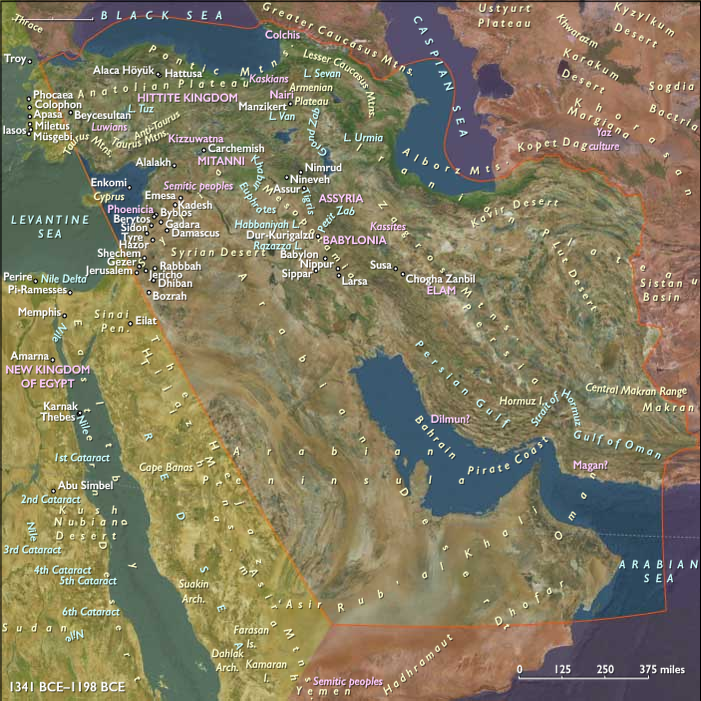
1341 BCE to 1198 BCE
The Ahlamû (= wanderers) are first mentioned in the el-Amarna letters alluding to the king of Babylon; the presence of the Ahlamû are also attested in Assyria, Nippur and even at Dilmun (Bahrain); Shalmaneser I (1274-1245 BCE) defeats Shattuara, the King of Mitanni and his Hittite and Ahlamû mercenaries are mentioned in the Jazirah.
The term appears equivalent to the Egyptian term Shasu (Shsw = wanderer), who replaced the outlaw 'Apiru (cuneiform SA.GAZ) as the major source of instability in the Egyptian Levantine empire from the reign of Tutankhamun onwards.
In the following century, the Ahlamû cut the road from Babylon to Hattusas, and Tukulti-Ninurta I (1244-1208 BCE) claims that he conquered Mari, Hana and Rapiqum on the Euphrates and "the mountain of the Ahlamû,” apparently the region of Jebel Bishri.
Commodities
Regions