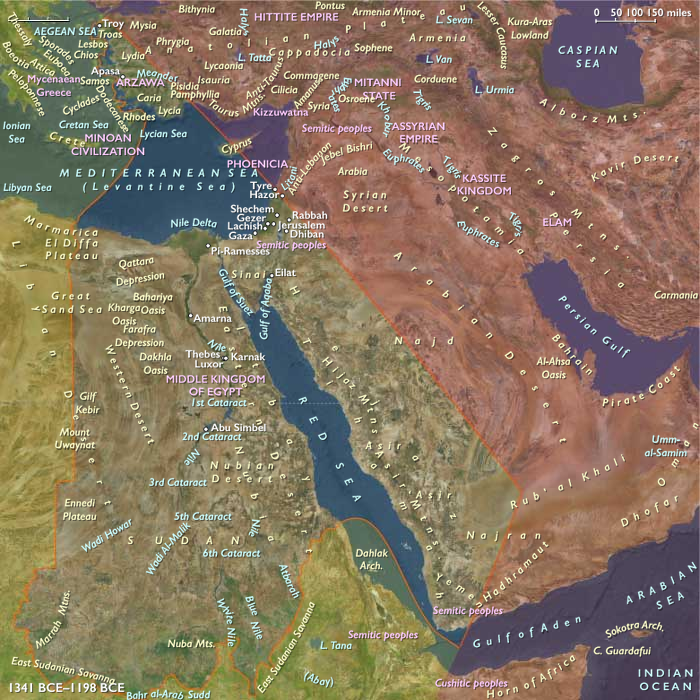
Troy VII, an archaeological layer in the…
1341 BCE to 1198 BCE
Troy VII, an archaeological layer in the mound at Hissarlik dated to the mid- to late- thirteenth century BCE, is the most often-cited candidate for the Troy of Homer.
Until excavations in 1988, Troy VII seemed to be a hilltop fort, and not a city of the size described by Homer.
The 1988 discovery of a small section of a possible city circuit wall enclosing a much larger area suggests a city at least ten times larger than earlier excavators had thought.
A walled city with towers reaching a height of nine meters, the foundations of one of its bastions measure eighteen meters by eighteen meters.
Manfred Korfmann will excavate the site in the 1980s and estimate the area of Troy VII at two hundred thousand square meters (fifty acres) or more and put its population at five to ten thousand inhabitants, a large and important city by contemporary standards.
Almost every house is provided with one or several huge storage jars that are sunk deep into the ground, with only their mouths above the level of the floor.
The crowding together of houses and the special measures to store up food supplies suggest the making of preparations to withstand a siege.
Groups
Topics
Commodities
Regions
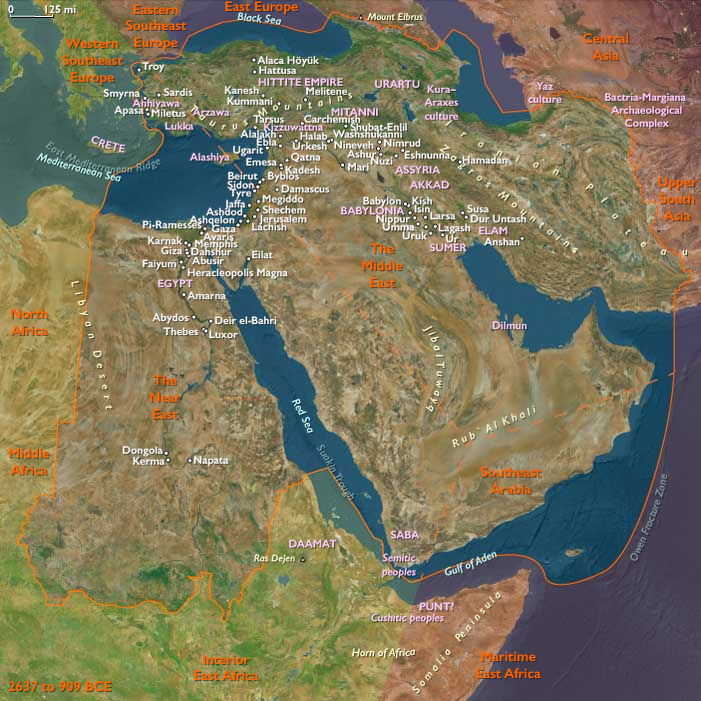
The Near and Middle East
View →Subregions