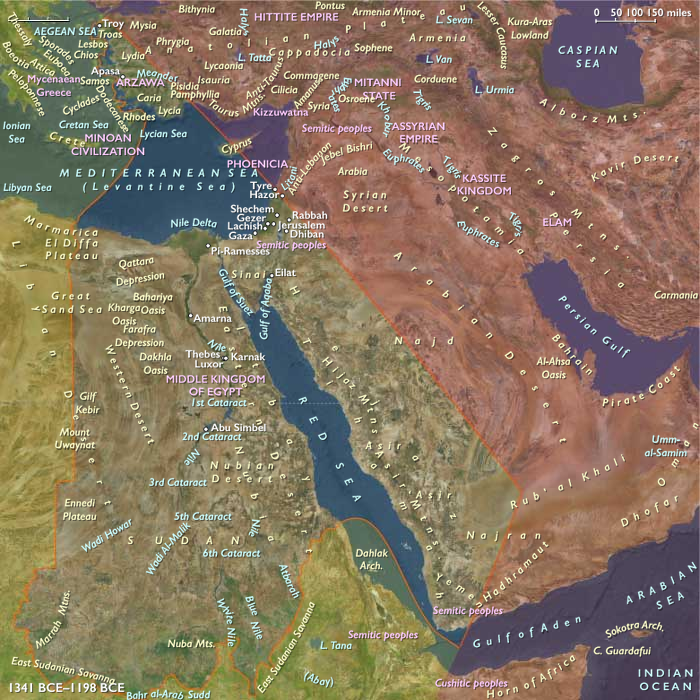
Mycenaean pottery and imitations of it appear…
1341 BCE to 1198 BCE
Mycenaean pottery and imitations of it appear at Troy itself from the fifteenth century onward.
“Troy” at this time has new and vigorous settlers who introduce domesticated horses to the Aegean area.
Further enlarging the city, they erect a magnificent circuit of cut limestone walls fifteen feet (four and a half meters) thick at the base, rising to a height of more than seventeen feet (five meters), and featuring brick ramparts and watchtowers.
Inside the citadel, which one hundred and forty meters) wide, great houses are laid out on ascending, concentric terraces.
A violent earthquake evidently destroys Troy VI a little after 1300 BCE.
Only a single arrowhead will be found in this layer, and no remains of bodies.
The ruins are leveled and covered over by new buildings, which are set close together and fill all available space inside the fortress.
Groups
Topics
Commodities
Regions
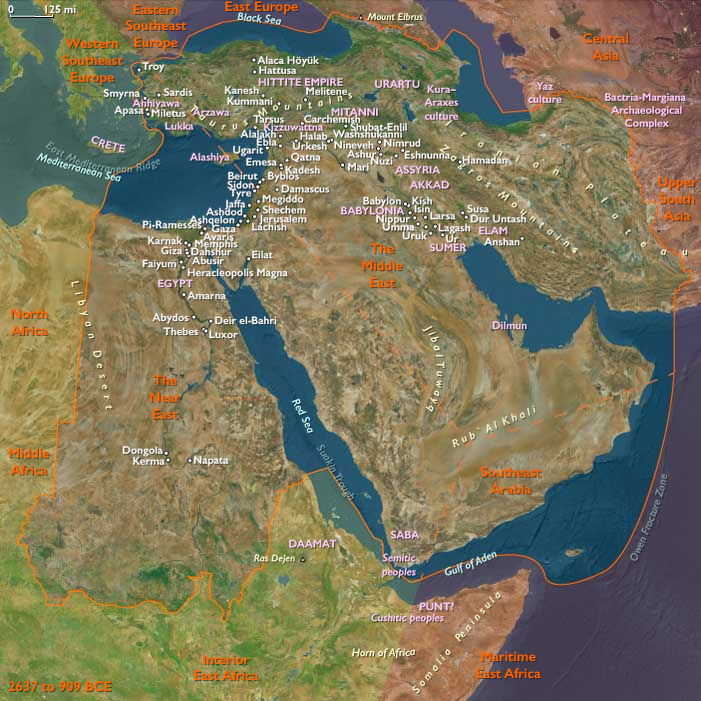
The Near and Middle East
View →Subregions