
The Proto-Arctic Populations: A Foundational Period (6093-5950…
6093 BCE to 5950 BCE
The Proto-Arctic Populations: A Foundational Period (6093-5950 BCE)
Environmental Context:
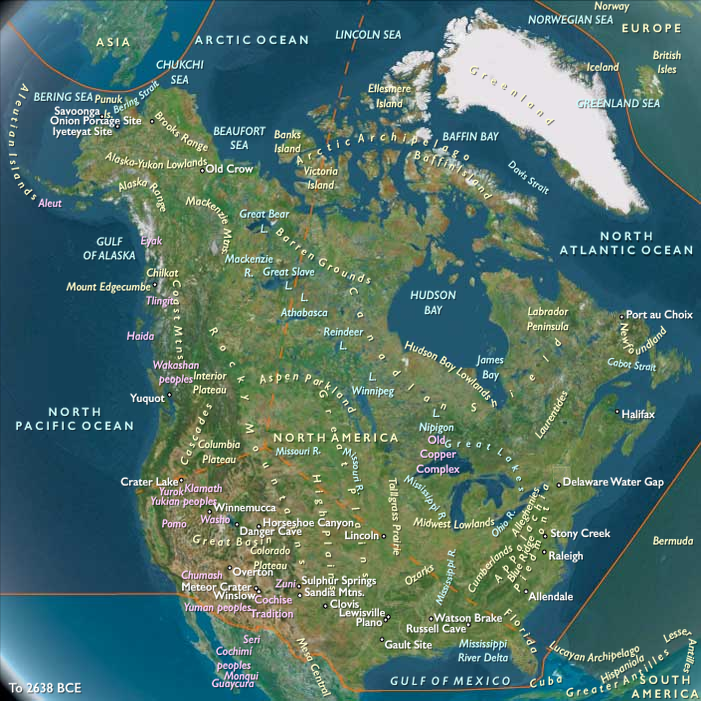
During 6093-5950 BCE, the world was experiencing the early Holocene transition. Beringia began to emerge some 36,000–40,000 years ago and maintained a complete connection between Asia and North America from about 28,000 to 10,000 BCE. By ~6000 BCE, rising sea levels were beginning to submerge the Bering land bridge, fundamentally altering migration patterns and forcing populations to adapt to new geographic realities.
The Ancestral Arctic Populations:
The period 6093-5950 BCE represents a crucial transitional time for what would become the linguistically diverse Arctic and Subarctic populations. Beginning about 6000 BCE, what had been a relatively cool and moist climate gradually became warmer and drier, with cultural changes including bands becoming larger and somewhat more sedentary.
During this era, we can envision proto-populations that carried the genetic legacy later found in multiple language families. Modern genomic research reveals that Paleo-Eskimo-related ancestry is ubiquitous among populations speaking Na-Dene and Eskimo-Aleut languages, suggesting these diverse linguistic groups share common ancestral populations from this earlier period.
The Proto-Arctic Cultural Complex (6093-5950 BCE):
Rather than distinct, separate migrations, this period likely saw:
- Adaptive Diversification: Small, mobile bands adapting to changing Arctic and Subarctic environments as ice sheets retreated and forests advanced northward.
- Proto-Linguistic Foundations: The ancestral populations from this period carried the genetic and cultural foundations that would later differentiate into the Dené-Yeniseian, Eskimo-Aleut, and other northern language families.
- Technological Innovation: Groups following grazing herds north into present-day Saskatchewan and Alberta, and by 3000 BCE reaching the Arctic tundra zone, shifting from bison to caribou hunting, suggesting technological and cultural adaptations that began in our target period.
The Broader Epoch (5950-4222 BCE):
The 1,728-year epoch following our core period would witness:
- Proto-Eskimo-Aleut Emergence: The language family is thought to have developed and diverged in Alaska between 4,000 and 6,000 years ago, placing its origins within this broader timeframe.
- Maritime Adaptations: The earliest sign of Eskimos around the Bering Strait was between 4,500-5,000 years ago, representing the culmination of maritime adaptations that likely began during our period.
- Circumpolar Networks: The establishment of cultural and genetic networks that would later facilitate the rapid spread of technologies and populations across the Arctic.
Archaeological Trajectory:
Related Paleo-Indian groups, such as the Plano culture, persisted until sometime between 6000 and 4000 BCE, meaning our target period represents the transition from these earlier traditions to the emerging Arctic-adapted cultures.
Linguistic Implications:
While we cannot reconstruct specific languages from this period, the genetic evidence suggests that 6093-5950 BCE represents the time when ancestral populations were diversifying in ways that would later manifest as:
- The proto-Dené-Yeniseian continuum linking Siberia and North America
- The foundations of Eskimo-Aleut maritime adaptations
- The development of Tsimshian and other Pacific Northwest traditions
- The establishment of population networks that facilitated later cultural exchanges
Conclusion:
The period 6093-5950 BCE emerges not as a time of isolated migrations, but as a foundational era when Arctic-adapted populations established the demographic and cultural foundations for the remarkable linguistic diversity that would characterize the northern regions of North America. The descendants of proto-Paleo-Eskimos speak widely different languages, belonging to the Chukotko-Kamchatkan, Eskimo-Aleut, and Na-Dene families, suggesting that this early period set the stage for one of the most linguistically complex regions in the world.
This narrative acknowledges that while we cannot speak with certainty about specific linguistic developments from 8,000 years ago, the archaeological and genetic evidence points to this period as foundational for understanding the shared heritage underlying the apparent diversity of northern North American indigenous languages.
Topics
Regions
Northern North America
View →Subregions
