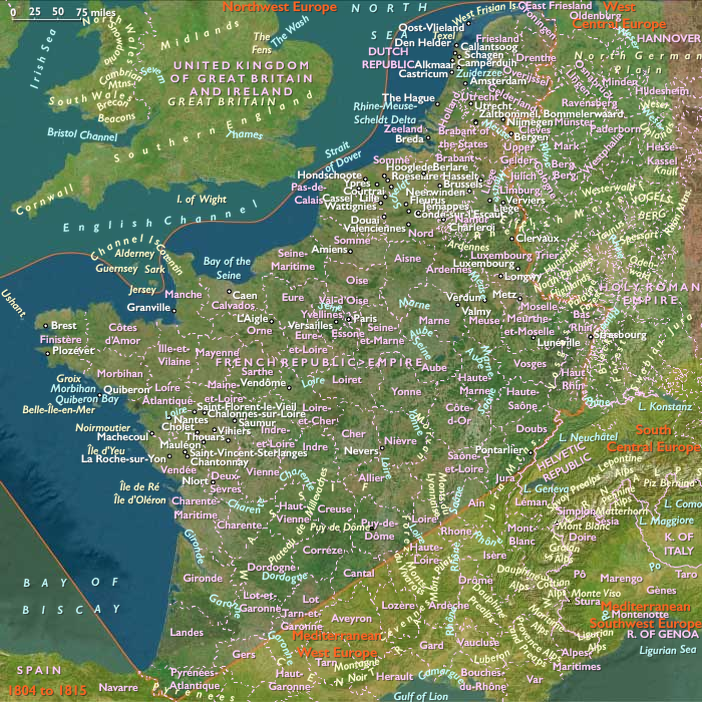
Rutger Jan Schimmelpenninck is appointed by Napoleon…
April 1805 CE
Schimmelpenninck had been appointed Batavian ambassador to Paris on June 14, 1798.
After Napoleon's coup d'état on November 9, 1799, Schimmelpenninck had become captivated with his personality.
In 1801 and 1802 he had taken part in the negotiations preceding the Treaty of Amiens, seeing himself as an independent negotiator between the French and English plenipotentiaries, Napoleon's brother Joseph Bonaparte and Charles Cornwallis, 1st Marquess Cornwallis respectively.
In practice, the Batavian Republic had no independent foreign politics anymore, and had to comply to the wishes of France.
On December 8, 1802, Schimmelpenninck had been transferred to London, but he returned half a year later, on June 14, 1803, at the request of France.
The battle between Great Britain and France and its allies, including the Batavian Republic, which had endured another coup d'état in 1801, had continued.
He returned to his office as ambassador to France on September 15, 1803, where he was noticed by Napoleon.
In 1804, Schimmelpenninck had been asked to write a new constitution for the Batavian Republic by Napoleon.
When he finished this constitution a year later, he returned to the Netherlands to assume power from the Uitvoerend Bewind, being appointed Grand Pensionary of the Batavian Republic on April 29, 1805.
It is not clear whether he felt a much desire to hold this office, but since Napoleon has more or less forced him to, he accepts.
Although on paper he is the republic's chief executive, in practice he has become a puppet to Napoleon.
As Grand Pensionary, he is assisted by a legislative body of nineteen men, which are to assemble every six months to express its opinion on the policy.
A kind of cabinet of secretaries of state is introduced.
One of the most important secretaries of state is Alexander Gogel, who manages the department of Finance.
In the short period of time in which Schimmelpenninck is Grand Pensionary he, assisted by Gogel, will implement several major reforms.
Gogel will manage to implement a new tax system.
Excise on salt, soap, peat, alcoholic beverages, grain, flour and meat will be introduced, as well as land tax, a cadastre, personal tax on clerks, horses, furniture, etc.
Schimmelpenninck's secretary of Education, Hendrik van Stralen, will implement a new education act introducing subsidized public education.
People
Regions
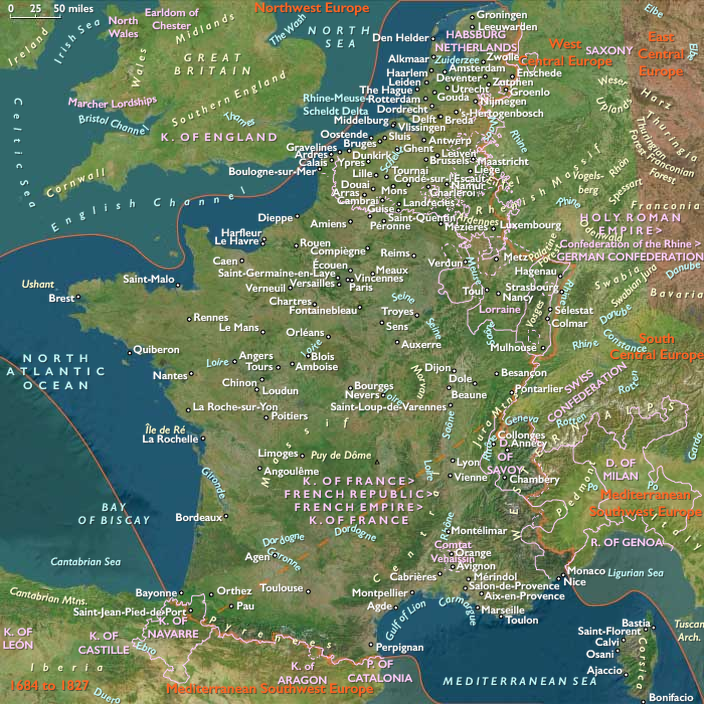
West Europe
View →Subregions