General Amherst, held responsible for the uprising…
July 1764 CE
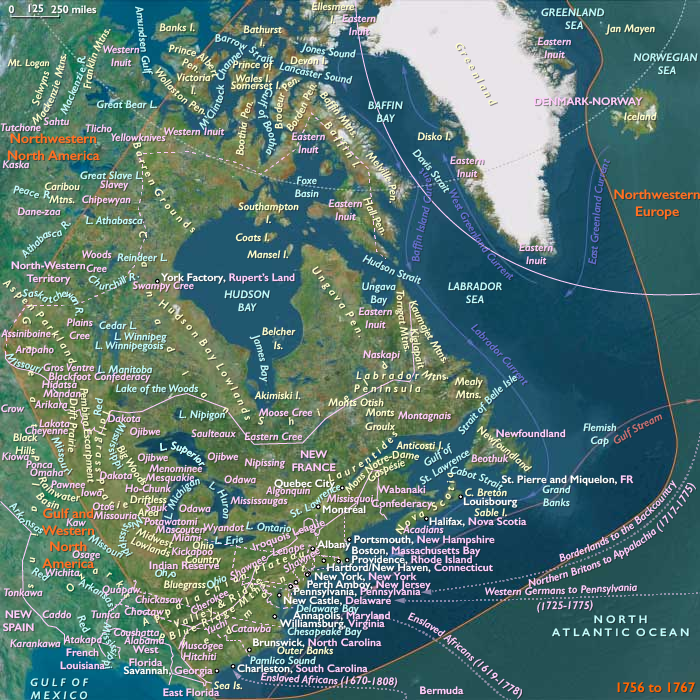
In 1764, Gage sends two expeditions into the west to crush the rebellion, rescue British prisoners, and arrest the natives responsible for the war.
According to historian Fred Anderson, Gage's campaign, which had been designed by Amherst, prolongs the war for more than a year because it focuses on punishing the natives rather than ending the war.
Gage's one significant departure from Amherst's plan is to allow William Johnson to conduct a peace treaty at Niagara, giving those natives who are ready to "bury the hatchet" a chance to do so.
Locations
People
Groups
Iroquois (Haudenosaunee, also known as the League of Peace and Power, Five Nations, or Six Nations)
View →
Wyandot, or Wendat, or Huron people (Amerind tribe)
View →
Miami (Amerind tribe)
View →
Lenape or Lenni-Lenape (later named Delaware Indians by Europeans)
View →
Ojibwa, or Ojibwe, aka or Chippewa (Amerind tribe)
View →
Odawa, or Ottawa, people (Amerind tribe)
View →
Seneca (Amerind tribe)
View →
Mascouten (Amerind tribe)
View →
Kickapoo people (Amerind tribe)
View →
Potawatomi (Amerind tribe)
View →
Wea (Amerind tribe)
View →
Piankeshaw (Amerind tribe)
View →
Susquehannock (Amerind tribe)
View →
Shawnees, or Shawanos (Amerind tribe)
View →
Ohio Country
View →
Illinois Country
View →
Britain, Kingdom of Great
View →
Mingo (Seneca-Cayuga Tribe of Oklahoma)
View →
Topics
Regions
Northern North America
View →Subregions