
Ferdinand II of Aragon Consolidates Navarre and…
August 1513 CE
Ferdinand II of Aragon Consolidates Navarre and Shifts Focus to Guyenne (1513)
With Navarrese resistance crushed by early 1513, Ferdinand II of Aragon swiftly consolidated his rule over Upper Navarre, ensuring Castilian dominance over the region. With his control now secure, he redirected his attention to supporting England in a new offensive against France in Guyenne (Aquitaine).
Finalizing the Annexation of Navarre (1513)
- By March 1513, the pro-Castilian Beaumont party had secured the Parliament of Navarre, officially recognizing Ferdinand as King of Navarre.
- Diego Fernández de Córdoba was installed as the first Castilian Viceroy, overseeing the full integration of Upper Navarre into the Crown of Castile.
- Navarrese institutions (fueros) were nominally preserved, but Castilian political and military control was now absolute.
- Lower Navarre remained under John III of Albret, but with no realistic chance of reclaiming Upper Navarre without major French intervention.
Ferdinand’s Strategic Pivot: The English Offensive in Guyenne
- With Navarre secured, Ferdinand shifted focus to the war in France, aligning with Henry VIII of Englandagainst Louis XII of France.
- England had been planning a renewed attack on Guyenne (Aquitaine), and Ferdinand saw an opportunity to weaken France while expanding his own influence.
- The offensive was part of the larger Italian Wars (1494–1559), where Ferdinand and England aimed to pressure France on multiple fronts.
Impact of Ferdinand’s Conquest of Navarre
-
Navarre is Effectively Absorbed into Castile
- While Ferdinand promised to respect Navarrese laws, over time, Castilian influence gradually eroded local autonomy.
-
French-Navarrese Resistance Continues in the North
- Lower Navarre remained independent, ruled by the House of Albret, though without realistic means to reconquer the south.
-
Strengthened Spanish Influence in European Conflicts
- With Navarre secure, Ferdinand could fully engage in the wider struggle against France, attempting to expand Spanish power in Guyenne and Italy.
Conclusion: Navarre Becomes a Spanish Stronghold
By 1513, Ferdinand had fully secured Upper Navarre, paving the way for its permanent integration into the Spanish monarchy. With his northern frontier secure, he could now direct Castile’s military resources toward the broader European conflict, marking the next phase of his ambitions against France and the House of Albret.
Locations
People
Groups
Commodities
Subjects
Regions
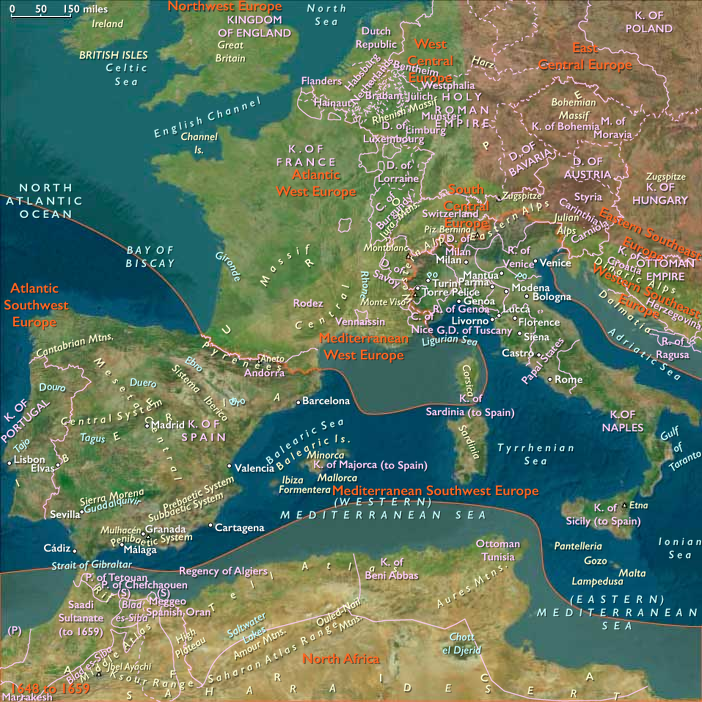
Southwest Europe
View →Subregions
