
North Africa (1252 – 1395 CE): Hafsid, …
Years: 1252 - 1395
North Africa (1252 – 1395 CE): Hafsid, Marinid, and Zayyanid Rivalries
Geographic and Environmental Context
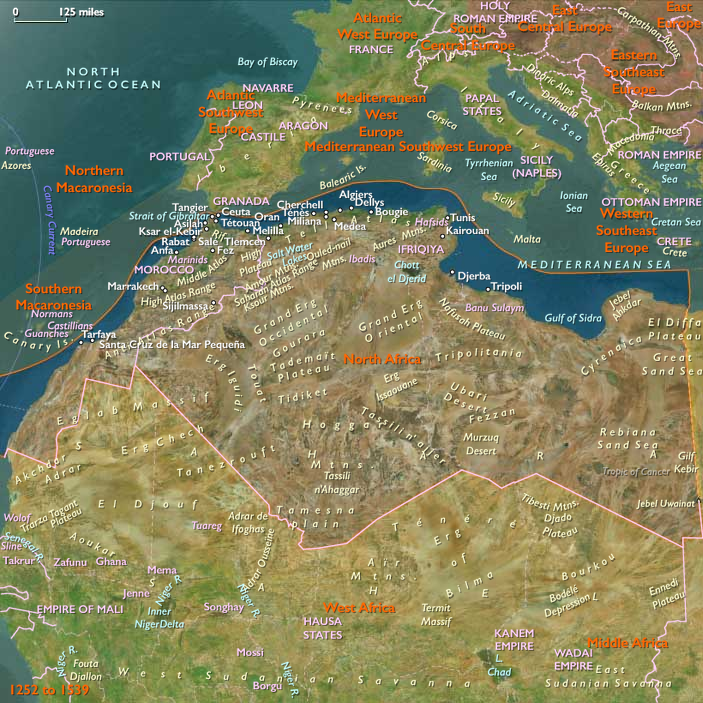
North Africa includes the Maghreb littoral and inland from modern Morocco through Algeria, Tunisia, and Libya (west of Egypt and the Nile). It also includes Western Sahara.
-
Anchors: the Atlas Mountains, Tell coastlands, Sahara fringes, and Ifriqiya (Tunisia–eastern Algeria–western Libya).
Climate and Environmental Shifts
-
The Little Ice Age onset (~1300) brought cooler, drier intervals.
-
Pastoralism expanded into degraded agricultural zones.
-
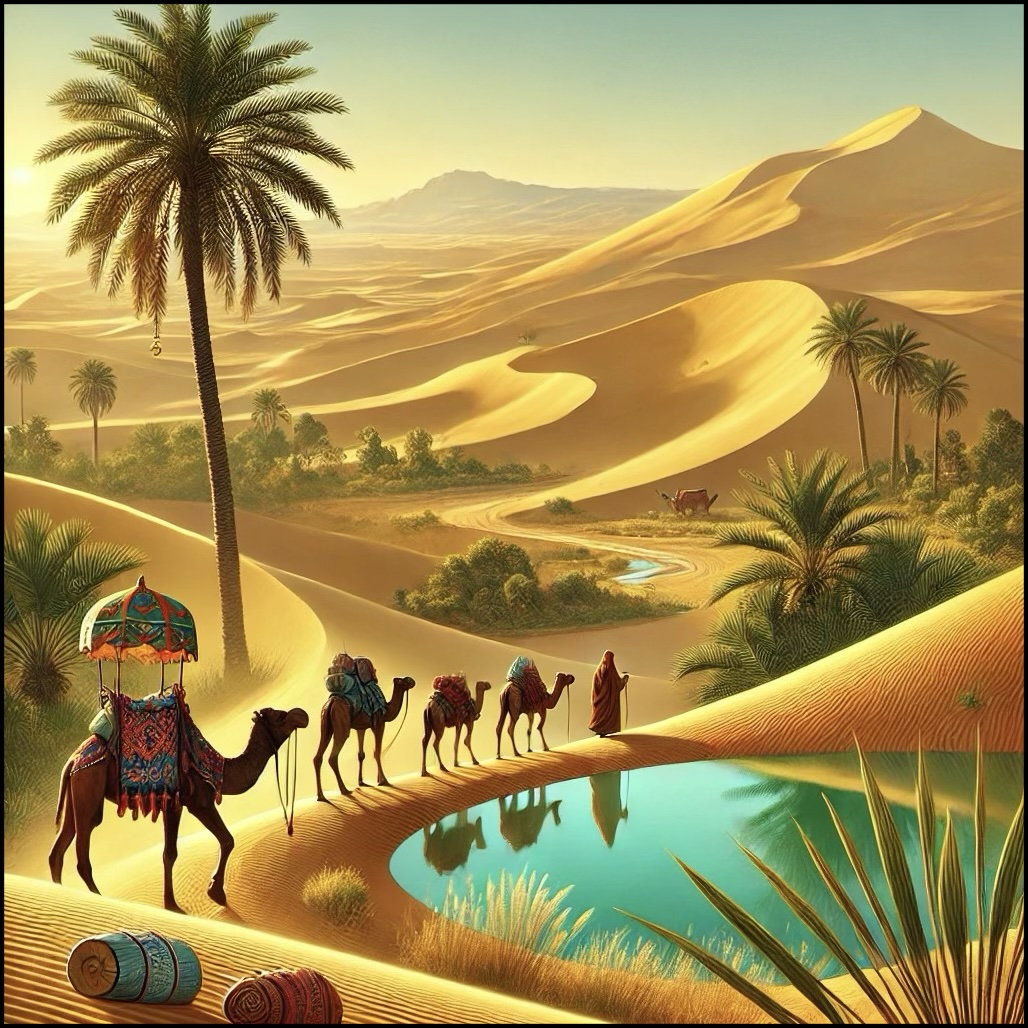
Caravans adjusted routes to shifting oases.
Societies and Political Developments
-
Marinid dynasty (Morocco): replaced Almohads; ruled from Fez; intervened in al-Andalus (Granada).
-
Zayyanids (Abd al-Wadids of Tlemcen): ruled western Algeria, balancing between Marinids and Hafsids.
-
Hafsid dynasty (Ifriqiya/Tunisia): successor of Almohads; based in Tunis; became a major Mediterranean power.
-
Merinid–Hafsid–Zayyanid rivalries produced frequent wars but also vibrant urban culture.
-
Western Sahara and caravan tribes: Sanhaja and Maqil groups (including Banu Hilal descendants) controlled Saharan routes.
Economy and Trade
-
Trans-Saharan trade: gold, slaves, salt, copper from Mali and Niger basins enriched Maghreb states.
-
Mediterranean trade: Tunis and Fez thrived in exchanges with Genoa, Venice, and Aragon.
-
Agriculture: cereals, olives, dates, citrus supported urban growth.
Belief and Symbolism
-
Islam: Maliki orthodoxy dominant; Sufi orders flourished.
-
Cities: Fez, Tunis, and Tlemcen became centers of Islamic scholarship, law, and art.
-
Architecture: Marinid madrasas in Fez; Hafsid monuments in Tunis.
Long-Term Significance
By 1395, North Africa was a tripartite system of Marinids, Hafsids, and Zayyanids, with Western Sahara tribescontrolling caravan routes. Despite rivalries, the Maghreb remained deeply tied to Mediterranean commerce and West African gold.
North Africa (with civilization) ©2024-25 Electric Prism, Inc. All rights reserved.
People
- Abu Al-Hasan 'Ali ibn 'Othman
- Abu Yusuf Yaqub ibn Abd al-Haqq
- Ibn Battuta
- Ibn Khaldūn
- Muhammad I al-Mustansir
Groups
- Arab people
- Berber people (also called Amazigh people or Imazighen, "free men", singular Amazigh)
- Tuaregs, or Touareg, people
- Sanhaja (Berber tribal confederacy)
- Kutama
- Maghrawa (Zenata Berber tribe)
- Miknasa (Zenata Berber tribe)
- Masmuda (Berber tribal confederacy)
- Islam
- Muslims, Sunni
- Muslims, Kharijite
- Muslims, Shi'a
- Zenata (Berber tribal confederacy)
- Muslims, Ibadi
- Sijilmassa, Berber state of
- Barghawata Confederacy (Masmuda Berber tribal confederacy)
- Abbasid Caliphate (Baghdad)
- Aragón, Kingdom of
- Almohad Caliphate
- Venice, (Most Serene) Republic of
- Ifriqiya, Hafsid (Banu Hafs) (first) Caliphate of
- Tlemcen, Kingdom of
- Zayyanid dynasty
- Marinid Dynasty (Sultanate of Morocco)
- Sicily, Aragonese Kingdom of
Commodoties
Subjects
Regions

Subregions
Years: 1252 - 1395
North Africa (with civilization) ©2024-25 Electric Prism, Inc. All rights reserved.
People
- Abu Al-Hasan 'Ali ibn 'Othman
- Abu Yusuf Yaqub ibn Abd al-Haqq
- Ibn Battuta
- Ibn Khaldūn
- Muhammad I al-Mustansir
Groups
- Arab people
- Berber people (also called Amazigh people or Imazighen, "free men", singular Amazigh)
- Tuaregs, or Touareg, people
- Sanhaja (Berber tribal confederacy)
- Kutama
- Maghrawa (Zenata Berber tribe)
- Miknasa (Zenata Berber tribe)
- Masmuda (Berber tribal confederacy)
- Islam
- Muslims, Sunni
- Muslims, Kharijite
- Muslims, Shi'a
- Zenata (Berber tribal confederacy)
- Muslims, Ibadi
- Sijilmassa, Berber state of
- Barghawata Confederacy (Masmuda Berber tribal confederacy)
- Abbasid Caliphate (Baghdad)
- Aragón, Kingdom of
- Almohad Caliphate
- Venice, (Most Serene) Republic of
- Ifriqiya, Hafsid (Banu Hafs) (first) Caliphate of
- Tlemcen, Kingdom of
- Zayyanid dynasty
- Marinid Dynasty (Sultanate of Morocco)
- Sicily, Aragonese Kingdom of
Commodoties
Subjects
Regions
Subregions