
North Africa (153–142 BCE) The Fall …
Years: 153BCE - 142BCE
North Africa (153–142 BCE)
The Fall of Carthage, Cyrenaic Stability, and Berber Continuity
Carthage's Destruction in the Third Punic War
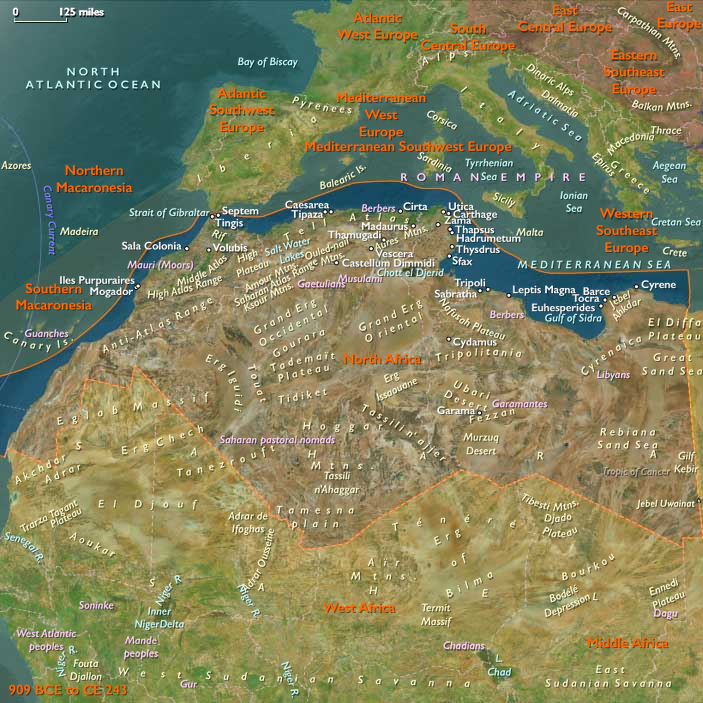
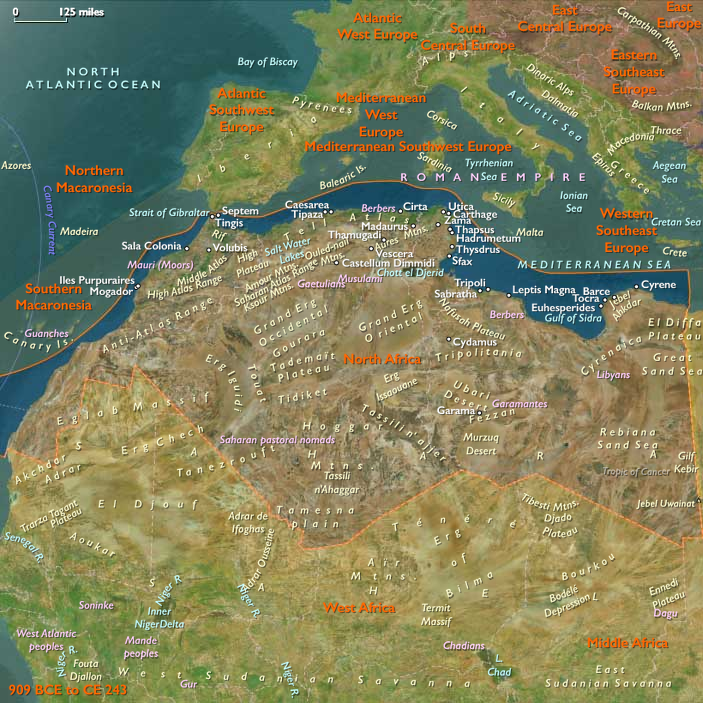
Between 153 and 146 BCE, Carthage continues its cautious diplomatic and economic recovery until tensions with Rome lead to the outbreak of the Third Punic War. This conflict, markedly smaller than the previous Punic Wars, concentrates primarily on Tunisia and culminates in the brutal Siege of Carthage (149–146 BCE). Roman forces completely destroy the city, annex all remaining Carthaginian territories, and either kill or enslave the entire population, decisively ending Carthage's existence as an independent entity in 146 BCE.
Cyrenaica’s Continued Political Stability and Economic Prosperity
Despite Carthage’s catastrophic fall, Cyrenaica remains stable and prosperous under continued Ptolemaic oversight. The Greek Pentapolis—Cyrene, Barce (Al Marj), Euhesperides (Benghazi), Teuchira (Tukrah), and Apollonia (Susah)—maintains economic vigor through sustained trade in grain, wine, wool, livestock, and the valuable medicinal plant Silphium.
Political and economic stability fostered by previous Ptolemaic diplomatic interventions allows Cyrenaica to thrive despite broader regional turmoil. Cyrene continues to flourish as a renowned center of Hellenistic culture, attracting scholars and philosophers and maintaining its reputation for intellectual and cultural vibrancy.
Micipsa’s Rule and Regional Influence
During 153–142 BCE, King Micipsa governs Numidia, maintaining the kingdom’s strong economic base and stable diplomatic relationship with Rome, preserving its status as a crucial regional player.
Berber Economic Integration and Cultural Stability
Berber communities remain economically integral to the region, maintaining robust trade relationships and contributing significantly to agriculture and craftsmanship. Coastal trade hubs, especially Oea (Tripoli), continue to thrive, further reinforcing economic connections between coastal and inland Berber populations.
Inland Berber tribes sustain their traditional governance structures, benefiting indirectly from coastal prosperity and continuing their cultural and economic resilience despite Carthage’s collapse.
Ongoing Cultural Exchange and Syncretism
The interaction among Berber, Greek, and now Roman influences continues enriching local traditions in art, pottery, textiles, and metallurgy. Religious syncretism remains vibrant, harmoniously blending indigenous Berber beliefs with Phoenician, Greek, and emerging Roman religious customs, enhancing regional cultural diversity.
Regional Reconfiguration and Long-Term Stability
By 142 BCE, North Africa undergoes significant geopolitical reconfiguration following Carthage’s destruction. Cyrenaica’s stable governance, continued economic prosperity, and the enduring resilience of Berber communities collectively enable the region to navigate the post-Carthaginian era successfully, positioning North Africa securely within the evolving Mediterranean landscape.
People
Groups
- Berber people (also called Amazigh people or Imazighen, "free men", singular Amazigh)
- Carthage, Kingdom of
- Cyrene
- Roman Republic
- Numidia, Kingdom of
- Cyprus, Roman
- Cyrenaica, (Ptolemaic) Kingdom of
- Africa (Roman Province)
- Africa proconsularis (Roman province)
- Tripolitania (Roman province)
Topics
Commodoties
Subjects
Regions
Subregions
Years: 153BCE - 142BCE
People
Groups
- Berber people (also called Amazigh people or Imazighen, "free men", singular Amazigh)
- Carthage, Kingdom of
- Cyrene
- Roman Republic
- Numidia, Kingdom of
- Cyprus, Roman
- Cyrenaica, (Ptolemaic) Kingdom of
- Africa (Roman Province)
- Africa proconsularis (Roman province)
- Tripolitania (Roman province)
Topics
Commodoties
Subjects
Regions
Subregions