
North Africa (489–478 BCE) Carthaginian Dominance, …
Years: 489BCE - 478BCE
North Africa (489–478 BCE)
Carthaginian Dominance, Strategic Rivalries, and Regional Development
Carthage’s Continued Expansion and Military Strength
From 489 to 478 BCE, Carthage further asserts its influence across the Western Mediterranean, continuing its strategic expansion in western Sicily, Sardinia, and the Balearic Islands. Under continued leadership of the Magonid dynasty, Carthage’s powerful naval forces and extensive mercenary armies—including significant Greek contingents—ensure protection of its vital maritime trade routes and colonies, securing regional dominance.
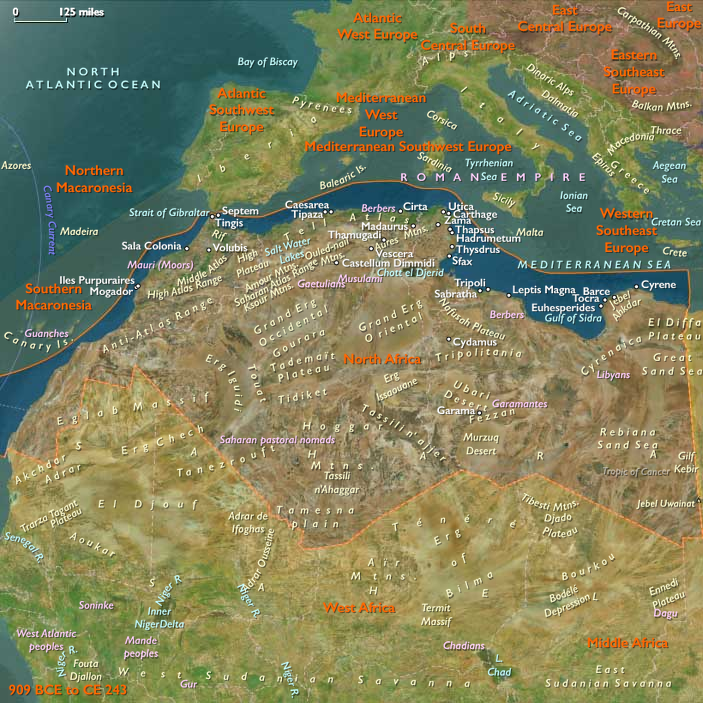
Carthage, consistently seeking to remove Greek opposition, might have even considered an alliance with the Persian king Xerxes—though historical accounts remain uncertain—aimed at jointly defeating their common enemy. However, thwarted by persistent Greek resistance in Sicily, Carthage increasingly redirects its attention to consolidating control over North African territories, extending from west of Cyrene to the Straits of Gibraltar.
Diplomatic Maneuvering and Conflict in Sicily
Diplomatic relations remain essential to Carthaginian strategy, yet tensions and conflict with Greek city-states escalate, particularly on Sicily. Ongoing competition for control of this strategically critical island prompts intensified military engagements. Gelo, ruler of Syracuse, emerges as a particularly formidable opponent, maintaining effective resistance to Carthaginian ambitions. Battles during this period underline Carthage’s resolve to maintain its economic and strategic footholds against Greek incursions.
Cyrene’s Sustained Prosperity and Expansion
Cyrene continues its economic and cultural flourishing, reinforced by strong exports of grain, fruit, horses, and particularly the prized medicinal plant Silphium. Its wealth drives ongoing construction projects, prominently featuring temples and civic structures, signifying sustained prosperity. The interconnected cities of the Pentapolis—Barce (al-Marj), Taucheira (Tukrah), and Euhesperides (Benghazi)—further strengthen their regional importance through independent economic success and cultural integration.
Deepening Berber Integration and Autonomy
Coastal Berber communities remain deeply enmeshed in Carthaginian trade networks, leveraging advanced Phoenician agricultural practices, maritime skills, and artisanal crafts. Economic integration enhances coastal prosperity and reinforces stability while preserving distinct Berber cultural identities. Inland Berber populations, largely insulated from direct coastal political dynamics, maintain traditional social structures and continue to benefit indirectly from expanded regional trade.
Cultural Vibrancy and Religious Syncretism
Cultural interactions among Berber, Carthaginian, and Greek communities continue to thrive, enriching regional artistic and artisanal traditions. Hybrid cultural forms flourish notably in pottery, textiles, and metalwork. Religious syncretism expands further, integrating Berber spiritual beliefs with Phoenician and Greek traditions, underscoring the region’s complex cultural identity.
Foundation for Ongoing Influence
By 478 BCE, North Africa remains politically stable and economically vibrant, supported by Carthaginian maritime dominance, Cyrene’s continued prosperity, and thriving integrated Berber communities. Diplomatic and military strategies effectively manage regional tensions, laying a robust foundation for continued regional prominence and enduring influence within the broader Mediterranean geopolitical landscape.
People
Groups
- Phoenicians
- Tyre, Kingdom of (Phoenicia)
- Berber people (also called Amazigh people or Imazighen, "free men", singular Amazigh)
- Sicily, classical
- Carthage, Kingdom of
- Greeks, Classical
- Magna Graecia
- Syracuse, Corinthian city-state of
- Etruria
- Cyrene
- Achaemenid, or First Persian, Empire
- Roman Republic
Commodoties
Subjects
Regions
Subregions
Related Events
Showing 4 events out of 4 total
Years: 489BCE - 478BCE
People
Groups
- Phoenicians
- Tyre, Kingdom of (Phoenicia)
- Berber people (also called Amazigh people or Imazighen, "free men", singular Amazigh)
- Sicily, classical
- Carthage, Kingdom of
- Greeks, Classical
- Magna Graecia
- Syracuse, Corinthian city-state of
- Etruria
- Cyrene
- Achaemenid, or First Persian, Empire
- Roman Republic
Commodoties
Subjects
Regions
Subregions