North Polynesia (909 BCE – 819 CE):…
909 BCE to 819 CE
North Polynesia (909 BCE – 819 CE): Proto-Contact Horizons — Reconnaissance Voyages and Ecological Baseline
Geographic & Environmental Context
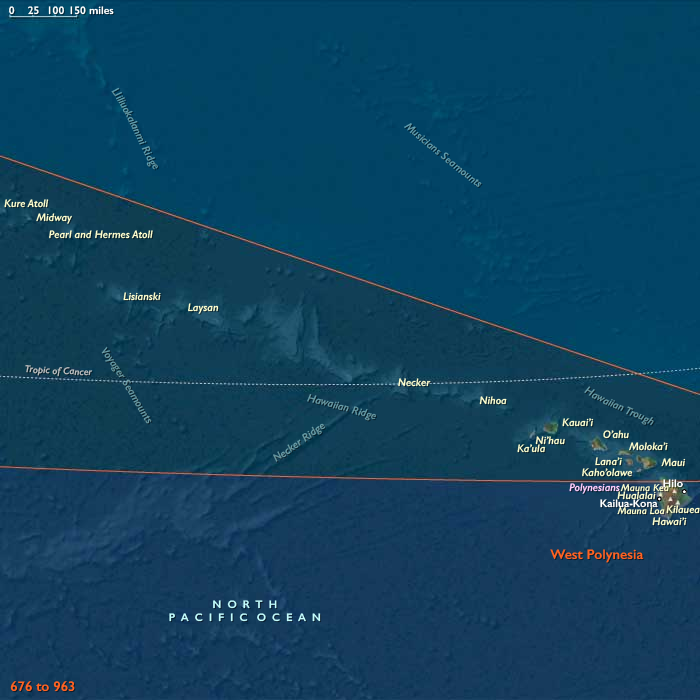
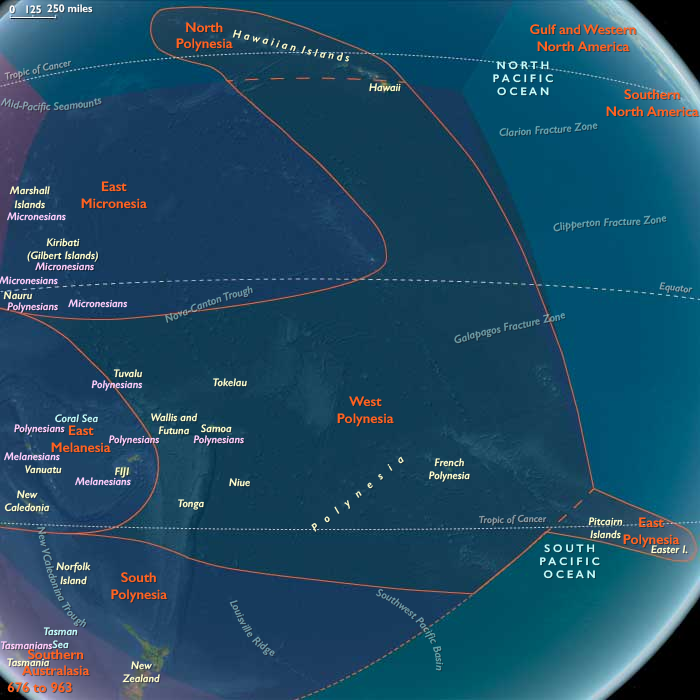
North Polynesia includes the Hawaiian Islands chain except Hawaiʻi Island (the Big Island) — principally Oʻahu, Maui, Kauaʻi, Molokaʻi, Lānaʻi, Niʻihau — plus Midway Atoll.
-
Anchors: Windward Oʻahu–Kauaʻi reef passes and fresh-watered valleys; Maui Nui lee bays (canoe landfalls); Midway as a remote atoll far to the northwest.
Climate & Environmental Shifts
-
Slightly cooler first-millennium swings; trades remained reliable; winter swell seasons punctuated long-range voyaging windows.
Societies & Voyaging (Approach Phase)
-
In East/West Polynesia beyond this subregion, voyaging guilds perfected star compasses, swell-reading, and bird-pathfinding.
-
Probable reconnaissance or rare landfalls reached the Hawaiian high islands by the late first millennium CE (debated), yet enduring settlement most likely post-900–1000 CE.
Ecological Baseline at Threshold of Settlement
-
Pristine forests on valley floors and ridges; reef-lagoon systems at peak diversity; seabird rookeries across offshore stacks; no introduced mammals (rats, pigs, dogs) yet.
-
Streams ran clear; wetlands unmodified—ideal templates for later loʻi kalo (irrigated taro pondfields) and loko iʻa (fishponds).
Transition Toward the Medieval Period
By 819 CE, North Polynesia stood on the cusp: the islands were still uninhabited, but Polynesian voyaging capacity and wayfinding knowledge had matured to the point that permanent colonization would follow in the 10th–12th centuries, inaugurating the engineered ridge-to-reef societies documented in our later-age entries.
Commodities
Regions
Polynesia
View →Subregions