Northeast Europe (1348–1359 CE): Recovery, Realignments, and…
1348 CE to 1359 CE
Northeast Europe (1348–1359 CE): Recovery, Realignments, and Regional Consolidation
Introduction
Between 1348 and 1359 CE, Northeast Europe confronted significant demographic, economic, and political challenges triggered by the devastating effects of the Black Death, alongside ongoing territorial realignments. The period witnessed gradual regional stabilization, strategic consolidation by the Teutonic Order, and economic adaptation by urban centers.
Impact and Recovery from the Black Death
The arrival of the Black Death around 1348 severely impacted populations throughout Northeast Europe, including in major trading cities such as Reval (Tallinn), Riga, Königsberg, and Visby. This plague caused dramatic demographic losses, labor shortages, economic disruption, and social upheaval. Over the decade, recovery initiatives gradually emerged, reshaping economic structures, labor relations, and trade patterns, as the region adapted to these profound demographic changes.
Consolidation of Teutonic Rule in Estonia and Prussia
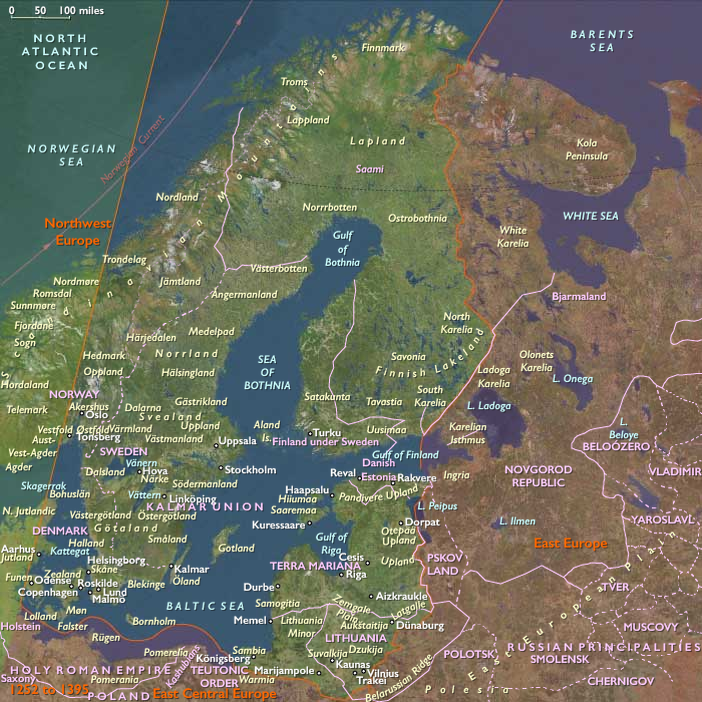
Following the transfer of Estonia from Danish to Teutonic Order control in 1346, the Order consolidated its regional authority throughout this period. Administrative and military fortifications, especially at strategic locations such as Toompea Hill in Reval (Tallinn), significantly enhanced their ability to manage and defend the territory. In Prussia, the Order implemented rigorous administrative measures to strengthen local governance and stimulate economic recovery following the plague.
Continued Stability within the Livonian Confederation
The Livonian Confederation, centered in Riga, maintained relative stability by strengthening diplomatic networks, internal governance, and trade routes. Despite experiencing significant economic setbacks during the plague years, the Confederation effectively leveraged its strategic position to restore economic productivity and urban growth by the end of the decade.
Swedish Integration Efforts in Finland
Sweden continued strengthening its presence in southern Finland, fortifying defensive positions, reinforcing administrative structures, and enhancing ecclesiastical influence. These efforts bolstered regional security and fostered a more cohesive political and cultural integration between Sweden and its Finnish territories, offering stability amid broader regional challenges.
Economic Rebound in Key Urban Centers
Major trade centers, including Reval (Tallinn), Riga, Königsberg, and Visby on Gotland, began to recover economically in the wake of the Black Death. Urban authorities and merchant guilds responded adaptively, restructuring trade and labor arrangements to mitigate the pandemic's effects. Maritime trade gradually resumed its prominence, fostering renewed regional prosperity.
Ecclesiastical Influence and Social Cohesion
Ecclesiastical institutions, particularly the influential Teutonic Order and key bishoprics, played critical roles in fostering regional recovery, providing essential social services, promoting education, and reinforcing cultural and religious cohesion. Latin Christian traditions remained a stabilizing force, facilitating social integration and continuity amid demographic and economic disruptions.
Diplomatic Realignments and Regional Interactions
Throughout this era, regional powers, including the Teutonic Order, Scandinavian kingdoms, and the Livonian Confederation, engaged in careful diplomatic interactions to maintain regional stability. Negotiations and alliances reflected strategic adaptations to the economic and demographic conditions following the plague, ensuring that regional political equilibrium was preserved.
Legacy of the Era
The years 1348–1359 CE marked a critical juncture in Northeast Europe's historical trajectory, characterized by the profound impact of the Black Death and subsequent strategic recoveries. The consolidation efforts by the Teutonic Order, resilience of the Livonian Confederation, and the gradual economic revival in key cities established patterns of governance, economic strategy, and regional cooperation that influenced Northeast Europe's subsequent historical developments.
Groups
Subjects
Regions
North Europe
View →Subregions