Northern South Asia (2061–1918 BCE): Consolidation of…
2061 BCE to 1918 BCE
Northern South Asia (2061–1918 BCE): Consolidation of Urban Complexity and Regional Networks
Heightened Urban Integration and Infrastructure
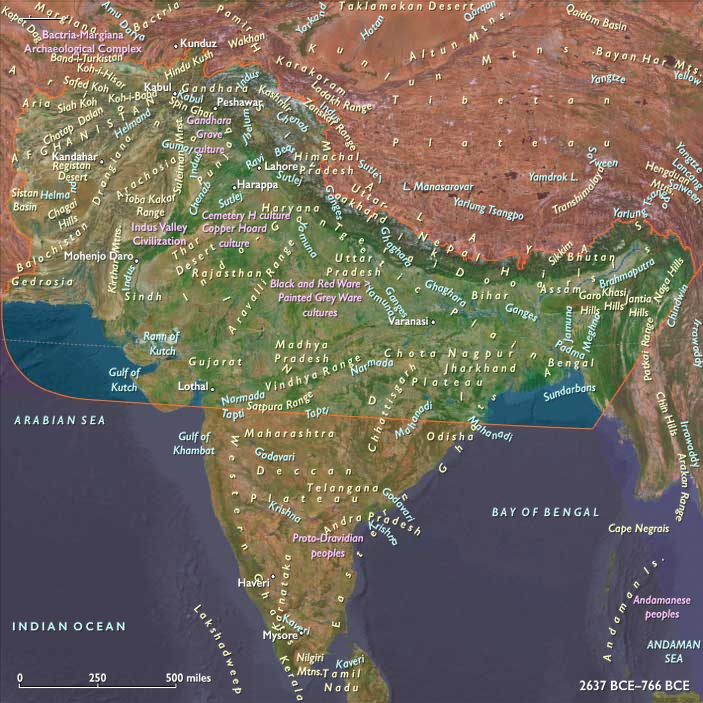
Between 2061 and 1918 BCE, Northern South Asia experiences the consolidation of sophisticated urban life, particularly in the mature phase of the Indus Valley Civilization. Major urban centers such as Harappa (Pakistani Punjab) and Mohenjo-daro (Sindh) continue to thrive, with advanced features including well-organized street grids, fortified citadels, granaries, bathhouses, public wells, and an intricate network of drainage and sanitation systems. Similar complexity emerges at Dholavira (Gujarat), Kalibangan (Rajasthan), and Lothal (Gujarat), showcasing robust governance and civic planning.
Agricultural Productivity and Environmental Adaptation
Sustained agricultural innovation and expansion of irrigation systems further increase productivity across the fertile plains of the Indus Valley, Punjab, Haryana, Uttar Pradesh, and Bihar. Communities adapt cultivation strategies to diverse ecosystems, from the flood-prone regions of Bangladesh and Odisha to semi-arid zones of Rajasthan and Khyber Pakhtunkhwa, ensuring stable food supplies for urban centers.
Expanding Trade and Economic Complexity
Trade networks expand significantly, connecting urban centers in Sindh, Punjab, Gujarat, and Rajasthan with distant regions. Commodities such as metals from Madhya Pradesh and Rajasthan, precious stones from Afghanistan, and marine resources from coastal Gujarat circulate widely. Increasingly standardized weights, measures, and seals indicate an advanced commercial system fostering regional economic integration.
Afghanistan as a Cultural and Commercial Hub
In present-day Afghanistan, settlements like Mundigak, Shortugai, and Balkh flourish as vital nodes in trade networks linking Central Asia and Northern South Asia. These cities facilitate significant cultural and technological exchanges, including metallurgical techniques, pottery styles, and architectural methods. This interaction solidifies Afghanistan's pivotal role in interregional dynamics.
Himalayan Trade Routes and Cultural Exchange
Mountain communities in Jammu and Kashmir, Ladakh, Himachal Pradesh, Uttarakhand, Nepal, and Bhutan expand trade relations with the plains. These Himalayan regions serve as critical intermediaries, trading forest products, medicinal plants, gemstones, and livestock with urban areas for manufactured goods, agricultural produce, and metal tools, enriching cultural interaction and economic prosperity.
Growth of Eastern Settlements and Agricultural Systems
Eastern areas, including modern-day Assam, Meghalaya, Nagaland, Manipur, Tripura, Mizoram, Arunachal Pradesh, and northwestern Myanmar (Kachin State, Sagaing Region, Chin State, and northern Rakhine State), experience notable population growth and intensified agriculture, particularly rice cultivation. Increasingly sophisticated flood-control systems and irrigation techniques support growing settlements, strengthening social complexity.
Social Hierarchies and Specialized Craftsmanship
Urban populations across the Indus Valley and broader regions, including settlements in Uttar Pradesh, Bihar, and West Bengal, display pronounced social stratification. Skilled artisans specialize in metallurgy, bead-making, textiles, ceramics, and sculpture, as evident in archaeological finds from major urban sites, indicating a highly organized and specialized economy.
Religious Beliefs and Ritual Practices
Structured religious practices are reflected in carefully designed ritual areas, extensive cemeteries, symbolic seals, and artifacts depicting animals and deities. The consistent iconography across vast areas implies widespread cultural and religious integration, underpinning social cohesion and legitimizing political authority.
Legacy of the Age
The period from 2061 to 1918 BCE represents a significant era of urban consolidation, economic complexity, and cultural cohesion across Northern South Asia. The extensive trade networks, sophisticated agricultural systems, and urban planning achieved during this period provide enduring models for subsequent regional civilizations, influencing the evolution of societies for generations to come.
Topics
Commodities
Subjects
Regions
South Asia
View →Subregions