
Upper South Asia (1917–1774 BCE): Transition from…
1917 BCE to 1774 BCE
Upper South Asia (1917–1774 BCE): Transition from Mature to Late Harappan Civilization
Mature Harappan Civilization at its Zenith
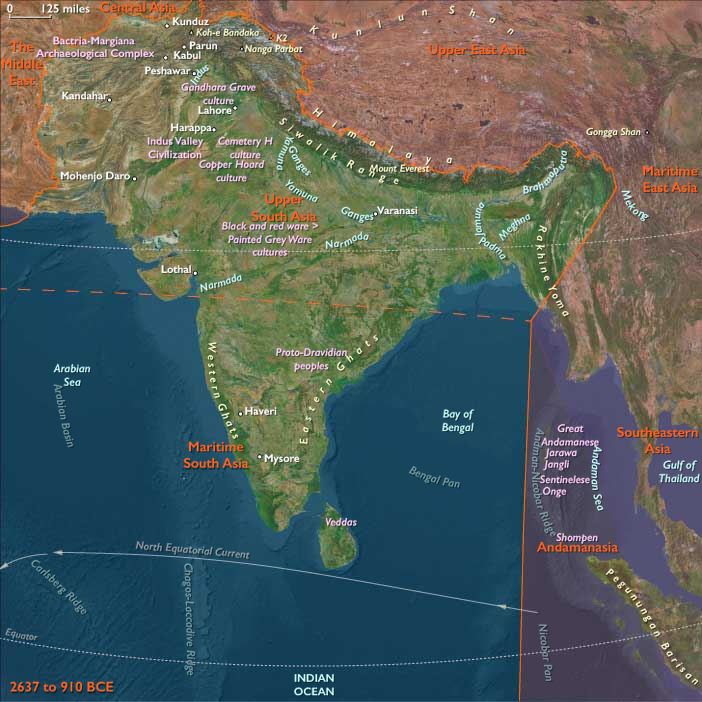
Between 1917 and 1774 BCE, Upper South Asia experiences the peak and subsequent transformation of the mature Indus Valley Civilization. Established urban centers such as Harappa in Punjab, Mohenjo-daro in Sindh, Dholavira in Gujarat, and Rakhigarhi in Haryana thrive with meticulously planned cities, advanced drainage systems, standardized brick constructions, and complex social structures.
Agricultural Intensification and Sustainability
Agricultural innovations continue to sustain large populations in regions like Punjab, Haryana, Uttar Pradesh, Rajasthan, and the Gangetic Plain. Sophisticated irrigation practices, especially in the Indus basin and surrounding agricultural areas, enable the production of surplus grains, supporting extensive urban populations and specialized craftspeople.
Expansion of Trade and Commerce
Trade networks flourish, connecting the core Harappan regions to resource-rich hinterlands, notably in Rajasthan, Gujarat, Madhya Pradesh, Odisha, and Afghanistan. Commodities such as copper, gold, lapis lazuli, and tin circulate extensively, underpinning complex economic relationships across the region and beyond.
Developments in Afghanistan and the Western Regions
Present-day Afghanistan witnesses continued urbanization and trade integration. Sites like Mundigak and Shortugai maintain close connections with the Indus civilization, exchanging vital resources such as lapis lazuli and tin. This interaction facilitates cultural and technological diffusion, deeply influencing urban developments in the region.
Himalayan and Mountainous Communities
Communities in the Himalayan regions, including Jammu and Kashmir, Himachal Pradesh, Ladakh, Nepal, Bhutan, and Uttarakhand, sustain agricultural and pastoral economies, refining terrace farming and animal husbandry techniques. Trade routes across Himalayan passes remain active, supplying essential resources like timber, medicinal herbs, and precious stones to the plains, in exchange for grains and crafted goods.
Agricultural Advancements and Settlements in the East
In the eastern regions encompassing modern-day Bangladesh, Assam, Tripura, Nagaland, Manipur, Meghalaya, Mizoram, Arunachal Pradesh, and northwestern Myanmar (Kachin State, Sagaing Region, Chin State, northern Rakhine State), populations intensify rice cultivation. Sophisticated flood management systems and agriculture sustain growing communities, contributing to increased social complexity.
Indo-Aryan Migration and Cultural Shifts
During this period, the significant Indo-Aryan migration begins to influence Northern South Asia. Groups of Indo-Aryan-speaking peoples gradually move into the region from the northwest, introducing new cultural practices, languages, and social structures. These migrations contribute to the cultural and linguistic transformations that reshape the societal landscape, influencing the later Vedic traditions and laying the foundations for classical Indian civilization.
Transition to the Late Harappan Phase
Around 1900 BCE, the Indus Valley Civilization begins transitioning into its Late Phase, marked by significant urban decline, shifts in settlement patterns, and regional fragmentation. Urban centers like Mohenjo-daro and Harappa exhibit signs of gradual abandonment, reduced population density, and declining civic maintenance. Environmental changes, shifting river courses, disruptions in trade networks, and the impact of Indo-Aryan migrations contribute to these transformations, prompting migrations towards smaller settlements and villages.
Cultural and Religious Continuity
Despite urban decline, religious practices and symbolic traditions endure, influencing later cultural developments across Northern South Asia. Ritual sites and burial practices persist, suggesting continued reverence for established spiritual traditions even as political and economic structures transform.
Legacy of the Age
The period from 1917 to 1774 BCE is pivotal, marking both the zenith and subsequent transformation of the Harappan Civilization. The shift from mature urban societies to smaller, more dispersed settlements, combined with the arrival of Indo-Aryan peoples, sets the stage for new cultural and social dynamics that profoundly impact subsequent historical trajectories throughout Upper South Asia.
Groups
Topics
Commodities
Subjects
Regions
South Asia
View →Subregions
