Upper South Asia (2349–2206 BCE): Consolidation of…
2349 BCE to 2206 BCE
Upper South Asia (2349–2206 BCE): Consolidation of Urban Civilization and Regional Integration
Urban Expansion and Consolidation
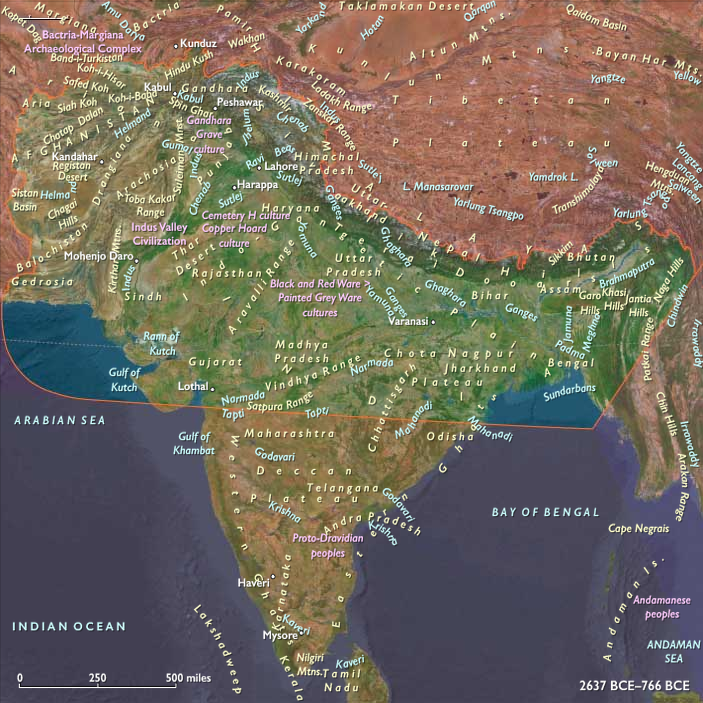
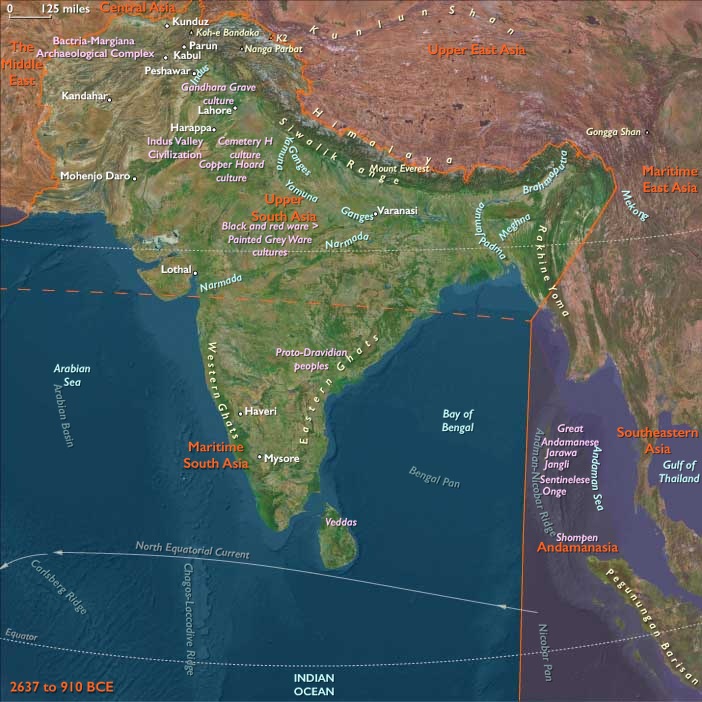
The period from 2349 to 2206 BCE marks a significant phase of urban consolidation and expansion across Upper South Asia. Major cities of the Indus Valley Civilization, including Harappa (in Punjab), Mohenjo-daro (in Sindh), Dholavira and Lothal (in Gujarat), achieve sophisticated urban planning, standardized construction methods, and impressive hydraulic engineering. These urban centers exhibit advanced sanitation systems, fortified structures, and clearly delineated residential, administrative, and commercial zones.
Agricultural and Economic Development
Agriculture in the fertile plains of the Indus and Ganges basins, including areas of modern-day Punjab, Haryana, Uttar Pradesh, Bihar, West Bengal, and Bangladesh, continues to thrive with improved irrigation techniques, water storage systems, and cultivation of diversified crops such as wheat, barley, lentils, peas, and rice. Surpluses produced by these agricultural advancements strengthen urban economies and enable robust regional trade.
Intensified Regional and Long-Distance Trade Networks
Trade networks expand and integrate more extensively throughout Northern South Asia, reaching eastward into modern-day Myanmar, notably Kachin State, Sagaing Region, Chin State, and Rakhine State, and westward into Afghanistan, notably around Balkh, Helmand, and Mundigak. Commodities such as copper, gold, semi-precious stones, timber, and textiles circulate widely, demonstrating significant regional interdependence and facilitating cultural exchanges.
Afghanistan and Western Regions
In Afghanistan, urban centers along the fertile valleys, particularly around Mundigak and Balkh, evolve into thriving hubs for regional trade and culture. Afghanistan becomes a crucial conduit for long-distance commerce, linking Northern South Asia to Central Asia and beyond, particularly for the distribution of lapis lazuli and copper, essential for Indus Valley artisans.
Himalayan Exchange and Cultural Contacts
Himalayan communities, including present-day Jammu and Kashmir, Himachal Pradesh, Uttarakhand, Ladakh, Nepal, and Bhutan, deepen their interaction with lowland urban centers through established trade routes across mountain passes. Commodities such as wool, timber, medicinal herbs, and precious stones flow southward, while metal tools, pottery, and agricultural products travel northward, enhancing economic prosperity and cultural exchanges throughout the region.
Social Complexity and Governance
Increasingly sophisticated urban societies exhibit clear stratification and more structured governance. Administrative complexity is indicated by uniform building standards, systematic urban layout, standardized weights and measures, and artifacts signifying authority or governance found in cities across Sindh, Punjab, Gujarat, Rajasthan, and along the Gangetic Plain.
Religious and Cultural Developments
This age witnesses the further crystallization of religious and cultural practices across Northern South Asia. Ritual centers and burial practices, particularly those uncovered in Harappa and Mohenjo-daro, reflect more sophisticated spiritual concepts. Iconography suggesting reverence for animals, fertility symbols, and possibly early forms of mother-goddess worship emerge prominently, underpinning emerging social hierarchies and community cohesion.
Advances in Craftsmanship and Technology
Craft specialization and technological innovations reach impressive levels. Pottery, jewelry, metallurgy, textiles, and beadwork from urban centers in Harappa, Lothal, and Dholavira display remarkable sophistication. In particular, metallurgical advancements and fine bead-making technologies flourish, supported by extensive trade networks supplying necessary raw materials from regions like Rajasthan, Gujarat, Afghanistan, and northeastern frontier regions.
Legacy of the Age
From 2349 to 2206 BCE, Upper South Asia solidifies the foundations of urban civilization, complex social organization, extensive trade networks, and advanced technologies. This era significantly shapes regional cultural identities, economic interdependence, and social structures, setting the stage for subsequent periods of further cultural fluorescence and urban sophistication throughout the subregion.
Topics
Commodities
Subjects
Regions
South Asia
View →Subregions