
Northwest Asia (1684–1827 CE): Fur Frontiers, Siberian …
Years: 1684 - 1827
Northwest Asia (1684–1827 CE): Fur Frontiers, Siberian Expansion, and Imperial Crossroads
Geography & Environmental Context
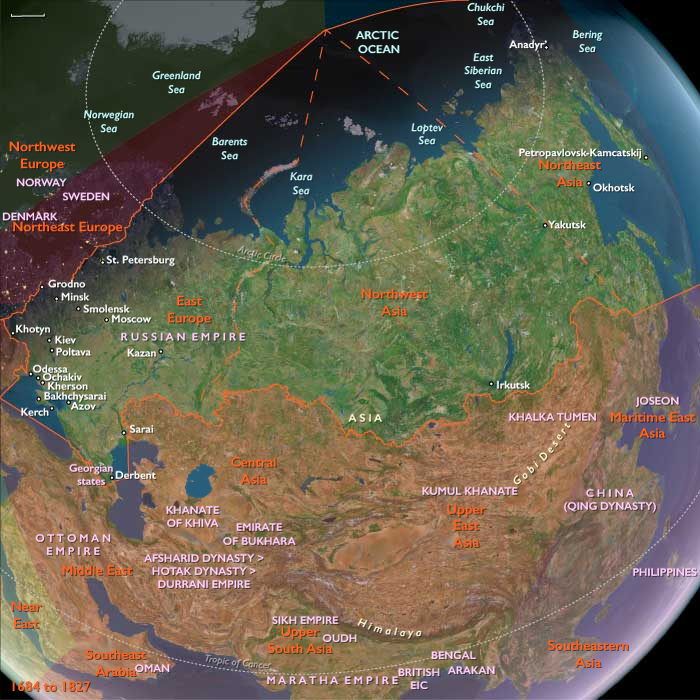
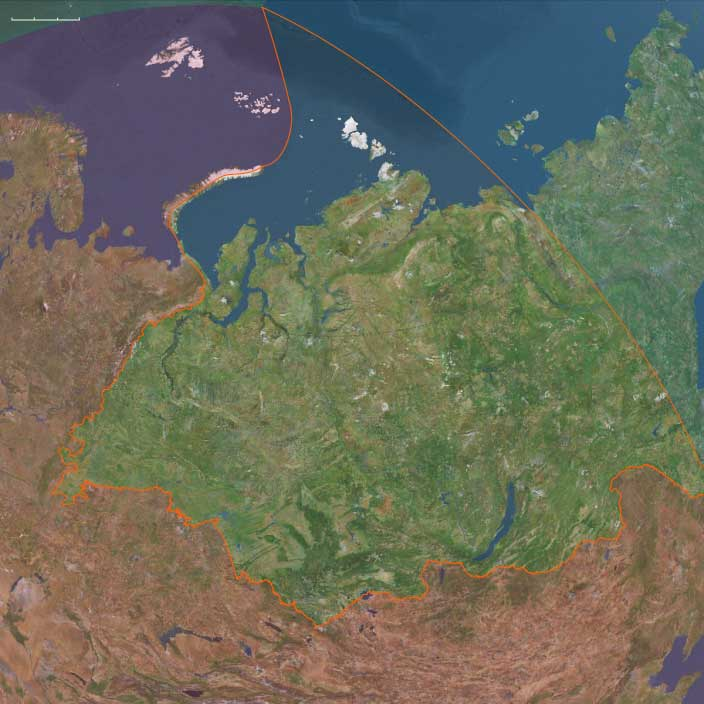
Northwest Asia stretches from the Ural Mountains eastward to roughly 130°E, encompassing western and central Siberia. Anchors include the Ob, Irtysh, Yenisei, and Lena rivers (upper and middle reaches), the West Siberian Plain, the Altai Mountains, the Central Siberian Plateau, and the taiga–steppe ecotone along the southern rim. To the north lie tundra coasts of the Kara Sea and Laptev Sea; to the south, open steppe corridors that historically linked Siberia to the Kazakh steppe and Central Asia. This was a landscape of coniferous forests, permafrost basins, and river arteries threading thousands of kilometers.
Climate & Environmental Shifts
The Little Ice Age bore heavily on the region: long winters, severe frosts, and shorter growing seasons. The taiga endured repeated forest fires and outbreaks of pests in drought years. In tundra and permafrost zones, winters locked rivers for eight months, while spring floods carved new channels. Southern Siberia (Altai, Minusinsk Basin) offered more hospitable microclimates, allowing grain cultivation, bee-keeping, and orchards, while northern zones remained dominated by hunting, fishing, and reindeer herding. Periodic harsh winters caused mass die-offs of livestock, forcing nomadic and semi-nomadic groups to expand their ranges.
Subsistence & Settlement
-
Indigenous peoples (Khanty, Mansi, Nenets, Selkup, Evenki, Ket, Dolgan, and others): Continued fishing, hunting (sable, elk, reindeer), and reindeer pastoralism. Settlements ranged from seasonal river camps to forest villages.
-
Southern Siberia (Altai, Yenisei valleys): Mixed economies combined herding, millet and barley cultivation, and bee-keeping. Turkic-speaking groups (Altai, Khakas) combined stockbreeding with hunting and foraging.
-
Russian settlers: Established fortified towns (ostrogs) along major rivers (Tobolsk, Tomsk, Krasnoyarsk, Irkutsk), expanding farming zones and integrating indigenous labor into fur tribute systems.
-
Cossacks and promyshlenniki (hunters/traders): Exploited fur resources, especially sable, feeding Russian and European markets.
Technology & Material Culture
-
Indigenous toolkits: Birch-bark canoes, skis, sledges, snowshoes, bone fishhooks, and nets adapted to taiga and tundra. Shamanic drums, carved idols, and bead ornaments reinforced cosmology.
-
Russian technologies: Log forts, Orthodox churches, and plough agriculture spread along rivers. Firearms and metal traps gave settlers advantages in hunting and defense.
-
Caravan infrastructure: Sledges, reindeer and horse caravans, and riverboats supported long-distance transport of furs, grain, and salt.
-
Trade goods: Iron pots, beads, textiles, tobacco, vodka, and firearms moved into indigenous economies; furs, hides, and ivory moved outward.
Movement & Interaction Corridors
-
River highways: The Ob, Irtysh, Yenisei, and Lena were the main transport routes—frozen in winter for sledges, open in summer for barges.
-
Steppe links: The Omsk–Semipalatinsk corridor tied Siberia to Kazakh steppe markets.
-
Overland portages: Trails linked river basins, enabling Cossacks and merchants to bypass watersheds.
-
Transcontinental flows: By the 18th century, Siberia was integrated into Russia’s imperial networks; furs from Tobolsk reached Moscow and St. Petersburg, while silver, grain, and tea caravans entered from China after the Treaty of Kiakhta (1727).
-
Indigenous mobility: Seasonal migrations balanced fish runs, hunting, and reindeer pasture.
Cultural & Symbolic Expressions
-
Indigenous spirituality: Shamanism structured relationships with animals, rivers, and spirits; rituals honored bear spirits, river deities, and forest guardians. Sacred landscapes—groves, mountains, rivers—anchored cosmology.
-
Russian Orthodoxy: Churches, missions, and itinerant priests sought conversion, erecting wooden chapels in towns and forts. Syncretism often emerged, blending Christian symbols with indigenous ritual life.
-
Epic traditions: Turkic and Samoyedic peoples preserved oral epics of heroes, ancestors, and migrations.
-
Colonial cultural imprints: Russian schools, courts, and markets gradually drew populations into imperial cultural frames, while vodka and tobacco consumption reshaped social life.
Environmental Adaptation & Resilience
-
Indigenous strategies: Reindeer herding diversified across tundra and taiga; fish drying, smoking, and oil rendering created reserves; mobile shelters and clothing (fur parkas, felt boots) adapted to extremes.
-
Russian adaptation: Grain cultivation expanded in southern valleys, with rye and oats planted in floodplains. Grain stores and fortified warehouses buffered famine.
-
Trade resilience: Furs, hides, and ivory were exchanged for salt, flour, and tools, reducing risk in lean years.
-
Hybrid economies: Many indigenous groups combined tribute labor with hunting and herding to navigate colonial demands.
Transition
From 1684 to 1827, Northwest Asia was transformed by Russian imperial expansion. Cossack detachments built forts, imposed yasak (fur tribute), and opened Siberia to global trade, linking sable and fox pelts to Amsterdam, London, and Beijing. Indigenous societies endured disease, tribute extraction, and missionization, yet sustained resilience through mobility, ritual life, and hybrid economies. By the early 19th century, the subregion had become both a fur frontier feeding Europe and Asia, and an indigenous heartland where reindeer herds, salmon runs, and shamanic ceremonies still defined everyday life beneath the widening shadow of empire.
People
Groups
- Evens, or Eveny
- Mansi people
- Khanty
- Selkup
- Nenets
- Evenks
- Yakuts
- Russians (East Slavs)
- Russia, Tsardom of
- Chinese Empire, Qing (Manchu) Dynasty
- Russian Empire
Topics
Commodoties
Subjects
Regions
Subregions
Years: 1684 - 1827
People
Groups
- Evens, or Eveny
- Mansi people
- Khanty
- Selkup
- Nenets
- Evenks
- Yakuts
- Russians (East Slavs)
- Russia, Tsardom of
- Chinese Empire, Qing (Manchu) Dynasty
- Russian Empire
Topics
Commodoties
Subjects
Regions
Subregions