Northwest Europe (1312–1323 CE): Consolidation, Conflict, and…
1312 CE to 1323 CE
Northwest Europe (1312–1323 CE): Consolidation, Conflict, and Cultural Vitality
Scotland and England: Battle for Independence
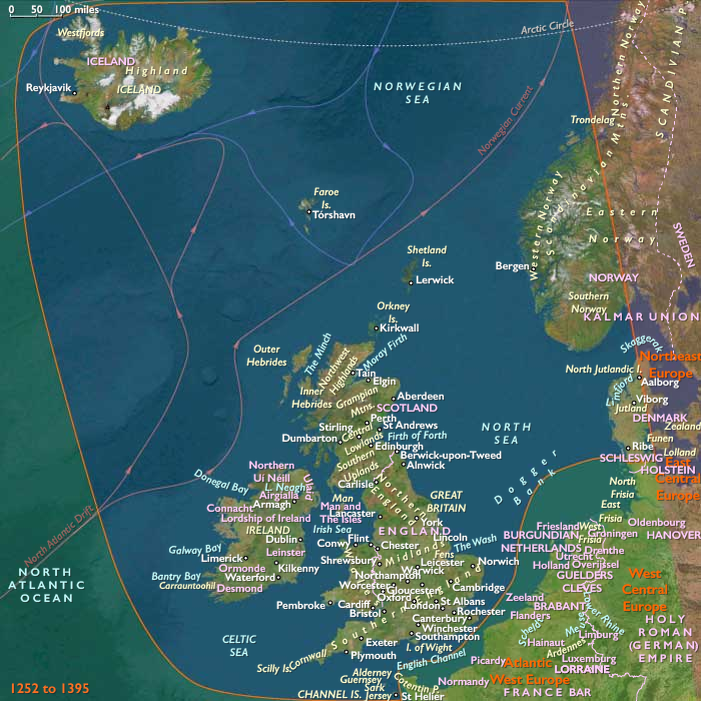
The era was defined by intensified Scottish resistance against English dominance, culminating dramatically at the Battle of Bannockburn in 1314, where Robert the Bruce decisively defeated Edward II's forces. This pivotal victory not only reaffirmed Scotland’s sovereignty but also significantly bolstered Bruce’s legitimacy as king. The subsequent Declaration of Arbroath in 1320, an appeal to Pope John XXII, eloquently articulated Scottish national identity and independence, influencing later conceptions of sovereignty.
Ireland: Continued Gaelic Resilience and Norman Decline
Ireland remained politically fragmented, with the Gaelic lords effectively resisting Norman consolidation. The Gaelic resurgence was particularly evident in territories like Ulster and Connacht, where traditional Gaelic power structures reinforced their authority. The Normans’ inability to extend beyond the Pale and coastal towns highlighted the continued resilience of indigenous governance.
Denmark: Internal Strife and Royal Consolidation
Under the reign of Eric VI Menved, Denmark faced internal unrest and fiscal crises, exacerbated by costly foreign conflicts and domestic revolts. His successor, Christopher II, who ascended in 1320, struggled to maintain royal power amidst growing noble opposition and economic strain. Despite these challenges, centralizing reforms and administrative restructuring efforts continued, albeit with limited success.
Norway: Strengthening Central Authority
Norway, under the firm rule of Haakon V Magnusson, further solidified its territorial integrity and central governance. Haakon continued reforms in administration, enhancing royal authority and establishing a more cohesive national identity. His reign laid foundations for stable governance that supported economic and cultural growth throughout the kingdom.
Iceland: Literary and Cultural Flourishing
In Iceland, the literary and cultural renaissance persisted robustly. The era saw the continued compilation and creation of sagas, poetry, and historical texts that preserved and celebrated Icelandic heritage. The production of key manuscripts, including continued expansions of works such as Hauksbók, underscored the vibrancy and resilience of Icelandic cultural life, even as Norwegian political influence increased.
Economic and Urban Developments
Trade and commerce continued to drive economic prosperity, reinforcing the significance of key urban centers such as London, Bruges, Bergen, and Dublin. Merchants benefited from expanded networks dealing in wool, fish, timber, and luxury items, facilitating significant urban and architectural growth. This economic vitality reinforced the interconnectedness and prosperity of Northwest Europe.
Religious Influence and Scholarly Pursuits
The period continued to witness the influential presence of religious orders like the Dominicans and Franciscans, who were pivotal in advancing education and theological discourse. Intellectual life flourished, building upon the foundations laid by previous scholars such as Roger Bacon and Robert Grosseteste, reinforcing a robust scholastic tradition characterized by vigorous theological, philosophical, and scientific inquiry.
Artistic Expression and Cultural Ambitions
Gothic architectural projects, prominently illustrated by ongoing construction at monumental sites such as York Minster, continued to reflect the artistic ambitions and cultural sophistication of the era. Literary contributions, including romances like Havelok the Dane, provided insightful portrayals of social ideals, governance, and everyday life, demonstrating a vibrant cultural milieu.
Legacy of the Era
By 1323 CE, Northwest Europe had made considerable strides in political consolidation, cultural resilience, and economic strength. Scotland's assertion of independence, Ireland’s enduring Gaelic traditions, Denmark’s struggles and reforms, Norway’s strengthened central governance, and Iceland’s cultural achievements collectively defined this era. These developments significantly shaped regional identities, governance structures, and cultural legacies for subsequent medieval generations.
People
Groups
Topics
Commodities
Subjects
Regions
North Europe
View →Subregions