
Northwest Europe (1528–1539 CE): Religious Transformations, Political…
1528 CE to 1539 CE
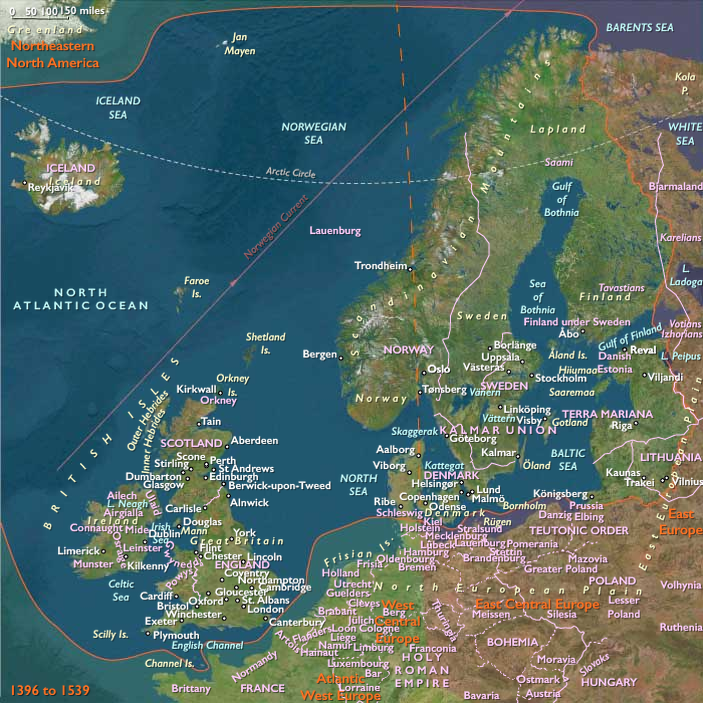
Northwest Europe (1528–1539 CE): Religious Transformations, Political Consolidation, and Cultural Achievements
England: The Break with Rome and Religious Upheaval
The period marked a profound transformation as Henry VIII decisively broke with the Roman Catholic Church. After the Pope refused to annul his marriage to Catherine of Aragon, Henry enacted a series of legislative measures beginning with the Act of Supremacy (1534), declaring the monarch Supreme Head of the Church of England. Prominent figures such as Thomas More and John Fisher, who resisted Henry’s ecclesiastical reforms, were executed in 1535. Henry VIII, who patronized the art of gun founding in England after being forced to import his cannon, also encouraged the development of hollow shells filled with powder. These religious and technological changes significantly altered religious life, setting England firmly on a path toward Protestantism, though initially retaining many Catholic practices.
Scotland: Reign of James V and Franco-Scottish Alliance
In Scotland, James V reached maturity, assuming personal rule in 1528. His reign was marked by a centralized assertion of royal authority and significant diplomatic engagement, notably through the continuation of the traditional Auld Alliance with France. James’s rule fostered cultural patronage, exemplified by the flourishing of courtly literature and the arts. Nevertheless, tensions with England persisted, leading to periodic border skirmishes.
Ireland: Fitzgerald Revolt and Increasing English Dominance
Ireland saw heightened conflict as English pressure intensified under the administration of Lord Deputy Leonard Grey. The Fitzgerald Rebellion (Silken Thomas Revolt, 1534–1535) emerged as a significant challenge to English authority. Initiated by Thomas FitzGerald, 10th Earl of Kildare, this revolt was brutally suppressed, resulting in the execution of Silken Thomas and his leading supporters. The suppression reinforced English dominance in the Pale but further alienated the Gaelic Irish lordships.
Scandinavia: Lutheran Reformation and Consolidation of Royal Power
Scandinavia experienced significant religious and political shifts. Gustav I Vasa in Sweden embraced the Lutheran Reformation decisively at the Riksdag of Västerås in 1527, secularizing church lands and strengthening royal authority. Similarly, Denmark under Christian III formally adopted Lutheranism in 1536, marking the triumph of the Reformation across the Scandinavian kingdoms. These religious changes facilitated the growth of powerful, centralized monarchical states and reshaped religious practices profoundly.
Iceland: Reformation and Continuing Cultural Resilience
Iceland faced enforced Lutheran reform as Denmark extended its religious policies to its dependency. Despite initial resistance, by 1539, Lutheranism had become officially established. Nonetheless, Icelanders continued to preserve their literary heritage, with manuscript production persisting even amid religious and political upheaval. The country remained economically isolated, with persistent hardship tempered by cultural resilience.
Intellectual and Cultural Developments
This era witnessed further enrichment of cultural and intellectual life. The English poet John Skelton remained influential until his death in 1529, known particularly for his satirical wit and innovative poetic style known as "Skeltonics." Humanist ideals continued to influence scholarly circles, and artistic and architectural projects flourished in the Tudor style, characterized by symmetrical planning and rich decorative detail. Additionally, the translation and dissemination of religious texts into vernacular languages significantly impacted literacy and popular religious life.
Maritime Ambitions and Early Exploration
Exploration persisted, driven by commercial aspirations and emerging imperial ambitions. English maritime ventures sought opportunities in North America and other regions, laying foundations for later colonial enterprises. These ventures remained modest but indicated England's increasing global maritime interests.
Legacy of the Era
By 1539 CE, Northwest Europe had undergone critical transformations in religious, political, and cultural spheres. The Protestant Reformation had firmly taken root, monarchical authority was increasingly consolidated, and humanist scholarship significantly shaped intellectual discourse. These pivotal changes set the stage for continued evolution and profound historical developments in the region.
People
Groups
Topics
Subjects
Regions
North Europe
View →Subregions
