Northwest Europe (1672–1683 CE): Wars, Revolution, and…
1672 CE to 1683 CE
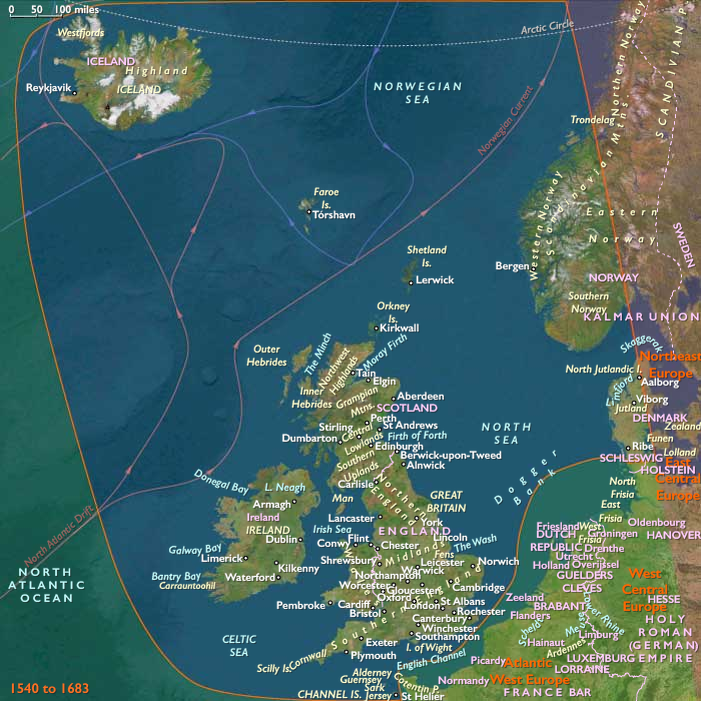
Northwest Europe (1672–1683 CE): Wars, Revolution, and Emerging Modernity
England: Political and Religious Tensions
The period from 1672 to 1683 in England was marked by political maneuvering, religious controversy, and tensions between monarchy and parliament. Charles II's pro-Catholic policies led to heightened suspicion, exemplified by the secret Treaty of Dover (1670) with Louis XIV of France, revealed in 1672. Public alarm grew over alleged Catholic plots, notably the Popish Plot (1678), fabricated by Titus Oates, leading to widespread paranoia and anti-Catholic hysteria. The resulting crisis intensified parliamentary opposition to the Crown and fueled the exclusion movement, which sought to bar James, Duke of York (later James II), from succession due to his Catholic faith. Following the Restoration, there was an overall reduction in the power of the crown.
The Netherlands and England: Third Anglo-Dutch War
Northwest Europe was significantly affected by the Third Anglo-Dutch War (1672–1674). Initiated by an alliance between England and France, the conflict aimed at undermining Dutch maritime and commercial power. However, despite initial successes, including the Battle of Solebay (1672), England's financial strain and lack of public support led to a quick peace settlement in the Treaty of Westminster (1674), restoring status quo ante bellum.
Ireland: Continuing Struggle for Dominance
In Ireland, the late Restoration period maintained Protestant dominance through a rigid system of land and religious controls. Catholic landownership declined further, reinforcing Protestant ascendancy. Sectarian tensions persisted, foreshadowing future uprisings, as the Catholic majority remained alienated under a Protestant ruling elite.
Scotland: Covenanter Rebellion and Suppression
Scotland experienced fierce religious persecution and resistance, notably through the continued suppression of the Covenanters. The Battles of Drumclog and Bothwell Bridge (1679) highlighted brutal confrontations between royal forces and Presbyterian rebels, underscoring deep divisions that remained unresolved.
Expansion and Power of the English East India Company
The English East India Company continued its rise to dominance during this period. With its charter renewed and expanded by Charles II, the company gained significant territorial and political influence, establishing a more substantial military presence and commercial settlements across India, solidifying the foundation for British imperialism. Sir John Banks, Governor of the East India Company from 1672, negotiated important agreements supplying gunpowder ingredients to the English crown, illustrating the growing political and economic clout of the company.
Scandinavia: Consolidation and Absolutism
Denmark-Norway, under Christian V (1670–1699), solidified the absolute monarchy established by his predecessor, Frederick III. The Danish Law Code of 1683 unified and modernized laws, reflecting Enlightenment principles and strengthening central royal control. The diet disappeared during this period, leading to further centralization of power in Copenhagen and a hierarchical administrative structure dominated by crown officials and bureaucrats, much to the dismay of traditional aristocracy. Agricultural surveys enabled direct taxation of landowners, reducing reliance on revenue from crown lands. Tensions with Sweden remained but were largely diplomatic rather than martial during this era.
Scientific Progress and Cultural Development
The Royal Society in England continued to flourish, promoting experimentation and rational inquiry. Robert Hooke's landmark work Micrographia continued to influence science, while Isaac Newton developed fundamental principles of physics and mathematics, laying groundwork for future scientific revolutions. Cultural life thrived, with John Dryden becoming Poet Laureate in 1670, contributing significantly to literature and drama.
Religious and Social Dynamics
Religious tensions defined the social landscape, particularly the persecution of Catholics and Nonconformists in England, influenced by heightened fears of Catholic conspiracies. The Test Act (1673) barred Catholics and dissenters from public office, deepening religious divisions and tensions.
Legacy of the Era
By 1683, the complex interplay of politics, religion, and expansionism had significantly shaped Northwest Europe. Religious persecution, particularly against Catholics and dissenting Protestants, entrenched societal divisions, while ongoing scientific discoveries provided intellectual progress. The political instability laid foundations for future constitutional and religious transformations, setting the stage for monumental shifts like the Glorious Revolution of 1688.
People
Groups
Topics
Subjects
Regions
North Europe
View →Subregions