Event
Northwest Europe (1828–1971 CE): Industrial Maturity, Mass…
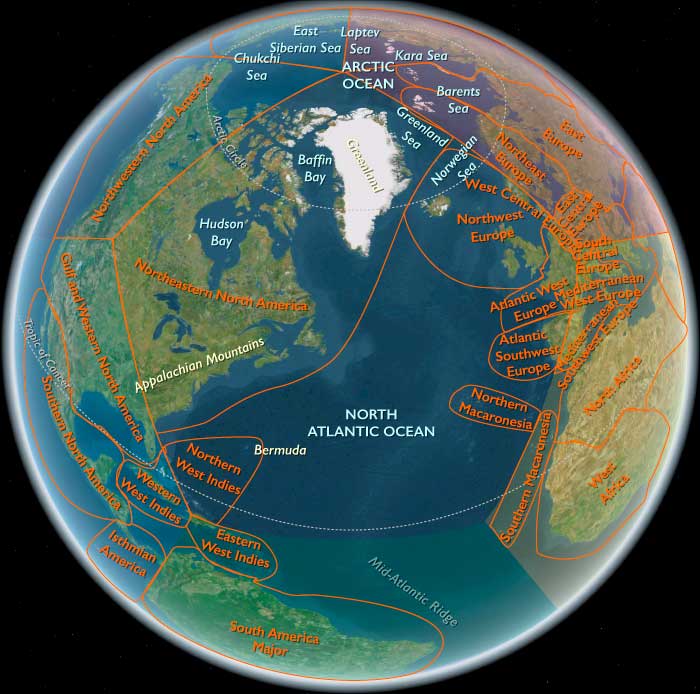
Northwest Europe (1828–1971 CE): Industrial Maturity, Mass Migration, and the North Atlantic War System
Geographic and Environmental Context
The nineteenth and twentieth centuries transformed Northwest Europe's physical landscape more dramatically than any previous age. Coalfields, railways, factories, docklands, industrial towns, reservoirs, electrical systems, and suburbs spread across parts of Britain and Ireland, while mechanized fisheries and hydroelectric development transformed northern maritime economies.
Yet extensive older environments persisted: sheep pasture in Wales and Scotland, cattle districts in Ireland, crofting and grazing landscapes in the Highlands and Islands, western Norwegian farms and fjords, Icelandic pasture, Danish agricultural districts, wetlands, moors, forests, and fishing coasts.
Environmental hazards remained significant. Potato blight devastated Ireland beginning in 1845. Iceland endured volcanic eruptions including Askja in 1875. The catastrophic North Sea flood of 1953 inundated parts of Britain and continental coasts. Industrial pollution degraded many rivers, estuaries, and urban districts.
Societies and Political Development
The United Kingdom of Great Britain and Ireland became the world's leading industrial and imperial state during much of the nineteenth century. Parliamentary reform gradually widened political participation, while trade unions, socialist organizations, cooperative movements, and mass political parties developed alongside industrial society.
Ireland experienced profound crisis during the Great Famine of the 1840s. Crop failure combined with poverty, insecure land tenure, limited relief, and structural dependency to produce mass mortality and migration. The population declined dramatically and remained below its pre-famine level for generations.
Irish nationalism intensified. Home Rule movements were followed by revolutionary politics, the Easter Rising of 1916, the War of Independence, and the creation of the Irish Free State in 1922. Northern Ireland remained within the United Kingdom.
Norway's nineteenth-century constitutional institutions supported growing national autonomy, culminating in peaceful separation from Sweden in 1905 and establishment of the independent Kingdom of Norway.
Iceland achieved home rule, then sovereignty as the Kingdom of Iceland in personal union with Denmark in 1918, and finally became the Republic of Iceland in 1944.
Two world wars profoundly affected the region. Britain mobilized enormous industrial, imperial, and naval resources during both conflicts. Norway and Denmark were occupied by Germany during the Second World War. Iceland became a major Allied North Atlantic base. Ireland remained neutral, although its geographic position and economic relationships remained strategically significant.
After 1945 welfare-state institutions expanded across Britain and Scandinavia. NATO integrated Britain, Norway, Denmark, and Iceland into a North Atlantic defense system, while Ireland retained military neutrality.
Productive Landscape and Economy
Industrialization matured in Britain. Coal powered steam engines, railways, factories, domestic heating, and electricity generation. Iron and steel supported engineering, shipbuilding, bridges, railways, and machinery.
Manchester and Lancashire became synonymous with cotton textiles; South Wales and northern England contained major coalfields; Sheffield specialized in steel; Belfast became an important linen and shipbuilding center; Clydeside developed one of the world's major shipbuilding complexes.
Railways connected agricultural hinterlands, mining districts, industrial cities, and ports. Steamships accelerated global trade and migration.
Ireland remained more agricultural, especially after famine, with cattle and dairy production increasingly oriented toward the British market. Belfast provided an important industrial exception.
Denmark developed highly productive cooperative dairy and livestock agriculture. Norway combined shipping, fisheries, forestry, and increasingly hydroelectric-powered industry. Iceland transformed its economy through mechanized fishing vessels, harbor improvements, refrigeration, and export fisheries.
By the mid-twentieth century older heavy industries began losing employment in some districts even as automobile production, chemicals, electrical engineering, aviation, and consumer manufacturing expanded.
Movement and Interaction Corridors
Mass migration became one of the age's defining processes. Millions of Irish emigrated to Britain, North America, Australia, and elsewhere. Scottish, English, Welsh, Norwegian, Danish, and Icelandic migrants also participated in extensive Atlantic diasporas.
Railways radically reorganized internal mobility. Steamships shortened Atlantic travel and linked Liverpool, Glasgow, Belfast, Southampton, and other ports to global migration and commercial systems.
The North Atlantic became strategically vital during both world wars. German submarine warfare threatened Allied shipping, while convoy systems, naval bases, shipyards, airfields, and coastal defenses mobilized entire regions.
After 1945 automobile ownership, road building, ferries, and civil aviation increasingly competed with rail and coastal shipping.
Technology and Material Culture
Steam power, railways, mechanized factories, gasworks, electrical generation, telegraphy, telephones, internal-combustion engines, radio, aviation, refrigeration, and mechanized fisheries transformed everyday life.
Urban infrastructure expanded through piped water, sewerage, electric lighting, tramways, public transport, municipal housing, and hospitals.
Mass-produced newspapers, books, gramophones, cinema, radio, and television created increasingly integrated popular cultures.
Military technology also transformed the landscape through naval dockyards, air bases, coastal fortifications, radar installations, and wartime factories.
Religion and Cultural Expression
Religious institutions remained influential but increasingly coexisted with secular politics, mass education, science, labor organization, and modern consumer culture.
Victorian literature, Irish literary revival, Scandinavian nationalism, modernism, theater, music, cinema, and broadcasting produced globally influential cultural movements.
Irish-language, Welsh-language, Scots Gaelic, Faroese, Icelandic, Norwegian, and other revival movements connected language with political and cultural identity.
By the 1960s Northwest Europe had become an internationally influential center of youth culture, popular music, broadcasting, fashion, and mass entertainment.
Adaptation and Resilience
Industrial cities developed public-health infrastructure and municipal services partly in response to overcrowding and pollution. Trade unions, cooperatives, insurance schemes, and eventually welfare states reduced some forms of economic insecurity.
Agricultural cooperatives strengthened rural economies in Denmark and Norway. Fisheries increasingly relied on mechanization, scientific assessment, and state regulation.
Postwar reconstruction rebuilt bomb-damaged cities while new housing estates and transport networks reshaped urban margins.
Legacy of the Age
By 1971 Northwest Europe had become a highly urbanized, industrial, and geopolitically strategic Atlantic region. Britain had moved from industrial-imperial supremacy toward postimperial restructuring; Ireland had divided into an independent state and Northern Ireland; Norway and Iceland had achieved independence; and Denmark, Norway, Britain, and Iceland were embedded in the North Atlantic security order.
The principal new organizing system was integrated steam, rail, industrial, and later motorized infrastructure, followed by the beginnings of deindustrialization and mass-service economies.

-
{# Image navigates to the detail page; the magnifying-glass chip is the only Fancybox lightbox trigger (kept a separate sibling — anchors can't nest). #}
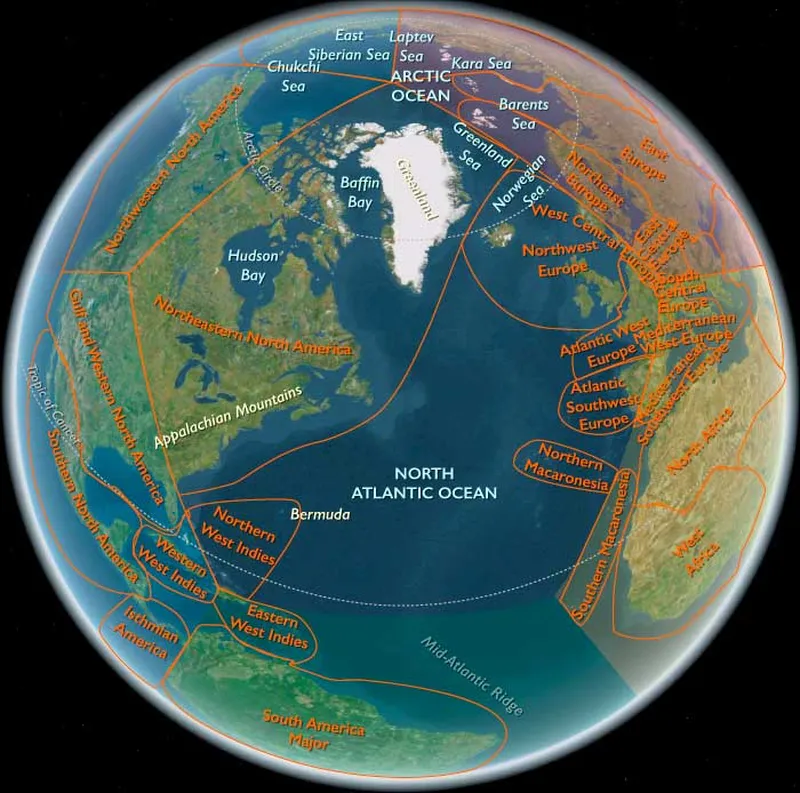 The Atlantic Lands
World
The Atlantic Lands
World
-
{# Image navigates to the detail page; the magnifying-glass chip is the only Fancybox lightbox trigger (kept a separate sibling — anchors can't nest). #}
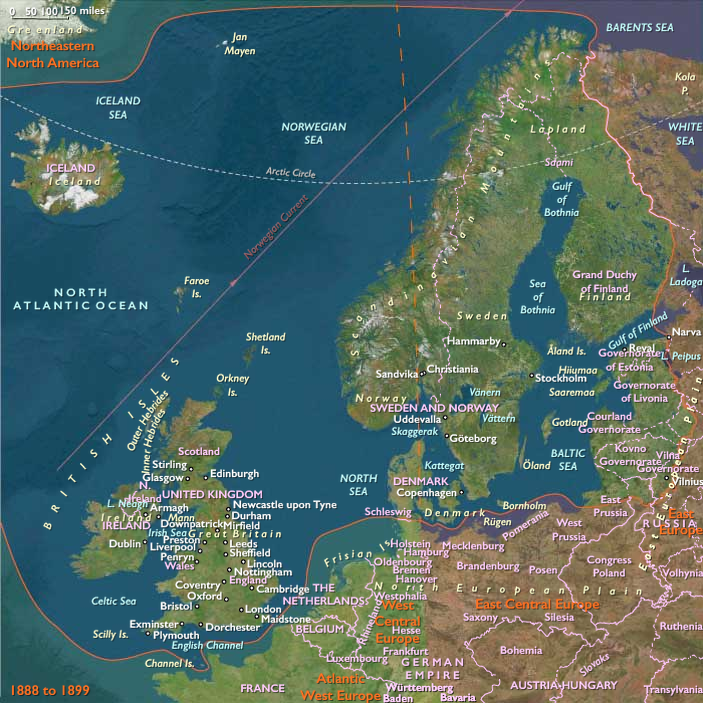 North Europe
Region
North Europe
Region
-
{# Image navigates to the detail page; the magnifying-glass chip is the only Fancybox lightbox trigger (kept a separate sibling — anchors can't nest). #}
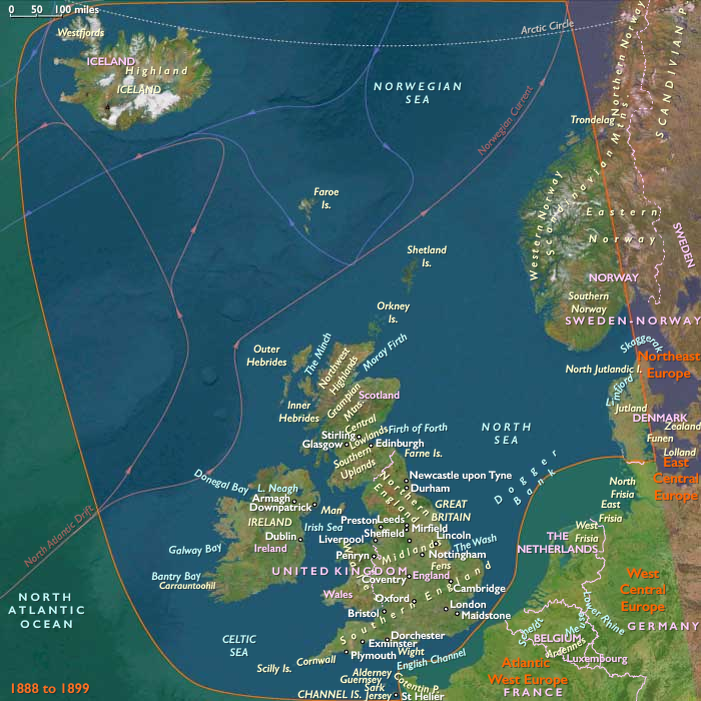 Northwest Europe
Subregion
Northwest Europe
Subregion