
Northwest Europe (1948–1959): Reconstruction, Welfare, and Adjusting…
1948 CE to 1959 CE
Northwest Europe (1948–1959): Reconstruction, Welfare, and Adjusting to Post-Imperial Realities
Postwar Britain: The Welfare State and Social Reforms
Following the devastating impact of World War II, Britain from 1948 onward embarked upon a transformative reconstruction of its economy, society, and global role. Under Clement Attlee’s Labour government (1945–1951), the foundations for a modern welfare state, begun immediately postwar, became fully operational:
-
National Health Service (NHS, 1948): Provided universal healthcare free at the point of delivery, profoundly improving public health and life expectancy.
-
National Insurance Scheme: Comprehensive social security offering unemployment, sickness benefits, and pensions, established a new social contract.
-
Educational reforms: Implemented under the earlier Education Act of 1944, expanded opportunities with universal secondary education.
These policies reshaped Britain socially, significantly reducing poverty and inequality and creating lasting expectations of state responsibility for citizen well-being.
Economic Recovery and Continued Austerity
Despite social progress, Britain’s economy in the late 1940s remained fragile, burdened by immense wartime debts, infrastructure damage, and shortages. Rationing continued until the mid-1950s, including basic goods like food, clothing, and fuel. Labour nationalized key industries (coal, steel, railways, electricity), hoping to stimulate economic recovery and employment stability.
By the early 1950s, modest recovery was visible, aided significantly by U.S. economic assistance under the Marshall Plan (1948–1952). However, Britain increasingly lagged economically behind rapidly recovering European neighbors, notably West Germany and France, exposing structural industrial weaknesses and productivity challenges.
Conservative Return: Churchill, Eden, and Macmillan (1951–1959)
In 1951, public dissatisfaction with ongoing austerity facilitated a return to Conservative leadership, first under Winston Churchill (1951–1955), then Anthony Eden (1955–1957), and subsequently Harold Macmillan (1957–1963). The Conservatives retained Labour’s welfare-state foundations, recognizing their popularity, while cautiously introducing consumer-oriented policies promoting economic growth, housing development, and rising standards of living—summarized famously by Macmillan’s phrase in 1957: "You've never had it so good."
Suez Crisis and Imperial Decline (1956)
Britain’s imperial decline accelerated dramatically during this era. The Suez Crisis (1956) profoundly underscored Britain’s diminished global influence. Egyptian President Gamal Abdel Nasser’s nationalization of the Suez Canal prompted Britain, France, and Israel to invade Egypt militarily, aiming to regain canal control.
However, intense diplomatic and economic pressure from the United States and the United Nations forced humiliating withdrawal. Suez shattered Britain’s illusions of global superpower status, exposing starkly its reliance on U.S. support and severely damaging Britain’s international prestige.
Imperial Contraction and Decolonization (1948–1959)
Throughout this decade, British colonial rule faced sustained nationalist pressures worldwide, hastening imperial dismantling:
-
India and Pakistan: Independent since 1947, became republics outside Commonwealth ties.
-
Ceylon (Sri Lanka) and Burma (Myanmar) achieved independence in 1948.
-
Malaya (1957), Ghana (1957), and others soon followed, marking accelerated African and Asian decolonization.
-
Tensions intensified in colonies such as Kenya (Mau Mau uprising, 1952–1960) and Cyprus (1955–1959 insurgency), challenging Britain’s ability and willingness to maintain colonial rule.
Britain increasingly transitioned from empire to Commonwealth—symbolizing an altered global role defined by cultural and economic partnerships rather than colonial dominion.
The Cold War and Britain’s Atlantic Alliance
In parallel, Britain became centrally involved in escalating Cold War tensions. Alarmed by Soviet expansion in Eastern Europe and beyond, Britain joined Western defensive alliances, notably becoming a founding member of NATO (1949).
Britain’s special relationship with the United States intensified, reinforcing military cooperation, intelligence sharing, and mutual diplomatic support. Britain maintained strong military forces in West Germany, underscoring commitment to European security.
Technological Progress and the Nuclear Age
Britain significantly advanced technologically during this period. The country successfully tested its first atomic bomb in 1952, asserting independent nuclear capability. By 1957, Britain detonated its first hydrogen bomb, joining the nuclear superpower club alongside the U.S. and USSR.
Commercial aviation expanded rapidly, symbolized by pioneering jet passenger services such as the de Havilland Comet—the world’s first commercial jet airliner (1952). Television broadcasting also rapidly expanded during these years, becoming central to everyday life and culture.
Social Change and Consumer Affluence
Socially, Britain began shifting dramatically toward greater consumer affluence, symbolized by increased car ownership, suburban housing growth, and popular consumer goods becoming widely available. Macmillan’s Conservative government actively promoted homeownership and consumer credit, fueling unprecedented standards of living, though regional disparities persisted.
Changing gender roles also accelerated postwar. Women, whose wartime employment roles expanded dramatically, continued entering workplaces, education, and public life in unprecedented numbers, steadily altering societal expectations.
Cultural Renaissance: From Austerity to Modernity
Postwar cultural life blossomed vibrantly despite austerity’s lingering shadow. British literature flourished with writers like George Orwell ("1984," published 1949) and Graham Greene ("The End of the Affair," 1951), exploring complex themes of morality, political ideology, and postwar anxieties.
Theatre and film similarly thrived, marked by influential playwrights such as Samuel Beckett ("Waiting for Godot," 1955) and British cinema’s emergence internationally, notably the "Ealing comedies" and David Lean’s critically acclaimed films ("The Bridge on the River Kwai," 1957).
Music, too, underwent significant evolution, reflecting American influences in jazz, blues, and early rock and roll, setting the stage culturally for the revolutionary 1960s.
Scandinavia: Stability, Neutrality, and the Nordic Welfare Model
Northern European countries navigated postwar reconstruction successfully. Sweden, Norway, and Denmark strengthened social-democratic welfare states, experiencing rapid economic recovery, stability, and rising standards of living. They maintained strict Cold War neutrality policies, balancing between East and West diplomatically, ensuring regional peace and economic prosperity.
Iceland, fully independent since 1944, thrived economically through strategic Atlantic alliances, notably joining NATO in 1949, reflecting its strategic importance.
Britain’s Relationship with Europe: The Path Toward European Integration
Britain, initially reluctant, gradually reconsidered its relationship with Europe. Although declining to join the European Economic Community (EEC) established in 1957 (the Treaty of Rome), Britain established the alternative European Free Trade Association (EFTA, 1960), reflecting cautious openness to closer European economic integration amid declining imperial markets.
Conclusion: Transition from Empire to Welfare Society (1948–1959)
Between 1948 and 1959, Britain experienced dramatic shifts, navigating postwar reconstruction, declining imperial influence, and rapid social transformations. Labour’s welfare state profoundly reshaped Britain socially, establishing lasting expectations of state responsibility for citizens’ well-being. Economically, Britain gradually recovered from wartime devastation, though increasingly lagging behind European neighbors.
Politically, Conservative governments maintained welfare foundations while encouraging consumer-driven prosperity, although Britain’s global standing markedly diminished after Suez, accelerating imperial withdrawal. Technologically, Britain advanced dramatically, asserting independent nuclear status and pioneering commercial aviation.
Socially and culturally, Britain evolved swiftly, experiencing growing affluence, changing gender roles, and vibrant cultural expressions. Scandinavia concurrently developed stable welfare democracies, emphasizing peace and neutrality, prospering economically.
This period critically transformed Northwest Europe—especially Britain—shaping profoundly the modern postwar order, defining a new national identity characterized less by imperial ambition and more by welfare state principles, consumer prosperity, and evolving European alignments.
People
Groups
Topics
Subjects
Regions
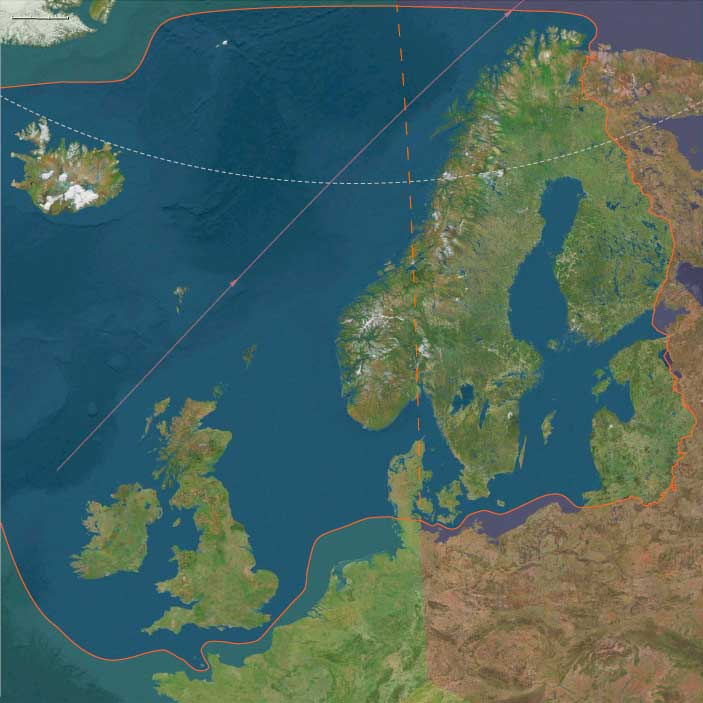
North Europe
View →Subregions
