
Northwestern North America (820 – 963 CE): …
Years: 820 - 963
Northwestern North America (820 – 963 CE): Salmon Worlds, Cedar Civilizations, and Dene–Inuit Frontiers
Geographic and Environmental Context
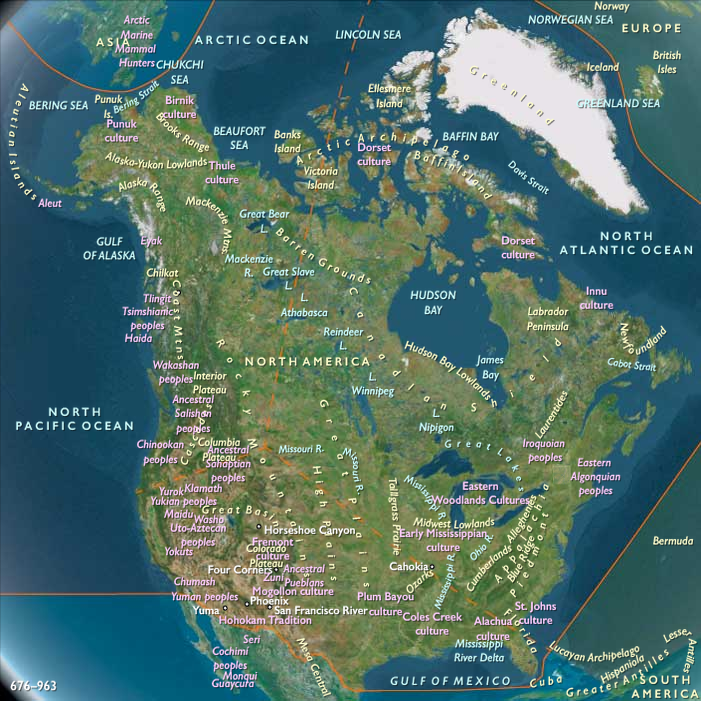
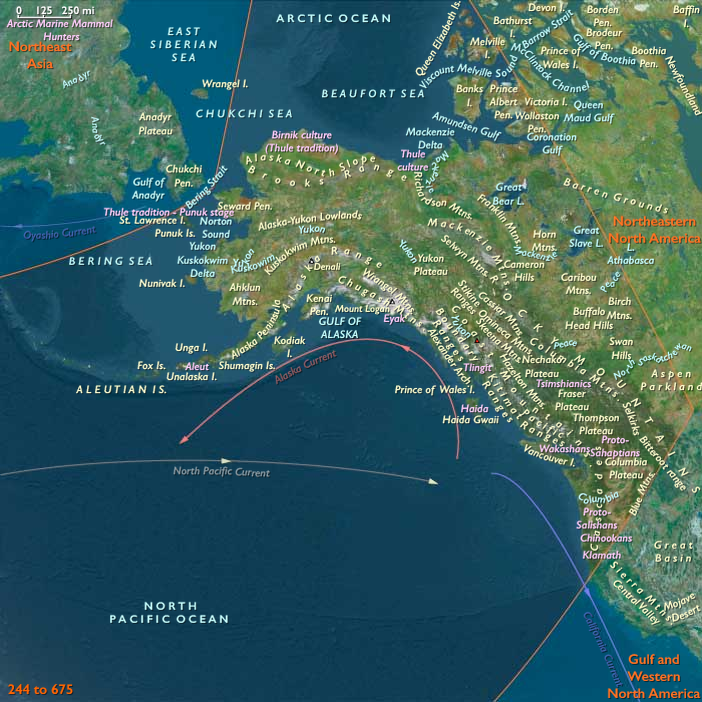
Northwestern North America includes western Canada (the Yukon and British Columbia), Alaska, Washington, northern Idaho, and the northwestern portions of Montana, Oregon, and California.
-
A mosaic of temperate rainforests, glaciated fjords, salmon rivers, and inside passages framed the Pacific littoral, while the subarctic taiga and tundra stretched inland across Alaska and the Yukon.
-
Coastal societies clustered along the Gulf of Alaska, Alexander Archipelago, and Salish Sea; interior peoples ranged river valleys and high plateaus; Arctic communities occupied the Bering, Chukchi, and Beaufort coasts.
Climate and Environmental Shifts
-
Cool, maritime conditions dominated the coast; inland, long winters and brief, productive summers shaped subsistence.
-
The approach to the Medieval Warm Period (after c. 950) modestly lengthened ice-free seasons and supported robust salmon runs on major rivers (e.g., Fraser, Skeena, Columbia, Copper, Yukon).
-
Sea-ice extent in the western Arctic fluctuated interannually, affecting seal and whale migrations.
Societies and Political Developments
-
North Pacific Coast chiefdoms: Tlingit, Haida, Tsimshian, Kwakwakaʼwakw, and Coast Salish organized into ranked societies (nobles, commoners, slaves) anchored by house-lineages and winter ceremonial orders.
-
Unangan (Aleut), Sugpiaq/Alutiiq, and Yup’ik–Inupiat communities specialized in sea-mammal hunting across the Aleutians, Kodiak–Prince William Sound, and Arctic coasts.
-
Athabaskan (Dene) peoples (e.g., Gwich’in, Tahltan, Carrier, Kaska) maintained flexible band polities in the subarctic interior, coordinating seasonal caribou hunts and riverine fisheries.
-
Leadership was situational inland (successful hunters, travel-masters) and hereditary–ritual on the coast (house heads who hosted potlatch distributions).
Economy and Trade
-
Salmon surplus (smoked/dried) formed the coastal economic base, supporting dense villages and long ceremonial cycles.
-
Interregional exchange moved obsidian, native copper, dentalium shells, furs, and carved wood among the coast, Columbia–Fraser plateaus, and the subarctic—linking Coast Salish, Plateau peoples, and Dene networks.
-
Arctic and Gulf of Alaska routes circulated sea-mammal oil, seal/sea otter pelts, and ivory; inland trails moved chert, birchbark, and tanned hides between taiga and coast.
Subsistence and Technology
-
Cedar plank-house villages, monumental posts, and carved crest panels characterized the coast; interior groups used pit houses, bark lodges, and seasonal camps.
-
Dugout canoes (cedar) enabled open-water travel and trade; in the north, skin boats—qayaq (kayak) and umiak—excelled in sea-mammal hunting.
-
Salmon harvests employed weirs, reef-nets, and wicker traps; smokehouses and grease rendering (eulachon/oolichan) secured winter stores.
-
Composite harpoons with toggling heads, sinew-backed bows, snowshoes, toboggans, and microblade-derived tool traditions persisted inland.
Movement and Interaction Corridors
-
The Inside Passage threaded canoe travel from Southeast Alaska to the Salish Sea; coastal headlands served as trade and marriage-alliance nodes.
-
River highways—the Fraser, Skeena–Bulkley, Columbia, Stikine, Copper, and Yukon—connected salmon fisheries to interior Dene trails and caribou grounds.
-
Arctic littoral routes linked Kotzebue Sound, Bering Strait, and Norton Sound communities; portage chains bridged drainages between taiga and coast.
Belief and Symbolism
-
Coastal cosmologies tied house-crests, clan histories, and animal beings (Raven, Eagle, Wolf, Killer Whale) into ceremonial performances and winter dances; prestige was distributed in potlatch feasts.
-
Shamanic healing and spirit-guardian relationships guided hunting luck from the Kodiak–Aleutian chain to the Mackenzie Delta.
-
Mortuary poles, memorial feasts, and carved regalia materialized lineage rights; interior Dene story cycles mapped rivers, passes, and animal migrations onto sacred geography.
Adaptation and Resilience
-
Multi-resource scheduling—spring eulachon, summer salmon, fall deer/moose/caribou, year-round shellfish—spread risk across ecosystems.
-
Food preservation (smoking, drying, grease) and communal labor in reef-net or weir fisheries produced stable surpluses for ritual economies.
-
Kin-based trade alliances buffered local shortages and secured access to distant copper, obsidian, and dentalium sources.
-
Mobility—canoe fleets on the coast, snow travel inland—allowed communities to pivot with climate and animal cycles.
Long-Term Significance
By 963 CE, Northwestern North America sustained complex, surplus-based chiefdoms on the coast and highly adaptive Dene–Inuit economies inland and Arctic. A web of canoe routes and river corridors integrated salmon, sea-mammal, and caribou landscapes into a single macro-region—an enduring foundation for the monumental art, ceremonial exchange, and wide-ranging trade that would define the centuries to follow.
Groups
- Kwakwakaʼwakw
- Coast Salish
- Haida people
- Tlingit people
- Athabaskans, or Dene, peoples
- Nuu-chah-nulth people (Amerind tribe; also formerly referred to as the Nootka, Nutka, Aht, Nuuchahnulth)
- Tsimshian
- Aleut people
- Alutiiq (Eskimo tribe)
- Inupiat
- Inuit
- Gwichʼin
- Kaska Dena
- Dakelh
- Tahltan
- Yupʼik
Topics
Commodoties
Subjects
- Commerce
- Architecture
- Watercraft
- Sculpture
- Environment
- Decorative arts
- Mayhem
- Faith
- Government
- Custom and Law
- Technology
Regions
Subregions
Related Events
Showing 10 events out of 54673 total
Years: 820 - 963
Groups
- Kwakwakaʼwakw
- Coast Salish
- Haida people
- Tlingit people
- Athabaskans, or Dene, peoples
- Nuu-chah-nulth people (Amerind tribe; also formerly referred to as the Nootka, Nutka, Aht, Nuuchahnulth)
- Tsimshian
- Aleut people
- Alutiiq (Eskimo tribe)
- Inupiat
- Inuit
- Gwichʼin
- Kaska Dena
- Dakelh
- Tahltan
- Yupʼik
Topics
Commodoties
Subjects
- Commerce
- Architecture
- Watercraft
- Sculpture
- Environment
- Decorative arts
- Mayhem
- Faith
- Government
- Custom and Law
- Technology
Regions
Subregions