A young woman strikes a marching drum…
October 1789 CE
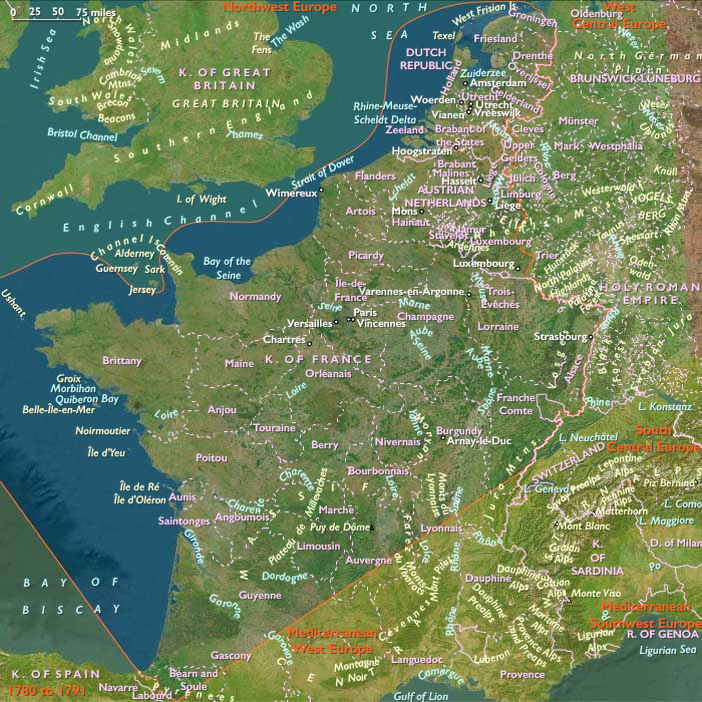
From their starting point in the markets of the eastern section of Paris known as the Faubourg Saint-Antoine, the angry women force a nearby church to toll its bells.
Their numbers continue to grow and with restless energy the group begins to march.
More women from other nearby marketplaces join in, many bearing kitchen blades and other makeshift weapons, as the tocsins ring from church towers throughout several districts.
Driven by a variety of agitators, the mob converges on the Hôtel de Ville, where they demand not only bread, but arms.
As more and more women—and men—arrive, the crowd outside the city hall reaches between six and seven thousand, and perhaps as many as ten thousand.
One of the men is the audacious Stanislas-Marie Maillard, a prominent vainqueur of the Bastille, who eagerly snatches up his own drum and leads the infectious cry of "à Versailles!"
Maillard is a popular figure among the market-women, and by unofficial acclamation is given a leadership role.
Maillard rescues the Hôtel de Ville's quartermaster, Pierre-Louis Lefebvre-Laroche, a priest commonly known as Abbé Lefebvre, who had been strung up on a lamppost for trying to safeguard its gun powder storage.
The Hôtel de Ville itself is ransacked as the crowd surges through taking its provisions and weapons, but Maillard helps prevent it from burning down the entire building.
In due course, the rioters' attention turns again to Versailles, and they filter back to the streets.
Maillard deputizes a number of women as group leaders and gives a loose sense of order to the proceedings as he leads the crowd out of the city in the driving rain.
As they leave, thousands of National Guardsmen who have heard the news are assembling at the Place de Grève.
The Marquis de Lafayette, in Paris as their commander-in-chief, discovers to his dismay that his soldiers are largely in favor of the march and are being egged on by agitators to join in.
Even though he is one of France's greatest war heroes, Lafayette cannot dissuade his troops and they begin threatening to desert.
Rather than see them leave as another anarchic mob, the Parisian municipal government tells Lafayette to guide their movements; they also instruct him to request that the king return voluntarily to Paris to satisfy the people.
Sending a swift horseman forward to warn Versailles, Lafayette contemplates the near mutiny of his men: he is aware that many of them had openly promised to kill him if he did not lead or get out of the way.
At four o'clock in the afternoon, fifteen thousand guards with several thousand more civilian latecomers set off for Versailles.
Lafayette reluctantly takes his place at the head of their column, hoping to protect the king and public order.
Locations
People
Commodities
Subjects
Regions
West Europe
View →Subregions