King João VI’s Departure from Brazil and…
April 1821 CE
King João VI’s Departure from Brazil and the Path to Brazilian Independence (April 1821)
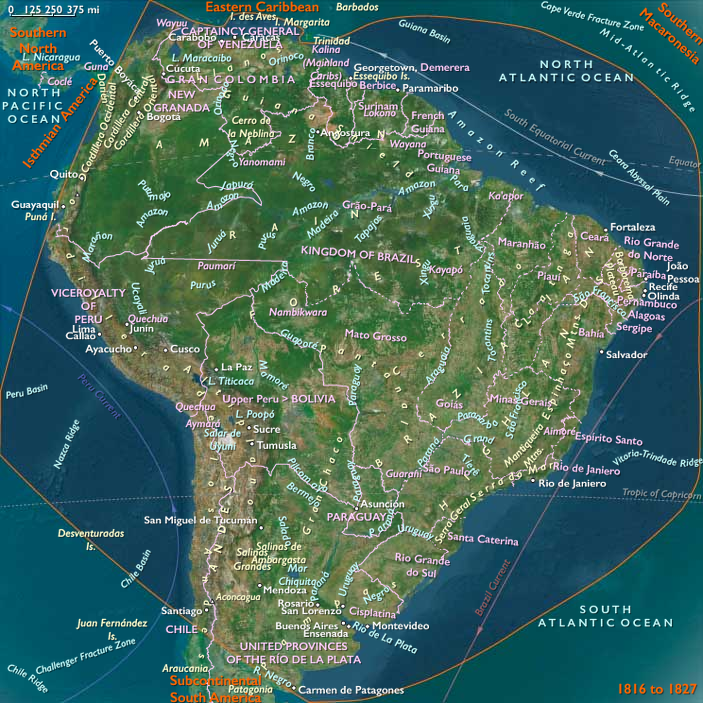
By April 1821, João VI faced a political crisis in both Portugal and Brazil. With the Portuguese Cortes demanding his return, the king attempted to balance the rising liberal movement in Portugal with growing Brazilian fears of losing autonomy. However, his efforts to find a middle ground ultimately failed, leading to his departure for Lisbon and the beginning of Brazil’s final break from Portugal.
The Rio de Janeiro Crisis – April 20–21, 1821
- On April 20, 1821, João VI convened a meeting in Rio de Janeiro to select deputies for the Portuguese Constituent Cortes.
- However, public protests erupted the following day, as many Brazilians feared that João’s return to Portugal would mean a loss of Brazil’s newly gained autonomy.
- The protests were violently suppressed, further increasing tensions between the Brazilian population and the Portuguese administration.
João VI’s Attempt at a Compromise – Prince Pedro’s Role
- Recognizing the growing unrest, João VI sought a middle ground by proposing to send his son, Prince Pedro, to Lisbon to grant a constitution and establish a new government.
- However, Prince Pedro, already influenced by liberal ideas and aware of Brazilian nationalist sentiment, refused.
- At this point, it was clear that the crisis had reached a point of no return, and Brazil’s path to independence was inevitable.
João VI Leaves Brazil – April 25, 1821
- Unable to maintain control, João VI named Prince Pedro as regent of Brazil in his name.
- On April 25, 1821, after thirteen years in Brazil, João VI set sail for Lisbon, leaving behind a country he would always miss but never return to.
Consequences – The Last Step Toward Brazilian Independence
- João VI’s departure left Prince Pedro in a position of power, where he soon faced pressure from Brazilian nationalists.
- As Portuguese authorities sought to reassert control over Brazil, Pedro was forced to choose between Portugal and Brazil.
- In 1822, Pedro would declare Brazil’s independence, completing the break from Portuguese rule.
Conclusion – A Nation at the Crossroads
João VI’s departure from Brazil in 1821 marked the beginning of the end of Portuguese colonial rule in South America. His attempt to maintain unity between Portugal and Brazil had failed, and his son Pedro I would soon lead Brazil to full independence, permanently reshaping the political landscape of the Portuguese-speaking world.