The Battle of Aljubarrota (August 14, 1385):…
1385 CE
The Battle of Aljubarrota (August 14, 1385): Portugal Secures Its Independence
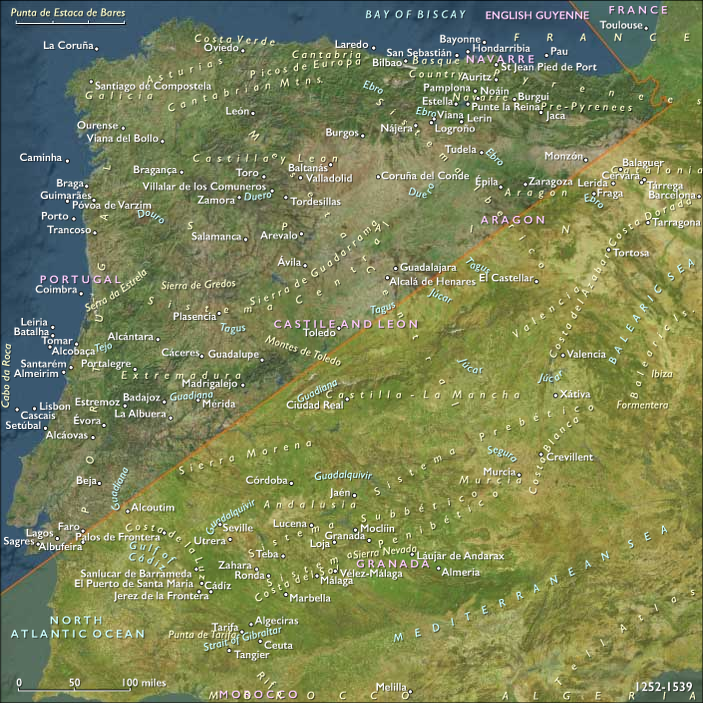
Following John I of Castile’s massive invasion of Portugal in 1385, the Portuguese army, led by John I of Portugal and his constable, Nuno Álvares Pereira, prepared to intercept the Castilian forces before they could lay siege to Lisbon once again.
Portuguese Strategy and the Role of English Allies
- The Portuguese royal army gathered in Tomar, where John I of Portugal and Nuno Álvares Pereira planned to engage Castile before it reached Lisbon.
- By Easter of 1385, a small contingent of English longbowmen—about 100 veteran archers from the Hundred Years’ War—had arrived in Portugal.
- These troops were sent in honor of the Anglo-Portuguese Treaty of 1373, the oldest active international alliance in the world (which would later be reaffirmed in the Treaty of Windsor in 1386).
- The Portuguese and their English allies marched toward Leiria, aiming to block the Castilian advance.
The Decisive Battle at Aljubarrota (August 14, 1385)
- The Castilian army, numbering about 31,000 men, was supplemented by French heavy cavalry and other allies.
- The Portuguese force, though outnumbered at about 6,500–7,000 men, held a strong defensive position at São Jorge near Aljubarrota.
- Inspired by English tactics from the Hundred Years' War, Nuno Álvares Pereira deployed his troops in a defensive square formation, similar to what had been used at Atoleiros (1384) and what the English had done at Crécy (1346) and Poitiers (1356).
- The English longbowmen, positioned strategically, played a crucial role in weakening Castilian cavalry charges.
- The Castilians launched repeated assaults, but the Portuguese defensive tactics, terrain advantages, and discipline allowed them to annihilate the enemy in less than an hour.
Aftermath: Portugal Secures Independence
- The Castilian army collapsed, suffering enormous casualties, and John I of Castile fled to Santarém, then back to Castile.
- Though no formal peace treaty was signed, John I of Portugal’s victory decisively secured Portugal’s independence.
- This battle marked the end of the 1383–1385 Crisis, confirming the rise of the House of Aviz and ensuring that Portugal remained separate from Castile.
The Battle of Aljubarrota remains one of the most important victories in Portuguese history, symbolizing the kingdom’s resilience and military skill, and laying the groundwork for Portugal’s future as a major maritime power.
Locations
People
Groups
Topics
Commodities
Subjects
Regions
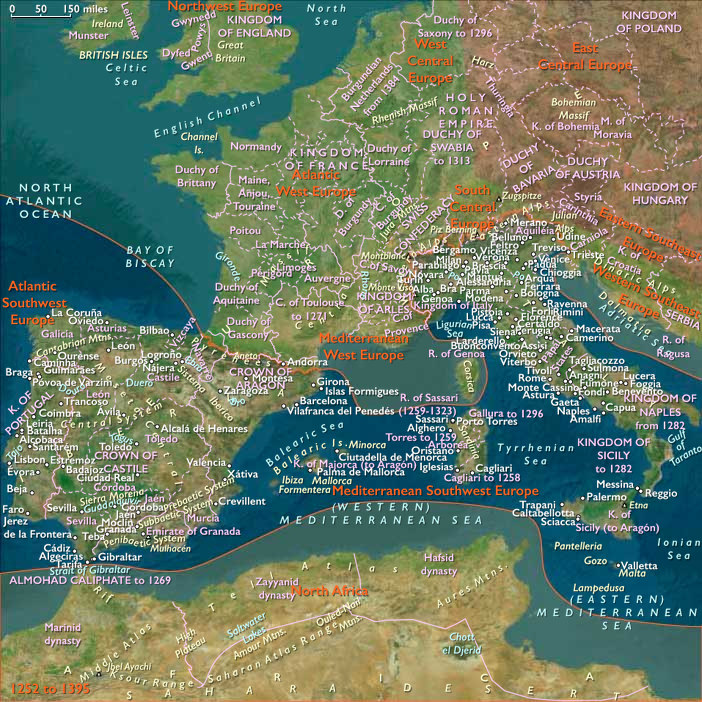
Southwest Europe
View →Subregions