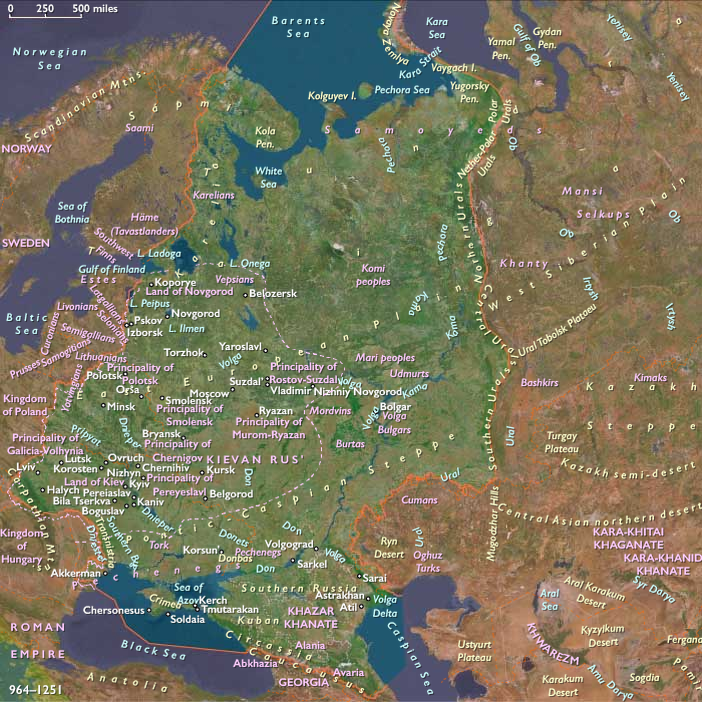
Pereiaslav-Khmelnytskyi, which is to play a significant…
1061 CE
Pereiaslav-Khmelnytskyi, which is to play a significant role in the history of Ukraine, is mentioned for the first time in the text of the Rus' treaty with Constantinople (911) as Pereyaslav-Ruskyi, to distinguish it from Pereyaslavets in Bulgaria.
Vladimir I, Prince of Kiev, had built a large fortress here in 992 to protect the southern limits of Kievan Rus' from raids of nomads from steppes of present southern Ukraine.
The Cumans, as Constantinople calls the non-Moslem, northern Oghuz Turks, had first encountered the Rus' in 1055, which had resulted in a peace agreement.
In 1061, however, the Cumans invade and devastate the Pereiaslav principality, supposedly breaching the earthworks and palisades that had been constructed by Princes Vladimir (d. 1015) and Yaroslav (d. 1054).
Groups
Commodities
Subjects
Regions
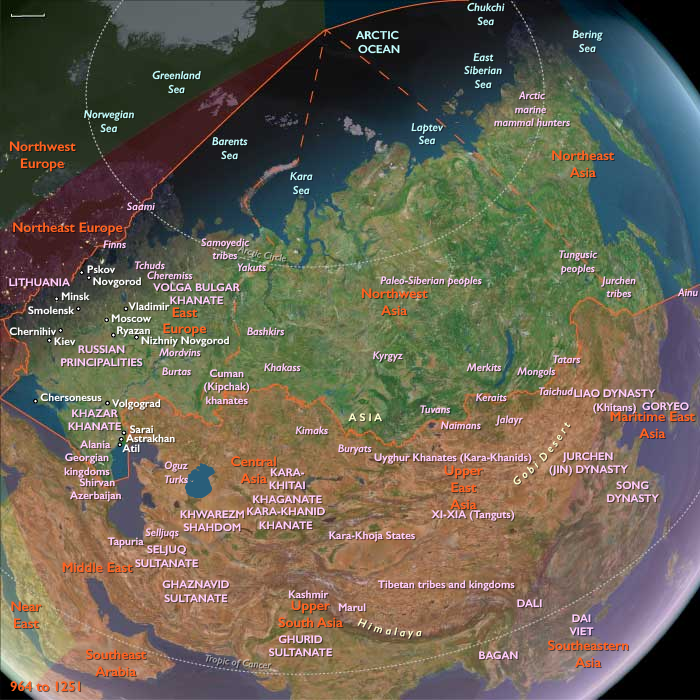
Northeastern Eurasia
View →Subregions