
Filters:
A particularly virulent form of Andean caudillismo …
Years: 1816 - 1827
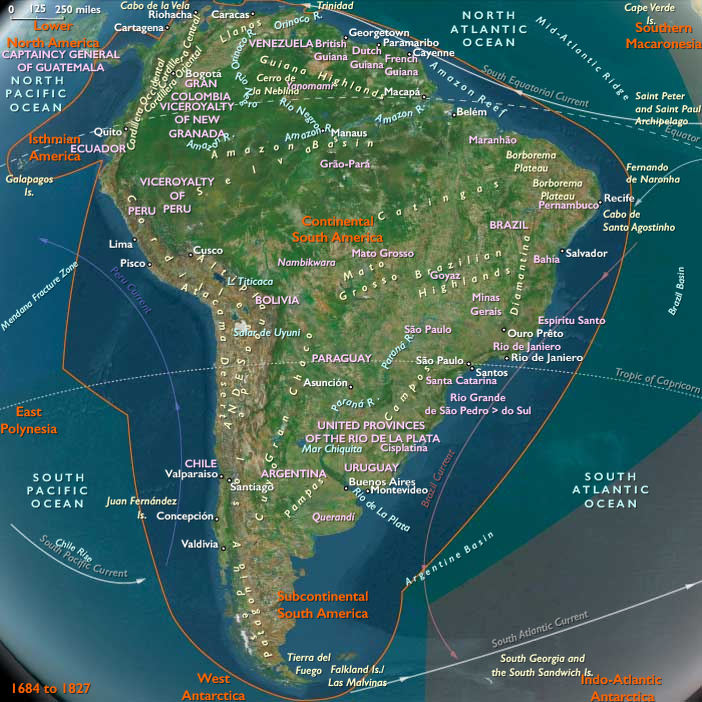
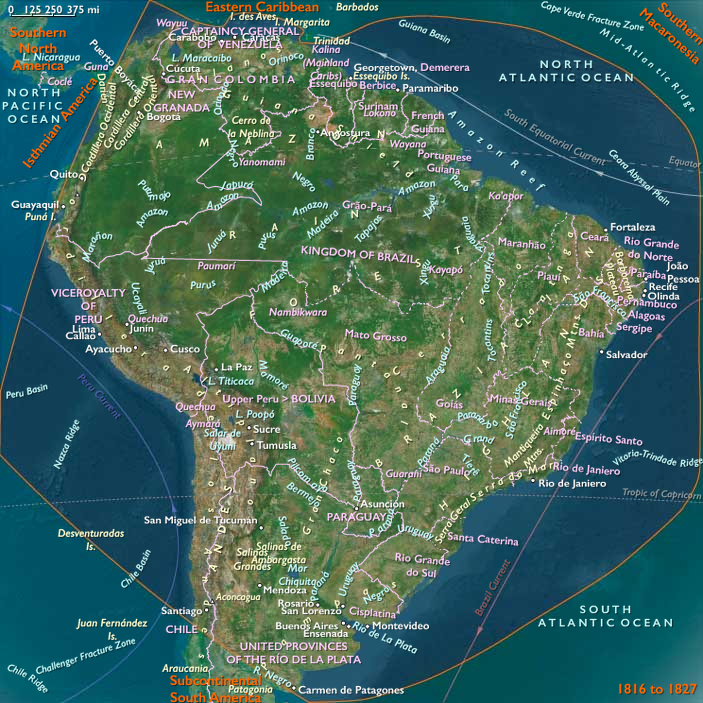
A particularly virulent form of Andean caudillismo surges into the political vacuum left by the collapse of Spanish rule.
Caudillo strongmen, often officers from the liberation armies, manage to seize power through force of arms and the elaboration of extensive and intricate clientelistic alliances.
Personalistic, arbitrary rule replaces the rule of law, and a prolonged and often byzantine struggle for power is waged at all levels of society.
The upshot is internal political fragmentation and chronic political instability during the first two decades of the post-independence era.
Caudillo strongmen, often officers from the liberation armies, manage to seize power through force of arms and the elaboration of extensive and intricate clientelistic alliances.
Personalistic, arbitrary rule replaces the rule of law, and a prolonged and often byzantine struggle for power is waged at all levels of society.
The upshot is internal political fragmentation and chronic political instability during the first two decades of the post-independence era.
Locations
People
- Agustín Gamarra
- Andrés de Santa Cruz
- Antonio José de Sucre
- Felipe Santiago de Salaverry
- Ferdinand VII of Spain
- Joseph Bonaparte
- José Bernardo de Tagle y Portocarrero, Marquis of Torre Tagle
- José de San Martín
- Luis José de Orbegoso
- Napoleon
- Simón Bolívar
- Thomas Cochrane, 10th Earl of Dundonald
Groups
- Christians, Roman Catholic
- Quechua (Amerind tribe)
- Spaniards (Latins)
- Peru, Viceroyalty of
- Spain, Habsburg Kingdom of
- Spain, Bourbon Kingdom of
Topics
- Colonization of the Americas, Spanish
- Bolivian War of Independence
- Bolivar's War
- San Martin's War
- Bolívar's campaign to liberate New Granada
- San Martin in Peru
Commodoties
- Domestic animals
- Grains and produce
- Fibers
- Textiles
- Strategic metals
- Sweeteners
- Beer, wine, and spirits
- Land
- Money
- Manufactured goods
- Stimulants
Subjects
Regions
Subregions
Years: 1816 - 1827
Locations
People
- Agustín Gamarra
- Andrés de Santa Cruz
- Antonio José de Sucre
- Felipe Santiago de Salaverry
- Ferdinand VII of Spain
- Joseph Bonaparte
- José Bernardo de Tagle y Portocarrero, Marquis of Torre Tagle
- José de San Martín
- Luis José de Orbegoso
- Napoleon
- Simón Bolívar
- Thomas Cochrane, 10th Earl of Dundonald
Groups
- Christians, Roman Catholic
- Quechua (Amerind tribe)
- Spaniards (Latins)
- Peru, Viceroyalty of
- Spain, Habsburg Kingdom of
- Spain, Bourbon Kingdom of
Topics
- Colonization of the Americas, Spanish
- Bolivian War of Independence
- Bolivar's War
- San Martin's War
- Bolívar's campaign to liberate New Granada
- San Martin in Peru
Commodoties
- Domestic animals
- Grains and produce
- Fibers
- Textiles
- Strategic metals
- Sweeteners
- Beer, wine, and spirits
- Land
- Money
- Manufactured goods
- Stimulants
Subjects
Regions
Subregions