
Event
Philip the Good Secures Picardy and Amiens…
Philip the Good Secures Picardy and Amiens (1435)
Through the pivotal Treaty of Arras in 1435, Philip the Good, Duke of Burgundy, strengthened his territorial position by acquiring strategically important areas of Picardy, including its principal city, Amiens. This territorial acquisition was a critical diplomatic success for Burgundy, underscoring Philip’s ability to leverage the conflict between England and France to expand Burgundian influence in Atlantic West Europe.
The acquisition of Amiens, the capital of Picardy, was particularly significant. It not only strengthened Burgundy’s geopolitical presence but also provided Philip with control over a prosperous and strategically located region that linked Burgundy’s domains with the economic centers of northern France and Flanders.
This territorial gain highlighted Philip’s astute diplomatic maneuvering, securing substantial concessions from King Charles VII of France in exchange for abandoning the English alliance. With Picardy firmly under Burgundian control, Philip enhanced his economic strength, military security, and political influence—further isolating English forces while simultaneously solidifying his position within the evolving political landscape of northern and western France.
In broader terms, Philip’s annexation of Picardy, and particularly Amiens, signified Burgundy's emergence as a dominant regional power, reshaping the political alignment in Atlantic West Europe for decades to come.
-
{# Image navigates to the detail page; the magnifying-glass chip is the only Fancybox lightbox trigger (kept a separate sibling — anchors can't nest). #}
 The North Atlantic Lands
World
-
{# Image navigates to the detail page; the magnifying-glass chip is the only Fancybox lightbox trigger (kept a separate sibling — anchors can't nest). #}
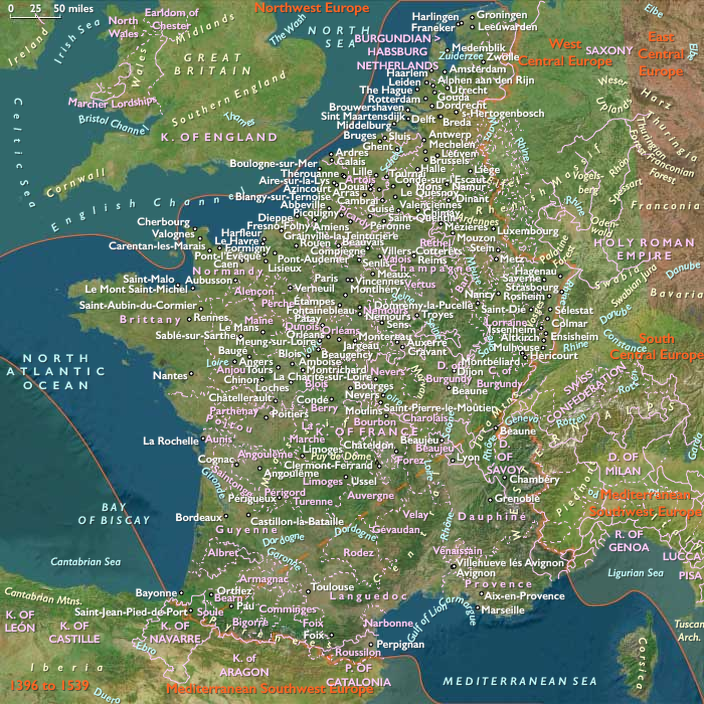 West Europe
Region
-
{# Image navigates to the detail page; the magnifying-glass chip is the only Fancybox lightbox trigger (kept a separate sibling — anchors can't nest). #}
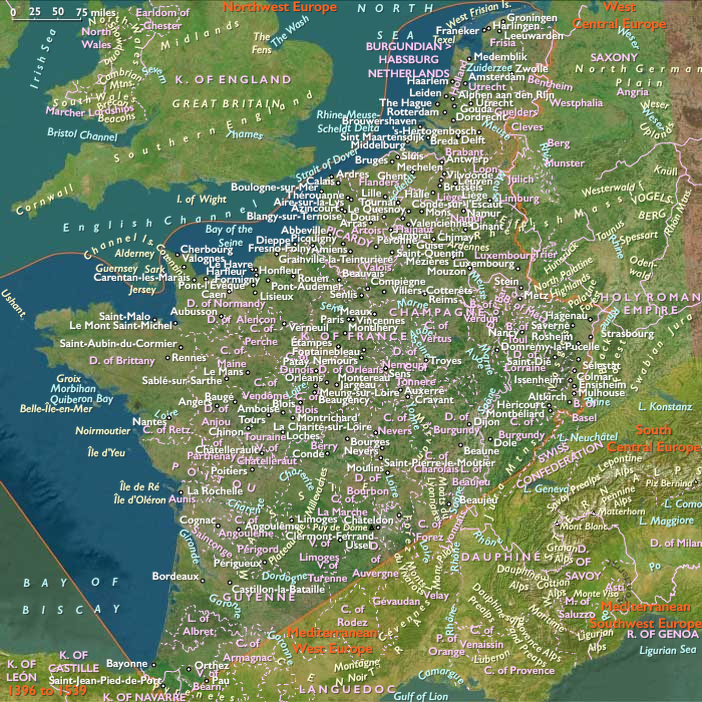 Atlantic West Europe
Subregion
