
Philip II’s Raid on Dieppe and the…
1195 CE
Philip II’s Raid on Dieppe and the Burning of Richard’s Fleet (1195 CE)
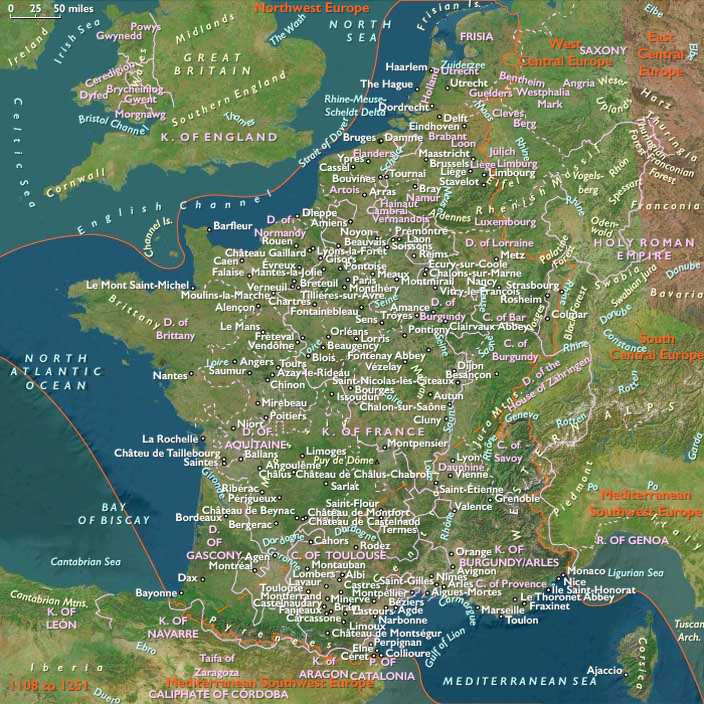
Following his treacherous actions at Verneuil, Philip II of France pressed his advantage in northeastern Normandy, launching a bold raid on Dieppe. During this campaign, Philip’s forces burned the English ships in the harbor, successfully repelling an attempted counterattack by Richard I.
Philip’s Raid on Dieppe
- Dieppe, a key port on the English Channel, was vital to Richard’s supply lines and control over Normandy’s northern coast.
- Philip launched a surprise assault, targeting Richard’s fleet in the harbor to disrupt Angevin naval operations.
- His forces set fire to the English ships, causing widespread destruction.
Richard’s Counterattack and Philip’s Victory
- Richard arrived in time to challenge Philip, attempting to drive the French forces out of Dieppe.
- However, Philip successfully repulsed Richard’s attack, forcing him to withdraw.
- This marked a rare direct battlefield success for Philip against Richard, who was known for his superior military skills.
Strategic Consequences
- Philip’s success at Dieppe weakened Richard’s naval capabilities, making it harder for him to supply and reinforce his forces in Normandy.
- The loss of ships in the harbor disrupted Angevin sea routes, allowing Philip to exert more pressure on Normandy’s northern front.
- The raid further escalated the war, showing that Philip was willing to engage in aggressive, preemptive strikes to weaken Richard’s position.
Though Richard remained formidable, Philip’s raid at Dieppe in 1195 demonstrated his growing confidence in challenging the Angevin forces both on land and at sea.
Locations
People
Groups
Jews
View →
Germans
View →
Anjou, County of
View →
Normandy, Duchy of
View →
Brittanny, Duchy of
View →
Normans
View →
Holy Roman Empire
View →
French people (Latins)
View →
Aquitaine, (Angevin) Duchy of
View →
France, (Capetian) Kingdom of
View →
Christians, Roman Catholic
View →
English people
View →
Anglo-Normans
View →
Austria, Archduchy of
View →
Regions
West Europe
View →Subregions
