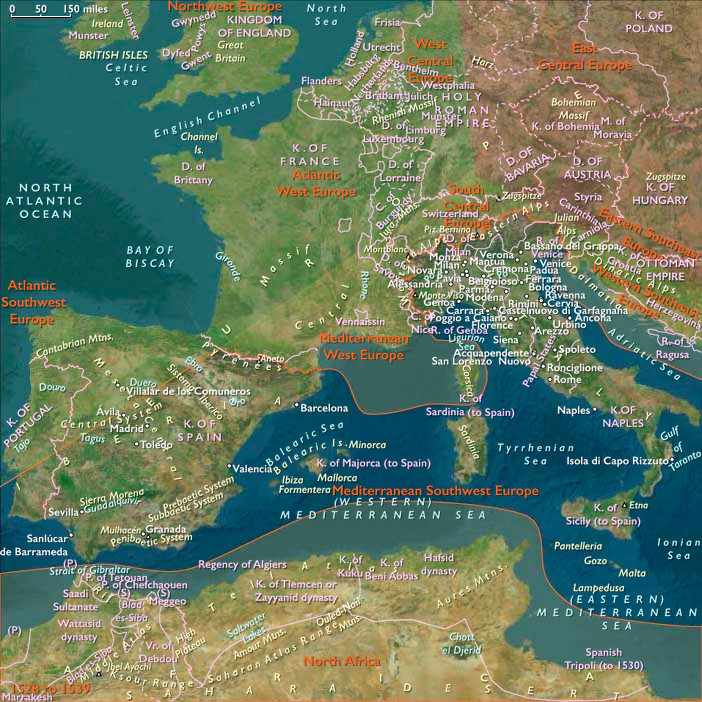
Pistoria (in Latin other possible spellings are…
1530 CE
Pistoria (in Latin other possible spellings are Pistorium or Pistoriae) had been a center of Gallic, Ligurian and Etruscan settlements before becoming a Roman colony in the sixth century BCE, along the important road Via Cassia: in 62 BCE the demagogue Catiline and his fellow conspirators were slain nearby.
From the fifth century the city was a bishopric, and during the Lombardic kingdom it was a royal city and had several privileges.
Pistoia's most splendid age began in 1177 when it proclaimed itself a free commune: in the following years it became an important political center, erecting walls and several public and religious buildings.
The taking of Ghibelline Pistoia by Guelph Florence in 1254 was among the origins of the division of the Florentine Guelphs into "Black" and "White" factions.
During the fourteenth century Ormanno Tedici was one of the Lords of the city.
Dante mentioned in his Divina Commedia the free town of Pistoia as the home town of Vanni Fucci, who is encountered in Inferno tangled up in a knot of snakes while cursing God.
Pistoia remains a Florentine holding except for a brief period in the fourteenth century, when Castruccio Castracani captured it for Lucca, and it is officially annexed to Florence in 1530.
Locations
Groups
Commodities
Subjects
Regions
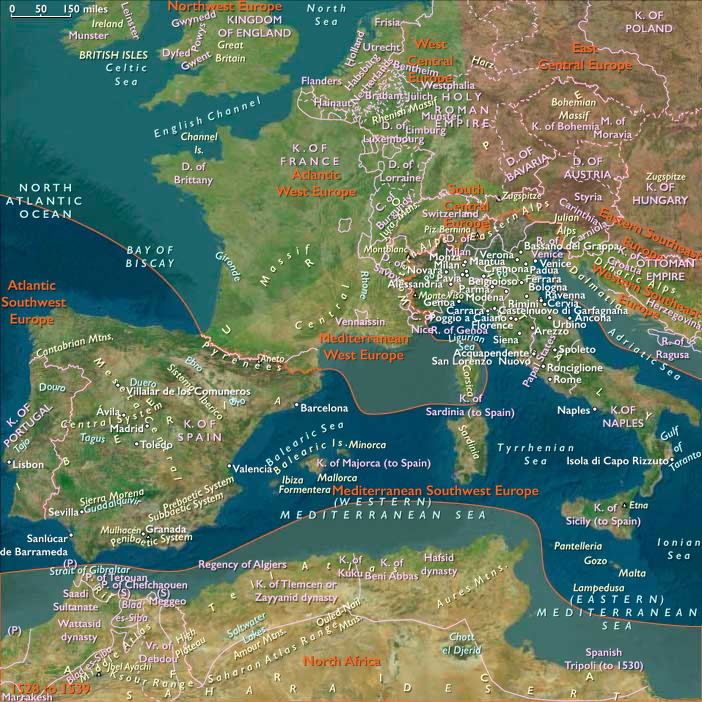
Southwest Europe
View →Subregions