Piyama-Radu is mentioned in the Manapa-Tarhunta letter…
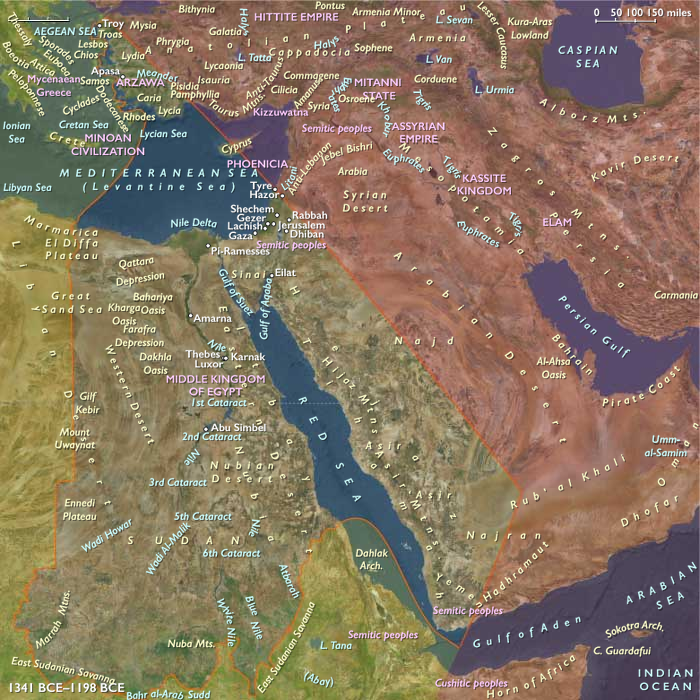
1341 BCE to 1198 BCE
Piyama-Radu is mentioned in the Manapa-Tarhunta letter (aroud 1295 BCE) and, in the past tense, in the Milawata letter (around 1240 BCE).
The Tawagalawa letter further mentions Miletus (as "Millawanda") and its dependent city Atriya, as does the Milawata letter; and its governor Atpa, as does the Manapa-Tarhunta letter (although that letter does not state Atpa's fiefdom).
The letter bears a conversational style which has commonly been associated with Hattusili III (1265-1235 BCE).
Oliver Gurney in "The authorship of the Tawagalawas Letter" (Silva Anatolica, 2002, 133-41) argues that the letter belongs to his older brother Muwatalli II (1295-1272 BCE), but if the Milawata letter postdates this letter, and if that letter is taken as a letter of Mursili II (1322-1295 BCE), then the Tawagalawa letter might belong to Mursili in the late 1300s BCE, but after the end of his annals.
The Hittite king in this letter refers to former hostilities between the Hittites and the Ahhiyawans over Wilusa, which had now been resolved amicably: "Now as we have come to an agreement on Wilusa over which we went to war..." Wilusa is often identified with Troy VIIa in archaeology (destroyed in around 1190 BCE), and with legendary Troy of the Greek Trojan War cycle.
Locations
People
Groups
Regions
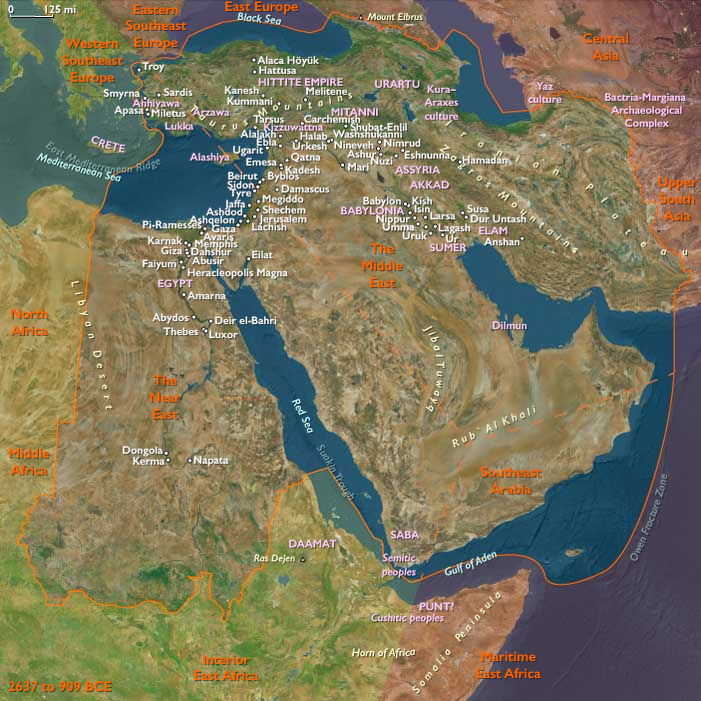
The Near and Middle East
View →Subregions