Portrait of a Knight, a painting by…
1510 CE
Portrait of a Knight, a painting by Carpaccio dated 1510, is the earliest full-length portrait in Western painting—on the assumption that it is a portrait, as seems likely.
It is characteristic of Carpaccio that apart from this important innovation, the style of the painting seems in other respects to look back to the previous century.
The subject is now considered most likely to be Francesco Maria I della Rovere, the Duke of Urbino, and nephew of Pope Julius II, during whose reign it is painted.
Until the twentieth century, the painting will be given the monogram of Albrecht Dürer, and Carpaccio's signature overpainted.
The realism and detail of Carpaccio does in fact show Northern influence.
The painting shows a young knight, surrounded by a rather crowded series of symbols.
The heron caught in the sky by a hawk might hint at this knight's death in battle, also alluded to by his posture, which recalls that of a funerary statue; an alternative theory is that this is a memorial portrait of a person already dead.
The other knight with a lance might then be the same person during his life.
In the left lower corner is a white ermine and a scroll stating "I prefer to die rather than to incur dishonor" (malo mori quam foedari).
The symbolism of these and the other animals and plants have been much discussed by art historians. (The painting is currently is housed in the Thyssen-Bornemisza Collection of Madrid; put up for sale by heirs of the American collector Otto Kahn after his death, it will be sold to Heinrich Thyssen in 1935.)
Images

Carpaccio: Young Knight in a Landscape (also known as Portrait of a Knight) 1510. Oil on canvas, 151.5 cm (59.6 in) x 218.5 cm (86 in). Thyssen-Bornemisza Museum.
Locations
People
Regions
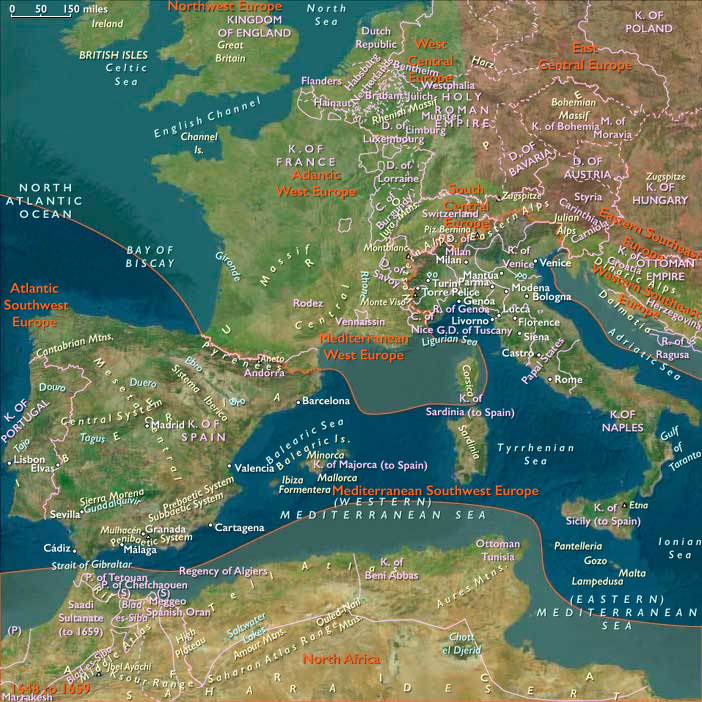
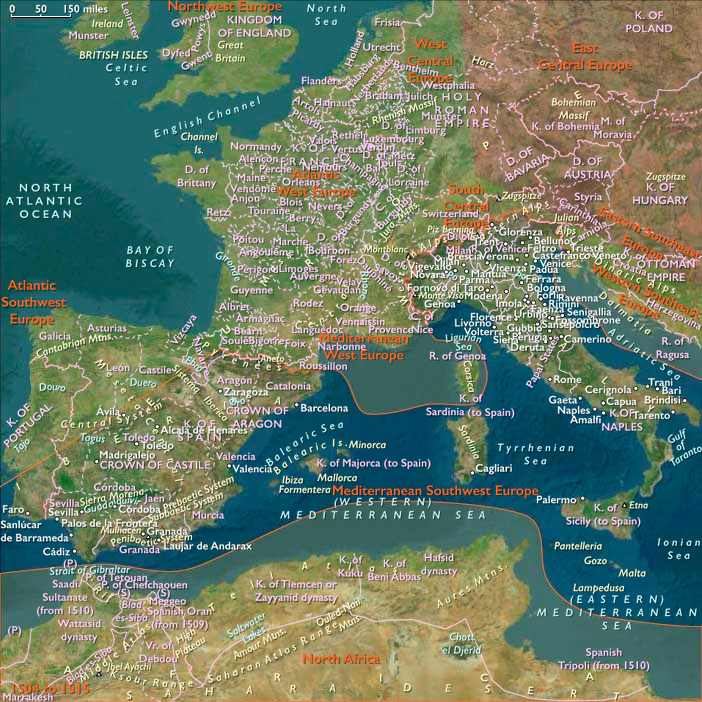
Southwest Europe
View →Subregions