An Acadian militia and Mi’kmaq (Mi'gmaq) militia,…
July 1760 CE
The Acadians arrive in about twenty schooners and small boats.
Along with the French, they continue up river to draw the British fleet closer to the Acadian community of Pointe-à-la-Batterie, where they are ready to launch a surprise attack on the English.
The Acadians sink a number of their vessels to create a blockade, upon which the Acadian and Mi’kmaq fire at the ships.
On June 27, the British had succeeded in maneuvering just beyond the chain of sunken ships. (One of the British ships, HMS Norwich (1745), is almost lost.)
Once the British are in range of the battery, they fire on the installation.
This skirmish lasts all night and is repeated with various breaks from the 28th of June to July 3rd, when the British overwhelm Pointe à la Batterie, burning one hundred and fifty to two hundred buildings that make up the Acadian village community at Pointe à la Batterie.
The militias retreat and re-group with the Machault.
They sink more schooners to create another blockade.
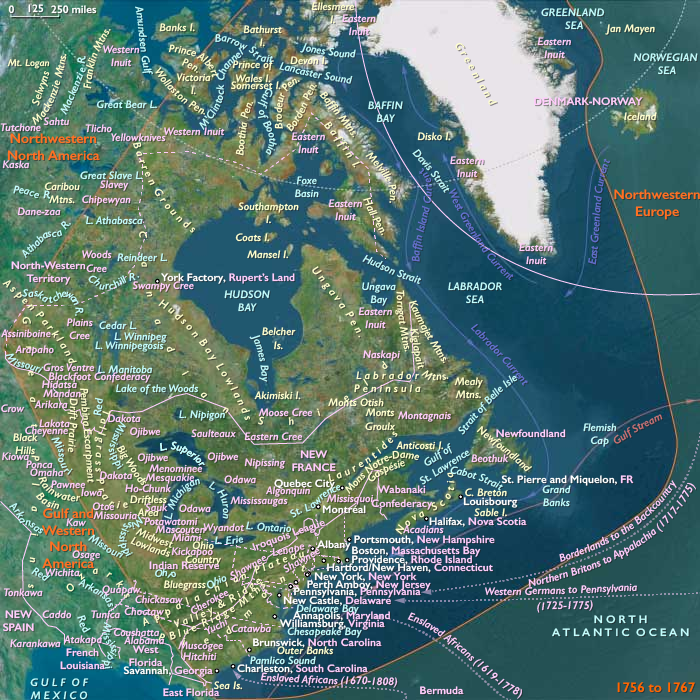
They create two new batteries, one on the North shore at Pointe de la Mission (today Listuguj, Quebec), and one on the South shore at Pointe aux Sauvages (today Campbellton, New Brunswick).
They create a blockade with schooners at Pointe aux Sauvages.
On July 7, Byron spends the day getting rid of the battery at Pointe aux Sauvages and later returns to the task of destroying Le Machault.
By the morning of July 8, Scarborough and Repulse are in range of the blockade and face to face with Le Machault.
The British make two attempts to defeat the batteries and the militias hold out.
On the third attempt, they are successful.
Despite La Giraudais' positioning, Byron is able to negotiate the shallower waters and on July 3, confronta the French defensive line.
At close range and in calm winds, the battle commences.
Despite being outgunned, the French inflict heavy damage on the British before Byron succeeds in silencing the shore batteries.
Le Machault and the merchant ships Bienfaisant and Marquis-de-Malauze withdraw further upriver with the British in pursuit.
For the next several days the two forces engage in a running battle, but La Giraudais recognizea that he cannot win a battle of attrition and on July 8 he has Le Machault and Bienfaisant scuttled to prevent the capture of their cargo (Marquis-de-Malauze is spared due to the prisoners that she contains in her hold).
The remaining French force now withdraw to the shore and the safety of Listuguj while Byron returns to Louisbourg.
The Battle of the Restigouche ends with all the French ships and most of the Acadians' boats sunk, but the English are not successful in landing because of the number of muskets on shore.
The Acadian militia and Mi'kmaq have made their last stand here and survived.
Their resistance is in effect a success.
The loss of important provisions hastens the fall of New France.
Without outside support and surrounded by three separate British forces, Montreal will fall on September 8.
La Giraudais will finally surrender on October 29, six days after hearing the news of the capitulation.
Byron will later command the British fleet that is defeated at the Battle of Grenada in 1779, as well as becoming Governor of Newfoundland.
Locations
People
Groups
Topics
Regions

Northern North America
View →Subregions