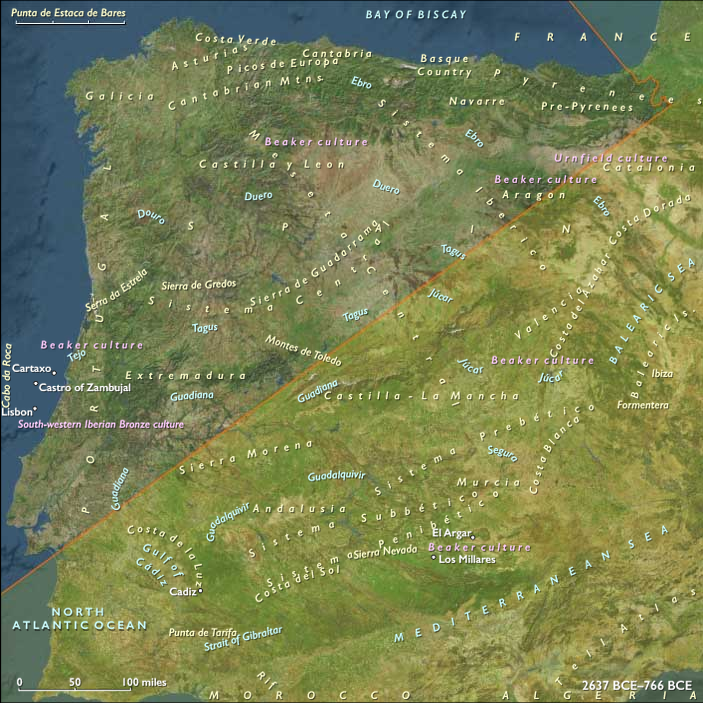
By 2000 BCE, toward the end of…
2637 BCE to 910 BCE
By 2000 BCE, toward the end of the Neolithic period, distinct cultural regions begin to emerge among the Stone Age inhabitants of the Iberian Peninsula. One of these is the western Megalithic culture, which leaves behind an impressive legacy of megalithic necropolises, particularly in present-day Portugal. The most notable sites include Palmela, Alcalar, Reguengos, and Monsaraz.
The Paleolithic and Neolithic periods are followed by the Bronze Age and Iron Age, likely beginning between 1500 and 1000 BCE. During this time, the Iberian Peninsula sees waves of colonization and cultural influences from various peoples.
Among the earliest known groups are the Ligures, about whom little is known. Another major group is the Iberians (Iberos), believed to have migrated from North Africa. The Iberians are a sedentary society, practicing agriculture with primitive plows, using wheeled carts, developing writing systems, and making ritual offerings to the dead.
By the 12th century BCE, the Phoenicians arrive on the western coast of the Iberian Peninsula in search of metals. They establish trading posts at Cadiz, Málaga, and Seville, facilitating commerce with inland communities. They export silver, copper, and tin while introducing eastern trade goods, significantly shaping the region’s economic and cultural landscape.
Groups
Commodities
Subjects
Regions
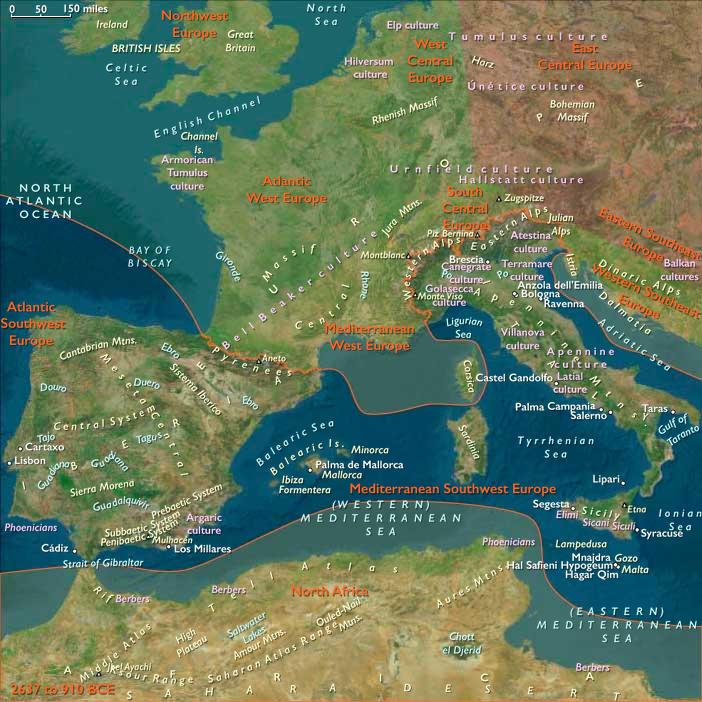
Southwest Europe
View →Subregions