
Doctor Andrew Turnbull had secured a grant…
1777 CE
Doctor Andrew Turnbull had secured a grant of forty thousand acres (one hundred and sixty square kilometers) of land in conjunction with Sir William Duncan, for the East Coast of Florida, with the requirement from the British government that it be settled within ten years in the proportion of one person for every hundred acres.
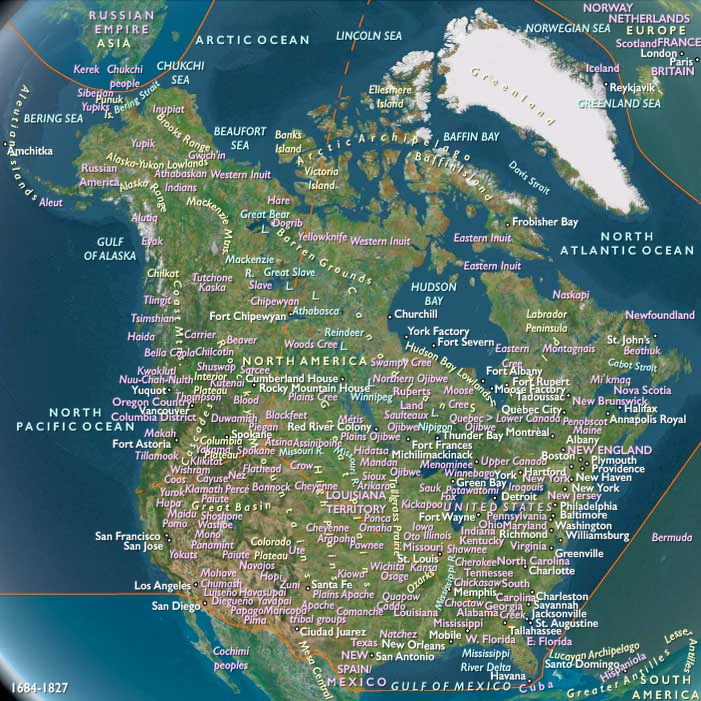
The Scottish physician, having married Maria Gracia Dura Bin, the daughter of a Greek merchant from Smyrna, in Asia Minor, establishes the colony of "New Smyrna" in 1768 on the Atlantic coast; nearly three times the size of the colony at Jamestown, it is the single largest attempt by a member of the British Crown at colonization in the New World.
Turnbull had sailed for America in 1765 and in St. Augustine, Florida, had secured from Governor James Grant the grant of land located about seventy-five miles (one hundred and twenty-one kilometers) south of St. Augustine, in what is now New Smyrna Beach, Florida.
He had then returned to England where he secured financing for his forthcoming venture through bounties from the government and the Board of Trade, and then sailed for the Mediterranean to search for his colonists "for a Tract of Land in East Florida on which I might settle a small Colony of Greeks," as Turnbull explained in a letter to Lord Shelburne.
One of Turnbull's prospective partners in the venture had been Francis Levett, an English factor working in Livorno for the Levant Company.
From a powerful English mercantile family with extensive trading connections, Levett hoped to use his pull in the Levant to supply Greek laborers to Turnbull's new colony.
Later, Levett left London, where he had relocated, and settled in British East Florida, where he was granted a ten thousand-acre (forty square kilometers) plantation by Governor Grant.
His collaboration with Turnbull apparently came to naught.
In June 1767, Turnbull had arrived with his ships in the Mediterranean, and had visited Minorca; Leghorn, Italy; Smyrna, Asia Minor; the island of Melos; Mani, Koroni, Greece; Methoni, Greece; Crete; Santorini; Corsica; Mahon.
He had found opposition from French, Italian, and Turkish authorities, who did not want to see their subjects leave, but after persistent efforts, he finally rounded up about fourteen hundred colonists and left for his new colony in East Florida, which he is to name "New Smyrna" in honor of his wife’s hometown.
The colony, which has grown hemp, sugarcane, and indigo, and produced rum, has suffered major losses due to insect-borne diseases and raids by natives; and tensions have grown due to mistreatment by Turnbull.
Due to these complications, the remaining colonists march north to St. Augustine along the Old King's Highway, to claim mistreatment by Turnbull to the Governor of Florida in St. Augustine in 1777; at this time a British protectorate. (Some years later, St. Augustine will be returned to the Spanish, and Turnbull will abandon his colony for life in Charleston, South Carolina.)
People
Groups
Commodities
Regions
Northern North America
View →Subregions
