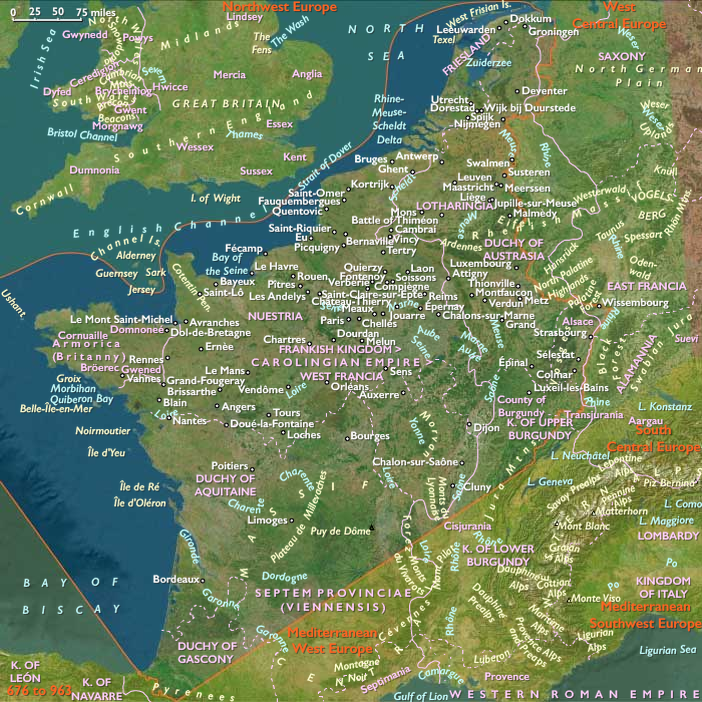
The Division of Burgundy (936) Hugh the…
936 CE
The Division of Burgundy (936)
- Hugh the Great gains control over much of Burgundy, further expanding his already vast territories, which include Neustria and regions in northern France.
- Hugh the Black retains part of the duchy, preventing total submission to Carolingian rule but reducing his ability to act independently.
Consequences of the Conflict
-
Strengthening Hugh the Great’s Power
- This victory increases Hugh the Great’s dominance in West Francia, making him the most powerful noble in the kingdom.
- He becomes the kingmaker, holding significant influence over Louis IV’s reign.
-
Weakened Carolingian Control Over Burgundy
- Though Louis IV secures Burgundy through Hugh the Great, he ultimately relies on a powerful noble to enforce royal authority.
- This further weakens direct Carolingian rule, as real power shifts to regional lords.
-
Hugh the Black Remains a Threat
- While weakened, Hugh the Black retains autonomy in part of Burgundy, meaning he continues to be a potential rival.
- His refusal to fully submit reflects the broader decline of centralized royal power in West Francia.
Conclusion: A Step Toward Feudal Fragmentation
The division of Burgundy in 936 marks another step toward the feudal fragmentation of West Francia, as nobles gain more control while the Carolingian monarchy weakens. Though Louis IV secures nominal authority, the real victors are the great magnates—especially Hugh the Great, whose power now rivals that of the king himself.
Locations
People
Groups
Commodities
Subjects
Regions
West Europe
View →Subregions