
Judicael Berengar
Count of Rennes
910 CE to 979 CE
Judicael alias Berengar is Count of Rennes in the mid-to-late 10th century.
There are conflicting accounts of his parentage, one popular solution making him son and successor to a count Berenger (sometimes identified with Berengar of Rennes, sometimes with that man's supposed maternal grandson of the same name) by a daughter of Gurvand, Duke of Brittany.
However, an 11th-century collection of Angevin genealogies shows him to be son of Pascweten, son of Alan I, King of Brittany.
World
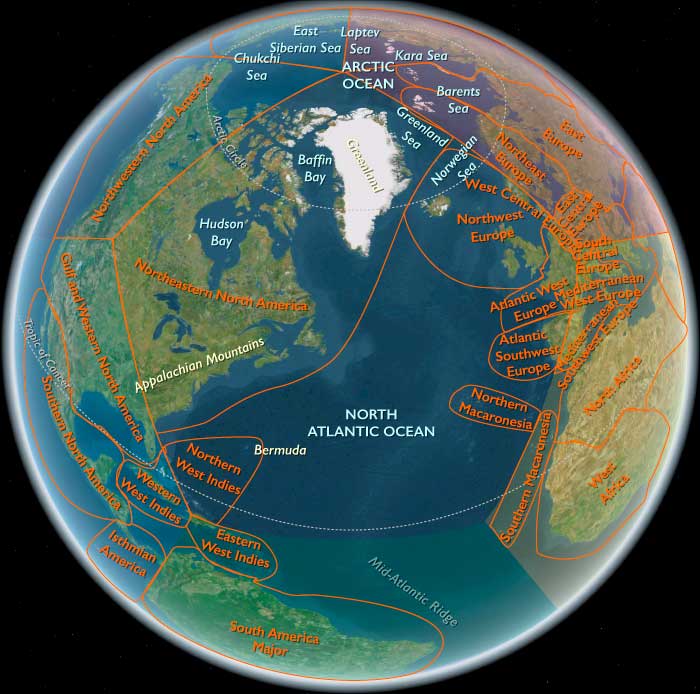
The Atlantic Lands
View →Related Events
Showing 10 events out of 11 total
William Longsword Faces a Norman Rebellion (c. 927–933)
After succeeding his father Rollo as ruler of Normandy in 927, William Longsword quickly faces resistance from within his own ranks. Many of his Norse followers, particularly the more traditionalist Viking leaders, believe he has become too Gallicized and too lenient in his rule. This early rebellion, led by Riouf of Évreux, threatens William’s authority in the duchy.
The Norman Rebellion: A Reaction to William’s Frankish Influence
- William Longsword continues his father’s policies, adopting Frankish customs, language, and governance, which alienates some of the Viking nobility.
- Many Normans still view themselves as independent Norse warriors, resisting full assimilation into the Frankish feudal system.
- Riouf of Évreux leads a faction of discontented Norman nobles in rebellion against William’s rule, attempting to challenge his leadership.
William Secures His Heir: The Birth of Richard I (933)
- During the rebellion, William sends his pregnant wife, Sprota, to Fécamp, a safer location away from the conflict.
- Their son, Richard I, is born in 933 at Fécamp, ensuring the continuation of the dynasty founded by Rollo.
- Sprota, a Breton noblewoman, plays a crucial role in Norman politics as the mother of William’s successor.
Outcome of the Rebellion and William’s Rule
- William ultimately crushes the rebellion, securing his rule over Normandy.
- However, the uprising demonstrates the fragile balance of power in early Norman society, where Viking traditions still clashed with Frankish influences.
- William’s success ensures that Normandy continues to integrate into the West Frankish kingdom, but it also shows that his rule is not uncontested.
Conclusion: A Turning Point in Norman Identity
The rebellion against William Longsword (927–933) highlights the ongoing cultural transformation in Normandy, as Norse rulers gradually adopt Frankish customs. Though he defeats the insurgents, the tensions between Norman warriors and feudalized Frankish-Norman aristocrats will continue to shape the region’s political landscape for generations. Meanwhile, the birth of Richard I in 933 ensures that the dynasty of Rollo remains intact, setting the stage for the continued rise of Norman power in medieval Europe.
William Longsword Recognizes King Rudolph and Gains Breton Territories (933)
In 933, William Longsword, the ruler of Normandy, formally recognizes King Rudolph (Raoul) of West Francia, who is struggling to assert his authority in northern France. In return, Rudolph grants William lordship over much of the Breton lands, significantly expanding Norman control beyond the Seine Valley.
Rudolph’s Need for Norman Support
- By 933, King Rudolph of Burgundy (Raoul) is still contesting his rule against the Carolingian claimant, Charles the Simple, and dealing with internal noble resistance.
- Northern France remains unstable, with regional lords like Herbert II of Vermandois, Hugh the Great, and Arnulf of Flanders holding considerable autonomy.
- Rudolph seeks William Longsword’s allegiance as the Duke of Normandy to help secure his northern frontier, particularly against Viking and noble threats.
The Expansion of Normandy: Avranches and the Cotentin
- In exchange for William’s recognition of his kingship, Rudolph grants him lordship over key Breton lands:
- Avranches → A strategic coastal town that helps secure Norman access to the Channel.
- Cotentin Peninsula → A highly fortified region with Viking settlements, making it a natural extension of Normandy.
- These territories had previously been part of Brittany, but with Breton power weakened by Viking invasions, they are transferred to Norman control.
Significance of the 933 Agreement
-
Normandy Expands Westward
- The incorporation of Avranches and Cotentin doubles the size of Norman-controlled lands, further establishing the duchy as a dominant power in northern France.
-
Weakened Breton Independence
- Brittany, already devastated by Viking raids and the loss of Nantes to Norse control, is now further dismembered, making a Breton resurgence unlikely for decades.
-
Rudolph Strengthens His Hold Over Northern France
- By securing William Longsword’s loyalty, Rudolph gains a powerful northern ally to counter both Carolingian loyalists and the rebellious Frankish nobility.
Conclusion: The Rise of Norman Influence in the West
The 933 recognition of King Rudolph by William Longsword is a turning point in the consolidation of Norman power in France. With control over parts of Brittany, the Normans now expand beyond their original grant in the Seine Valley, reinforcing their military and political dominance in northern Francia. This expansion westward lays the foundation for Normandy’s growing strength, which will later culminate in its role in the Norman Conquest of England in 1066.
The Breton Resistance to Norman Expansion and the Flight of Alan II Wrybeard (933–935)
As William Longsword of Normandy expands his domain westward into Brittany in 933, Breton leaders, particularly Alan II Wrybeard, Duke of Brittany, and Judicael Berenger, Count of Rennes, lead a resistance movement against Norman rule. However, their efforts are short-lived, ending with Alan fleeing to England and Judicael Berenger seeking reconciliation with the Normans.
Breton Resistance Against the Normans (933–935)
- The Norman annexation of Avranches and the Cotentin in 933 under William Longsword severely weakens Brittany, which had already suffered from decades of Viking incursions and noble infighting.
- Alan II Wrybeard (son of Count Mathuedoï of Poher) and Judicael Berenger of Rennes attempt to mobilize Breton forces against the Norman advance.
- The Bretons engage in skirmishes with the Normans, but their forces lack the strength and unity to mount an effective resistance.
The Collapse of the Breton Resistance (c. 935)
- The Normans, better organized and supported by West Francia, quickly overpower the Breton resistance.
- Alan II Wrybeard, seeing no path to victory, flees to England, seeking refuge with King Æthelstan, who had supported previous Breton exiles during Viking invasions of Brittany.
- Judicael Berenger of Rennes, realizing continued resistance is futile, seeks reconciliation with William Longsword, effectively submitting to Norman rule in order to retain his lands and influence.
Consequences of the Breton Defeat
-
Normandy Strengthens Its Hold Over Western Francia
- William Longsword further consolidates Norman rule in the west, making Normandy the dominant power in northern France.
-
Brittany Remains in Disarray
- With Alan II in exile and Judicael Berenger submitting to the Normans, Brittany loses its independence, becoming a fragmented and weakened region.
- Viking influence in Brittany remains strong, with Norman control extending deeper into Breton lands.
-
The Beginning of Norman-Breton Rivalry
- Although Brittany is temporarily subdued, Breton leaders will later return to reclaim their homeland, setting the stage for future conflicts between Brittany and Normandy.
Conclusion: Brittany Falls, but Resistance Will Continue
The defeat of the Breton resistance (c. 935) marks the temporary end of an independent Brittany, as Normandy extends its reach westward. However, Alan II Wrybeard’s flight to England ensures that Breton leadership survives in exile, setting the stage for his eventual return and the restoration of Brittany in later years.
The Channel Islands, which lie within thirty miles (forty-eight kilometers) of the French coast, become part of the county of Normandy in 933.
Æthelstan’s Role in the Restoration of Alan II of Brittany and Louis IV of West Francia (936)
Æthelstan, King of England (924–939), played a significant role in supporting dispossessed young royals, acting as a foster-father to exiled princes and using English resources to restore legitimate rulers to their thrones. In 936, he assists two young rulers in reclaiming their hereditary lands:
- Alan II, Duke of Brittany, regaining his duchy from the Vikings.
- Louis IV of West Francia, returning to the Frankish throne after the death of King Rudolph.
Æthelstan Aids Alan II in the Reconquest of Brittany
- Alan II Wrybeard, the son of Count Mathuedoï of Poher, had fled to Æthelstan’s court in England after Brittany was overrun by Viking forces in 919.
- Having spent years in exile under Æthelstan’s protection, Alan gains English support to reclaim his lands.
- In 936, Æthelstan sends an English fleet to support Alan’s return, allowing him to drive out the Vikings and reestablish his rule in Brittany.
- This marks the beginning of the Breton Reconquest, restoring Breton independence and weakening Viking control in western Francia.
Æthelstan Helps Louis IV Take the Throne of West Francia
- Louis IV, son of Charles the Simple and Eadgifu of Wessex (Æthelstan’s half-sister), had been living in exile in England since 923, following his father’s imprisonment by Herbert II of Vermandois.
- After the death of King Rudolph of Burgundy in 936, the West Frankish throne was vacant, leading to political maneuvering among the nobility.
- Hugh the Great, the most powerful noble in West Francia, orchestrates Louis’ return, likely to prevent rivals like Herbert II of Vermandois or Hugh the Black (Rudolph’s brother) from taking the throne.
- With Æthelstan’s backing, Louis IV returns to West Francia and is crowned King at Laon by Artald, Archbishop of Reims, on June 19, 936.
Significance of the 936 Restorations
-
Æthelstan’s Influence Beyond England
- These actions showcase Æthelstan’s role as a pan-European power broker, shaping the political future of both Brittany and West Francia.
-
Restoration of Carolingian Rule in West Francia
- Louis IV’s return revives the Carolingian dynasty, though he will struggle for power against Hugh the Great and regional lords.
-
Brittany’s Independence Reestablished
- Alan II’s return ends Viking rule in Brittany, restoring the duchy as a powerful buffer between Normandy and West Francia.
-
Hugh the Great’s Growing Power
- Though he supports Louis IV’s return, Hugh the Great remains the real power behind the throne, setting the stage for future conflicts between the monarchy and the Robertians.
Conclusion: Æthelstan’s Strategic Diplomacy in 936
Through his support for Alan II and Louis IV, Æthelstan strengthens English influence in France, demonstrating the interconnected nature of early medieval European politics. While his aid restores legitimate rulers, both Brittany and West Francia remain politically unstable, foreshadowing further struggles between regional lords and the monarchy.
William Longsword’s Marriages and Political Alliances (935–936)
By the mid-930s, William Longsword, Duke of Normandy, consolidates his political influence through two strategic marriages—one arranged for his sister Adela (Gerloc) and another for himself. These marriages strengthen his ties with the powerful nobles of West Francia, marking a shift in Norman diplomacy.
1. The Marriage of Adela (Gerloc) to William III of Poitou (935)
- In 935, William arranges a marriage between his sister, Adela (Gerloc in Norse tradition), and William III, Count of Poitou.
- The marriage is approved by Hugh the Great, Duke of the Franks, indicating William’s growing integration into West Frankish noble politics.
- This alliance links Normandy with Poitou, strengthening William’s relations with southern Francia and enhancing Normandy’s political reach beyond the Seine Valley.
2. William’s Own Marriage to Luitgarde of Vermandois (936)
- In 936, William marries Luitgarde, daughter of Herbert II, Count of Vermandois, one of the most powerful nobles in West Francia.
- Her dowry includes the lands of Longueville, Coudres, and Illiers-l’Évêque, expanding William’s territorial control into the heart of Francia.
- By marrying into the House of Vermandois, William cements an alliance with one of the most influential noble families in the kingdom.
3. A Shift in Loyalty: From Opposition to Alliance
- Unlike his father Rollo, who had opposed Herbert II of Vermandois and King Rudolph, William aligns himself with them.
- William now supports King Rudolph (Raoul) of Burgundy, whereas Rollo had once been loyal to Charles the Simple.
- His new alliance with Herbert II of Vermandois shows a pragmatic shift in Norman politics, as William seeks to strengthen his position within West Francia.
Impact of William’s Political Marriages
-
Integration of Normandy into Frankish Feudal Politics
- These alliances bring Normandy further into the West Frankish noble network, strengthening William’s political legitimacy.
-
Expansion of Norman Influence
- The marriage to Luitgarde of Vermandois gives William lands beyond Normandy, increasing his control over strategic regions.
-
Realignment of Norman Loyalties
- Unlike Rollo, who had opposed Herbert II and King Rudolph, William now supports them, adapting to new political realities in Francia.
Conclusion: William Longsword’s Shift Toward Feudal Nobility
Through these marriages and shifting alliances, William Longsword positions Normandy as an integrated part of West Frankish politics, ensuring continued Norman stability and influence. His ties to powerful noble families, particularly through Vermandois and Poitou, lay the groundwork for Normandy’s future rise as a major feudal power in France.
Hugh the Black’s Challenge to Louis IV (936)
- Hugh the Black may have intended to succeed his brother as King of West Francia, though there is no direct evidence that he formally claimed the throne.
- Instead of submitting to Louis IV, he refuses to acknowledge his rule, effectively challenging Carolingian authority in Burgundy.
- This defiance forces Louis IV to act swiftly to prevent a potentially independent Burgundy from emerging.
Louis IV’s Response: Hugh the Great’s Campaign
- To suppress Hugh the Black’s resistance, Louis IV enlists Hugh the Great, the most powerful noble in West Francia and Duke of the Franks.
- Hugh the Great leads a military campaign against Hugh the Black, capturing Auxerre and Sens, key cities in Burgundy.
- Following this military success, Burgundy is divided between Hugh the Great and Hugh the Black, ensuring that neither controls the entire duchy.
The Division of Burgundy (936)
- Hugh the Great gains control over much of Burgundy, further expanding his already vast territories, which include Neustria and regions in northern France.
- Hugh the Black retains part of the duchy, preventing total submission to Carolingian rule but reducing his ability to act independently.
Consequences of the Conflict
-
Strengthening Hugh the Great’s Power
- This victory increases Hugh the Great’s dominance in West Francia, making him the most powerful noble in the kingdom.
- He becomes the kingmaker, holding significant influence over Louis IV’s reign.
-
Weakened Carolingian Control Over Burgundy
- Though Louis IV secures Burgundy through Hugh the Great, he ultimately relies on a powerful noble to enforce royal authority.
- This further weakens direct Carolingian rule, as real power shifts to regional lords.
-
Hugh the Black Remains a Threat
- While weakened, Hugh the Black retains autonomy in part of Burgundy, meaning he continues to be a potential rival.
- His refusal to fully submit reflects the broader decline of centralized royal power in West Francia.
Conclusion: A Step Toward Feudal Fragmentation
The division of Burgundy in 936 marks another step toward the feudal fragmentation of West Francia, as nobles gain more control while the Carolingian monarchy weakens. Though Louis IV secures nominal authority, the real victors are the great magnates—especially Hugh the Great, whose power now rivals that of the king himself.
Alan Barbetorte Reclaims Brittany: The Retaking of Nantes (937)
Alan II Barbetorte ("Twisted-Beard"), the exiled Breton leader, successfully reclaims Nantes in 937, marking a turning point in the reconquest of Brittany from Viking rule. Having spent years in exile in England, Alan returns with military support from King Æthelstan, leading a Breton invasion to restore his ancestral homeland.
Alan Barbetorte’s Exile and Return to Brittany
- After Viking forces, led by Rognvald, conquered Brittany in 919, Alan fled to England, where he was given refuge at the court of King Æthelstan.
- He remained in exile for nearly two decades, waiting for the opportunity to reclaim his duchy.
- In 936, with Æthelstan’s backing, Alan returns to Brittany with a fleet and a well-trained army, beginning the Breton Reconquest.
The Battle for Nantes (937)
- Nantes had been a Viking stronghold for nearly two decades, serving as their capital in Brittany.
- Alan’s Breton forces engage the Norse occupiers in a fierce battle, using guerrilla tactics, cavalry raids, and knowledge of the terrain to their advantage.
- After intense fighting, Alan emerges victorious, and the Vikings lose control of the city.
- The victory at Nantes symbolizes the resurgence of Breton rule and inspires further resistance against Viking occupiers in Brittany.
Impact of Alan Barbetorte’s Victory
-
End of Viking Rule in Brittany Begins
- The fall of Nantes weakens Norse control over the region, marking the beginning of the end of Viking occupation in Brittany.
-
Brittany is Reclaimed as an Independent Duchy
- Alan’s victory allows him to establish himself as Duke of Brittany, restoring Breton sovereignty.
- His rule solidifies Breton independence from both Normandy and West Francia.
-
Continued Breton Resistance
- The war against the Vikings is not over, but Alan’s leadership ensures that Breton forces continue pushing them out of the region.
- Over the next few years, Alan systematically expels Norse forces, securing complete control over Brittany.
Conclusion: The Restoration of Breton Rule
Alan Barbetorte’s victory at Nantes in 937 marks the beginning of the full Breton Reconquest, leading to the reestablishment of Brittany as a powerful independent duchy. Having successfully defeated the Vikings, Alan’s rule ensures that Brittany remains free from Norse domination, paving the way for its continued cultural and political autonomy in medieval Europe.